
 by
by * Before the Internet
(For SNL thoughts, click here.)
Continuing the series with Johnny, Dave and Jay. But first, a big-picture observation on Excellent Media Experiences.
In the analog three-channels-plus-UHF era, audiences sat passively within a broad, shared stream of programming. Today, clicks and feedback — comments, likes — shape what gets made and what gets seen.
Then, information arrived in intervals. A newspaper appeared each morning. The national news aired at 5:30. You went to it, or you missed it.
Now, creators and individuals publish constantly. Content follows the viewer from screen to screen. Subscriptions, apps and personalized feeds construct a daily stream reflecting back what we already like.
The schedule used to set the terms. Now the viewer does.
* * * * *
A close friend once put it plainly: during the 1970s, drifting off to sleep in your bed while your parents laughed at Johnny Carson’s monologue down the hall — right there was the sound of a happy childhood.
And you knew you’d arrived when you finally earned permission to stay up and watch.
Nearly 7,000 times over a 29-year span until 1992, Carson, sidekick Ed McMahon and Tonight Show bandleader Doc Severinson appeared on screens in American households following the late local news. The show drew an average of 6.5 million nightly viewers in 1991, its final full year. Jimmy Fallon’s current Tonight Show, also the time slot ratings leader, drew 1.5 million viewers in October 2021.
Wearing a blazer, sporting a sunburn and enjoying a Pall Mall, Carson embodied Seventies Man cool. A quick wit and a great listener with celebrity guests, he was nearly as funny when the monologue jokes bombed as when they killed.
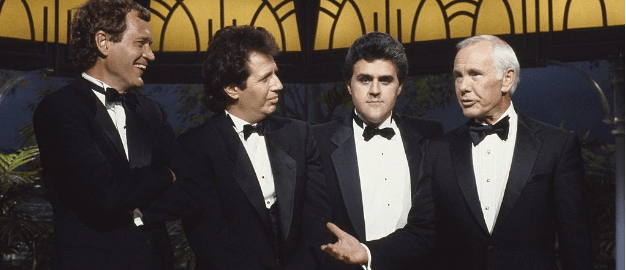
On Monday nights a few years ago, Turner Classic Movies ran edited, 15-minute segments of Tonight 1-on-1 sitdowns — Carson with William Holden, Liz Taylor, Burt Reynolds, Mel Brooks, Henry Fonda. Great footage from a time when celebrities went on talk shows to talk. No movie plug, no world-saving initiatives to promote. Just conversation.
That was how celebrities cultivated an offstage persona. Talk-show chats ran longer and more relaxed. Carson could zing the guest, ad-lib freely. His gift: draw out the interview subject and prime the pump for the potential unplanned moment — or the unexpected gem of a comment that audiences carried around for days.
The show ran its course, and then some, and by the time it was sunsetting SNL and others were poking great fun at the “out of it” lack of hipness and the clunky monologue jokes of Carson and McMahon. Carson pressed on. And he went out on his terms, May 22, 1992, in one of television’s most memorable goodbyes. (monologue at 3:15 and farewell at 58:15) He walked away, and stayed away, until his passing in 2005 at age 79.
“Late Night with David Letterman” — With the February 1982 addition of “Late Night with David Letterman,” executive producer Johnny Carson along with NBC Executives scored a hit in the 12:30 ET slot with a second late-night hour: David Letterman and his irreverent, insider humor, which was aimed at younger adults and collegiate audiences. The show averaged 3.2 million viewers in 1991.
At its peak from 1985 to 1989, Late Night was the most disruptive, inventive and authority-challenging comedy show anyone had produced. Letterman’s hipper-than-Hollywood persona and the show he built around it mocked celebrity and media — all the way down to the production’s New York base versus Carson’s Burbank.
Every time I watch old “Late Night” episodes I’m reminded not only of how original and unconventional the early Dave humor was, but also how talented Paul Shaffer and The World’s Most Dangerous Band were. Late Night’s house band could play anything, behind any musical guest. On an early date with then-Christi Clark, she and I saw “Shafe” and the band perform at Chicago’s Vic Theater.
“Tomorrow” — From 1973-1982 the one-on-one interview program “Tomorrow with Tom Snyder” drew a quirky cult following peaking with Snyder’s interviews of John Lennon, The Sex Pistols, or Charles Manson. (I remember Dan Aykroyd’s spot-on SNL impersonation of Snyder more clearly than the real thing.) Between 1995 and 1999, David Letterman revived Snyder’s extended-conversation format in “The Late Late Show” (1:30 a.m. Eastern), a timeslot that begat the similar, “Later with Bob Costas” in the early 90s.
Guest- and content-wise, Dick Cavett served as the Carson-era counterculture alternative. No other mainstream entity would give consideration to someone like Gore Vidal or Angela Davis. On ABC from 1969-75 Cavett himself was interesting and offbeat; well-spoken, self-deprecating… and self-impressed. (Were you aware that he attended Yale? He would be the first to say so.)
The Late Night Wars. With the impending retirement of Carson in 1991, the coveted 11:30 p.m. NBC time slot was coming open but with rivals Jay Leno and Letterman each pushing to get it.
Originally considered the heir to Johnny Carson’s legacy by none other than Carson himself, Dave had already put in eight years at NBC doing the 12:30 am “Late Night.”
Letterman was prickly*, reclusive and loved bashing NBC on the air. (He is, after all, the inspiration for Krusty the Klown.) Leno, used to working 200-plus nights a year on the road, was a die-hard pleaser who lobbied NBC executives and affiliates relentlessly.
Dave was Talent. Jay was a diplomat — and Jay got the gig. (Turns out NBC had signed a secret deal with Leno, some time earlier promising the job to Leno when Carson departed.)
Dave moved to CBS to host the new Late Show, which would compete head-to-head over the next two decades. During 1994, Leno averaged 5.6 million viewers. Letterman at CBS settled into around 4 million for most of its run.
Leno, who as a standup had been an highly anticipated recurring guest of Dave over at Late Night, compromised his edgy humor once he got to NBC. In short, Jay, the show, and comic material were too bland. I didn’t watch.
Dave lost his fastball sometime after moving to CBS. He still showed flashes of former greatness — capable of a two-week relevance streak annually, as in the monologues after September 11, 2001. Maybe Dave prevailed on Cool, but Jay won the war.
The current picture – Popular shows today within the late night talk show genre include The Tonight Show Starring Jimmy Fallon, The Late Show with Stephen Colbert, The Late Late Show with James Corden, Late Night with Seth Meyers and Jimmy Kimmel Live!
Audiences have waned, in part because time-shifting viewers no longer watch the broadcast when they can simply catch up later using social media. Lower viewership is also due to the many streaming, social media and YouTube options for other entertainment.
“I’m sure ABC would love it if my show appealed to everyone. I don’t think that world exists anymore and I’m not comfortable in it.” -Funnyman Jimmy Kimmel, the “best” of the current class of late-night talkers.
A final few points need to be made regarding Then and Now.
Late night TV is another one of those institutions that used to command a lot of respect among Americans. It was one of those things that your friends gathered to view together (or at least knew about).
Nobody watches these shows anymore that used to be huge cultural forces. Letterman’s final broadcast was May 20, 2015 but the reality is that the era of the late night talkers ended probably 10-12 years earlier. Hey, it happens: what was once a prominent part of the moment is now commodity.
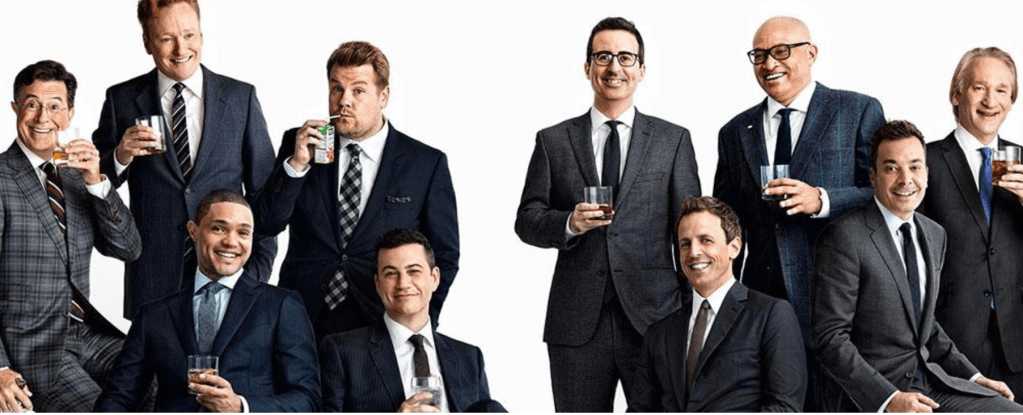
Carson poked fun at politicians. All politicians. If you slipped up, he was going to make a joke at your expense. Johnny specifically avoided politics with guests and kept it light in the monologue. Leno was non-commital. Dave’s political barbs, such as they were then, would be more of the non-sequitur variety.
It wasn’t partisan; it was comedy. It was the job. Seeing a current photo of the late-night lineup in context points out starkly how one-sided and political the latter-day hosts have become. Would it kill even one of them to be funny — about any public figure, across the full political spectrum — in the way the job once demanded?
Where late night once united culture and generated watercooler conversation, the genre got overtaken first by the immediacy of screens and streams, then turned into an ideological echo chamber offering group therapy for a dwindling viewership.
Other entrants of note — After The Arsenio Hall Show began in 1989 and was a decent hit in the ratings, drawing a 2 share, Tribune Entertainment tapped Dennis Miller for a talk show debuting in January, 1992. Booking pressures from Tonight Show restrictions limited Miller’s access to guests. His cerebral humor alone proved insufficient to sustain the program. But he went on in 1994 to launch the successful “Dennis Miller Live” on HBO which had a nine-year run earning several Emmys.
• The Magic Hour (June 1998–September 1998) starring Earvin “Magic” Johnson – syndicated by 20th Television – “Aww Craig!”
• The Pat Sajak Show (January 1989 – April 1990) — Funny to think TV Boys would take a look at a daytime/game-show host and say, “he’s got a following — let’s do it!”
• The Larry Sanders Show (1992-1998) — Running at the height of the talk-show wars, Garry Shandling’s brilliant HBO sendup of the genre carried with it real-life irony. Shandling had been approached on numerous occasions to potentially host an actual late-night talk show.
The Larry Sanders Show chronicles the daily life of neurotic, narcissist host Larry (Garry Shandling), irascible producer Arthur “Artie” (Rip Torn), buffoon sidekick Hank Kingsley (Jeffrey Tambor) and their interactions with celebrities playing themselves, conniving network executives and others.
* * * * *
* — On Letterman
What is it about old talk show hosts? Jack Paar had a nervous breakdown. Steve Allen became insufferable. David Letterman, the person, is a topic I could write volumes about:
Soon after Jay Leno got the Tonight Show, Dave’s willingness to push into new comedy places and to push limits subsided. Over at CBS he still showed plenty of chops initially. But over time, the material plateaued.
He was fortunate in 2009 to sidestep a major scandal. (In fact you could argue he was the final entertainer embroiled in a fiasco to escape the wrath of the ‘MeToo’ era which began then.) In the late going (2010s) Dave became a partisan hack, as his interviews and monologues revealed. Perhaps this was as an effort to siphon audience [and relevance] from Jon Stewart, The Daily Show’s fake-newsman.
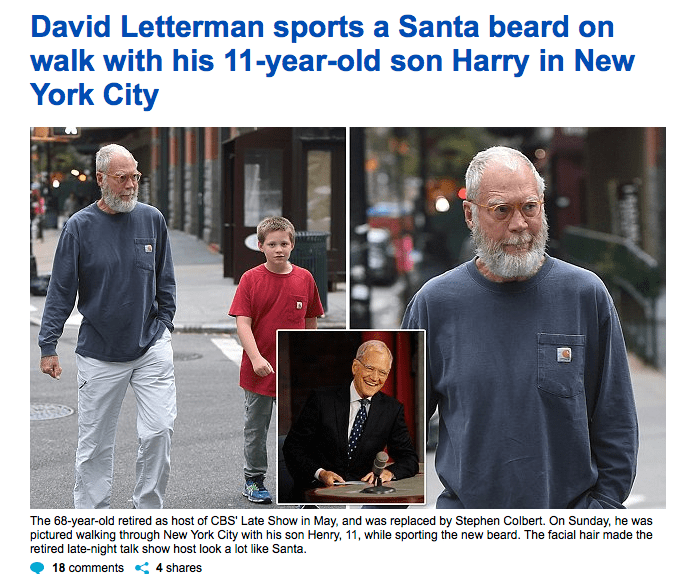
In recent conversations with Howard Stern, Letterman has disowned his past. He cannot bear to watch his old shows. “I am a completely different person now, mature, would be so much better equipped to deal with all of this now.” He seems unable to rest until he destroys every last pleasant memory anyone holds of him. And that’s the diplomatic version.
It remains a hell of a run. More than a quarter century after its peak, the Late Night with David Letterman episodes on YouTube are worth your time. Letterman’s creation stands as groundbreaking material in comedy TV. And it was appointment viewing for TwentySomething me.
 Stuart Wade
1 Comment