
 by
by * before the Internet
November 23, 2021
All month I’ve looked back at the products and personalities that defined the pre-Web moment. Excellent Media Experiences still exist, just in new and evolving forms.
Record and Tape Clubs – After much debate and several false starts, you joined the ‘Buy One, Get 12 Free’ Columbia Record Club — oddly based in Terre Haute. You got your 12 free LPs and absorbed the hit for the ‘Buy One.’ Then you tried hard to remember to mail the ‘Cancel Me!’ card before next month’s killer Amount Due took a $27 bite out of your summer lawn-care savings. After scoring Boston’s ‘Don’t Look Back’ and that Kansas album you’d always eyed at the record store, finding the next three or four LPs was a higher degree of difficulty. By the ninth choice you were looking at The Star Wars Soundtrack and asking your sister, hypothetically, what she’d pick.
The cassette tape revolution / Boomboxes – Cassette players brought with them the ability to tape an album, and create mixtapes (initially laborious and filled with meaning as author Nick Hornby brilliantly captured in High Fidelity). You could buy the factory cassette rather than the album (which I avoided).
About a year after I bought the big bedroom stereo I added a component tape deck, granting me, at 16, official power to record albums and create mixtapes. In 1982, our family owned a Sony boombox that went with Jim, Greg and me on the daily summer drive from my house to the Racquet Club pool. Because clearly everyone else at the venue wanted to hear what we were listening to.
Regional local TV channel programming – Some experiences depended less on what you chose and more on what your local market offered. When Eric, a Connecticut kid and co-creator of these E.M.E. thoughts, first posted this category, I asked, Did you mean syndicated national programs from childhood (“Make A Wish,” “Muppet Show”), or shows aimed at kids and teens (“Schoolhouse Rock,” “ABC After-School Special”)? Or were you thinking more of “Fright Night” hosts and local programming like “The Joe Franklin Show” on WOR?
His response: “The latter. In the New York metro area, it was WOR (Mets, maybe Knicks) and WPIX (Yankees, Abbott & Costello, Cookie Puss, Crazy Eddie, etc.). Howard Stern even had a short-lived TV show on one of them. I’m being NY-centric, but most major markets had something similar.”
My response: The best example I can offer is WFLD Channel 32’s “The Sportswriters on TV,” the original of the genre. (ESPN’s “Pardon The Interruption” drew heavily from it.) The show began in 1985 on WFLD in Chicago, then moved to Eddie Einhorn’s SportsVision, a precursor to SportsChannel Chicago (now Bally’s). Crusty sportswriters Bill Jauss (Chicago Tribune), Bill Gleason (Southtown Economist) and Rick Telander (Sports Illustrated) debated with moderator Ben Bentley, a boxing promoter. Gleason and Bentley smoked cigars. The set was dark, minimal, almost like a poker table—an approach later echoed by Charlie Rose. SI’s Lester Munson, who covered law in sports, appeared occasionally. Here is a representative sample.”
Comedy albums — One of the most parent-approved ways you learned about the adult world during adolescence: stand-up comedy recordings. In my formative years these included Bill Cosby, Bob Newhart, Steve Martin and George Carlin, plus a ten-inch 1950s Kermit Shafer ‘Pardon My Blooper’ record my parents owned, and comedy albums from National Lampoon, Monty Python and Richard Pryor belonging to friends. True then and now: when our son Ben was 11, he’d drift off to sleep to the Pandora ‘Jim Gaffigan Channel’ he’d created. In my day, it was the comedy album.
Media “horrors” coverage – A full, longer category waits to be written — Guyana/Jonestown, Lennon, Reagan, the Shuttle Challenger and other ‘media horrors.’ The method by which media picked up on these events and learned to cover them intensely grew up in this timeframe and evolved into the 24/7 cable news world we were all caught in until recently.Before cable news, ABC NightLine with Ted Koppel provided a nightly national news digest airing after your late local newscast. You’d choose Nightline over the Tonight Show only when something internationally serious had landed earlier that day. SNL captured the network behavior perfectly with ‘Buckwheat Dead: America Mourns.’
The Arrival of Cable TV in your Town — Our family got cable when I was 15. The cable box with the clicker to HBO sat atop the set. A revelation as a sophomore in high school: you could watch a full-length recent feature film, then watch it again the next day. I recall seeing things a teenager had no other easy means to consume: Warriors, Wolfen, Sharky’s Machine, The China Syndrome, Magic, Phantasm, Over the Edge with Matt Dillon, Fraggle Rock, Inside the NFL, burlesque and more. Our family didn’t spring for MTV (debut: August 1, 1981), which ran an extra dollar a month. My friend Greg’s family did.
Sports annuals — Street and Smith’s, The Sporting News. I didn’t subscribe to TSN and my go-to stores either didn’t carry it long or ran out of stock quickly. Though aware it published bi-weekly, I’d buy the odd issue once every couple of months — which made it feel like a rare treat.
As a loyal IU hoops and Bob Knight disciple (the 32-0 season arrived when I was 11), the new Street and Smith’s dropping every November carried weight. It served as a college basketball reference, or yearbook — roster, schedules and expert team analyses in one place. I know someone who used it strictly as a gambler’s bible. To me it functioned as a timely reference manual that anyone else could have produced. Nobody did.
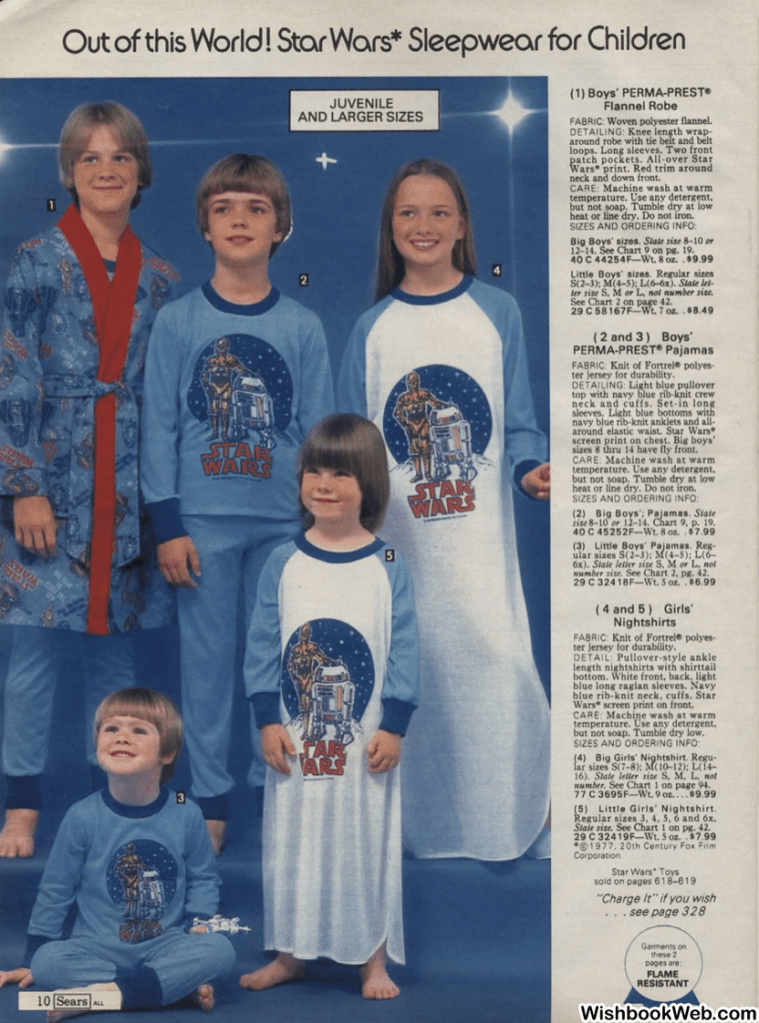
Cool catalogs / Scholastic / mailing lists – Every child of the 70s recalls the arrival of The Sears Christmas Catalog, aka Sears Wish Book. For a stretch of years, it served as the single source of what mattered in toys and games. You flipped pages, circling what you wanted before any money changed hands.
Others got into the act soon after; Service Merchandise comes to mind. You’d get the catalog, freak about the low prices for that sweet Seiko rectangular quartz watch or Mattel football game, then bring your mowing money to the showroom. You filled out a form and then waited for the item to cruise out of the backroom on a conveyor belt, an experience not unlike waiting for your airport baggage today.
In elementary school did you receive monthly Scholastic paperbacks catalog/order form? This was my source of The Guinness Book of World Records, an annual “lock” order. This pamphlet-catalog also offered “Dynamite” and “Bananas” magazines – each of which were starter Tiger Beat titles. Because of these purchases also, you’d get added to mailing lists for more catalogs. It was a glorious time, the catalogs era…
The letter – Much to say on this topic. Despite having co-written a book on the subject (more below), I’m no longer a frequent letter writer. My mother remains an inveterate correspondent — still buying stationery, still mailing card-sized envelopes from Evansville, still whip-smart on her Samsung. An 88-year-old Instagram and smartphone ace.
Any exchange of handwritten items from friends via US mail still delivers a small shot of joy. Somebody put in a little extra effort, and that effort registers. Sadly, social media does for the letter what the greeting card did to the personal note.
Why should letter writing ever stage a revival? The handwritten letter:
- Carries more meaning and more of your past. The handwriting of your best friend in 1980 takes you directly back to where you first opened the envelope. A living artifact of the current moment.
- Differentiates you. While email and apps offer convenience, old-school correspondence still generates genuine appreciation.
- Builds “delay” into the experience. The wait between sending and receiving is part of it.
In the digital realm, nothing rivals a well-written letter. (And nothing beats receiving a handwritten card. It’s old-fashioned, but more powerful than an email.) I still hold numerous original letters from my high school language exchange trip to Germany, from summer-camp and college friends, from distant and now-departed relatives.
The book – I later helped my brother on his second book on the topic, a compendium of prank letters to corporations (and actual responses) entitled “Drop Us A Line…Sucker.” The book was a hit (defined then as, it went into a second printing, thus was “sold out” of the first print run), and with my publicity background I did a lot of the PR legwork to set up coverage and interviews. That project was a ton of fun. Not sure you could do it the same way, again, in the age of the email. Hmm…
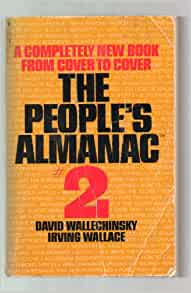
The People’s Almanac Vols. I and II – Formative for me, probably because my history teacher quoted Vol. II regularly. From Wikipedia: ‘The People’s Almanac is a series of three books compiled in 1975, 1978 and 1981 by David Wallechinsky and his father Irving Wallace. Wallechinsky had grown fed up with almanacs that regurgitated bare facts. He wanted a reference book to read for pleasure. The book arrived in 1975 and became a bestseller.’
The broader category here might be reference books you’d track religiously: The World Almanac, Rolling Stone Album Guides, the Blockbuster Guide to Movie and Video Reviews. The Farmer’s Almanac was big for a few years, especially during the Midwestern blizzards of ’78.
Columnists — One of the joys of regional news dailies, and multi-newspaper markets such as NY or Chicago, was the ability of a reader to “discover” a columnist who is new to you. When I moved up from small-market (still 2-paper!) Evansville to Bloomington, suddenly it was easy to lay hands on [mostly sports] columnists in Chicago, Indy and Louisville. And guys like Dave Barry. IU’s journalism program revered the Louisville Courier-Journal, and had us pore over its reporting, so it was with great interest that I followed Kentucky basketball’s early 80s scandals through those writers’ having to take down something that they all probably loved.
Book and CD Store Browsing (late 80s/early 90s) — On any given mild evening in near north Chicago, I’d complete a circuit of browsing that included the gleaming new Barnes & Noble and Tower Records, plus a half-dozen used CD and bookstores dotting Diversey-Clark-Broadway. I began these solo in 1988, then much of Christi’s and my early dates (1990-91) and post-marriage summer evenings (1992-95) were spent on after-dinner browse fests. A key point about Barnes & Noble: for the first time anywhere, shopkeepers encouraged in-store reading rather than chasing you out for excessive browsing.
My personal record-retail evolution:
- Karma: Midwestern regional LP/head-shop chain through 1983. Albums, cassettes, 8-tracks, Roger Dean posters, weeping Earth candles.
- Mall stores mid-80s: Disc Jockey, Record Bar, Sam Goody’s, Peaches. Convenient, overpriced, pedestrian inventory.
- Target: quietly great for cassettes. Someone there understood how college kids bought music.
- College LP and used CD stores: cheap, deep inventory, constant turnover. One IU store rented LPs, fully aware they’d be taped.
- Chicago north-Clark circuit: indie stores with impressive, specialized inventories.
- Tower Records, 2301 N. Clark. Essential through 1995, gone by 2006. Damn Internet.
- Austin 1995-2005: Waterloo, ABCD’s, then Cheapo’s. For a supposed music capital, surprisingly pricey and thin.
- Amazon. End of the line. Last CD I bought: the Tom Petty Wildflowers re-release, 2020.
The Lloyd Dobler Factor: It struck me that an entire generation no longer sells, buys or processes anything. People under 45 don’t own LPs, cassettes or CDs. No books, no DVDs, no videos. All their content runs digital. Instead of owning things — objects they may have traveled somewhere to obtain — they hold digits. They subscribe rather than buy, so they’re renting those digits temporarily until the subscription lapses. Their media plays on a phone, not an audio system, and the vast majority own no audio player larger than a deck of cards, no speakers larger than their own ear holes.
Bigger question about ephemeral ownership and the sharing economy: Uber, WeWork, Favor, AirBnB. What long-term impact will ‘rent everything, own nothing’ carry?
ALSO RECEIVING VOTES:
Your father’s/brother’s/buddy’s older brother’s stack of Playboys – It was a much more innocent time and low level of raciness. A rite of 70s/80s passage was raiding the stash when the parents were gone. Occasionally, some other 6th grader would show up with one… on the playground. That’s a move that never ended well.
T-shirt culture – I’m With Stupid; Keep on Truckin’ – In the late 70s you HAD to have a cool/funny slogan on your tee. I was also a huge fan of gimme-shirts from PUMA and Adidas.
The Live Album – KISS Alive, Cheap Trick at Budokan, Frampton Comes Alive – Or the all-time greatest title for a live LP, Ted Nugent’s “Intensities in Ten Cities.” This was a Seventies trend that thankfully went away pretty quickly (supplanted later by the unplugged-LP craze).
“I want you… To want me!” The ultra-phonetic Robin Zander enunciation, Budokan-style*, never fails to elicit a chuckle from me. (The Budokan versions of “Surrender” and “I Want You To Want Me” get more radio play than their studio songs.)
The idea of the live album was to capture the raw energy of a dynamic performer, etc. But in reality it was a cost-efficient way for artist or a label to put out something “new” for that year, buying time for the artist to work on the next studio record. Live albums were not necessarily recorded on one show; they manipulated crowd effects to make it sound as if Frampton were soloing at The Colosseum on free Bacchus night.
CB Radio. Trucker craze — CW McCall’s number-one hit “Convoy” marked the high-water point of this unlikely fad. The citizen band craze grew in popularity during the 1970s, partly because of the 1973 oil crisis and a nationwide 55 mph speed limit. CB radio, previously an obscure and inexpensive mode for truckers to alert one another regarding speed traps or gas stations with available fuel, became a nationally cool thing — bigger than Bigfoot — for about 9 months in 1976.
 Stuart Wade
1 Comment