
 by
by Happy November Challenge — I’m posting daily all month long.
Books in ’21
This year I made an effort to re-read — or re-listen to, truth be told — some of my all-time fiction favorites, as well as a few other titles past and current. (Warning: not keeping up on Bestsellers list!)
Independence Day, Richard Ford — The second novel in his Sportswriter trilogy is one of my all-time favorites. I love how Ford gets details just right. Moving and hilarious, he nails human nature to the core. The inner monologues resonate and the observational writing is so good you “know” exactly how a Ford character thinks. And he’s underrated as a funny writer.
Rabbit, Run and Rabbit Redux, John Updike — After Richard Ford I attempted the Updike Rabbit series, but maxed out after the second novel. Verdict: These novels had to be edgy and scandalous in 1960 and 1968, but today the plots are mundane. A sad commentary on latter-day America, or an admission of our love of the flawed protagonist? Yep.
Tom Wolfe — Went back and read more by my favorite author. This year I read The Painted Word, From Bauhaus to Our House, and many, many of his magazine-length essays. If you could only read one of those items, may I suggest, “Radical Chic & Mau-mauing the Flak Catchers.” It is as true today as when it was written more than 50 years ago (hard to believe). Lastly, here is Wolfe, observing journalism in the digital age, from 2015: “A whole generation has been transformed into a people with a tribal mentality. They’ll only believe what the last person they talked to tells them.” AND: “That’s what blogs are, so little fact-checking, and pretty soon—this is just a prediction—there will be no such thing as a [journalist’s] beat, something you cover whether you get the story of the day or not.”
Fifth Business, Robertson Davies (1970) — If we are aware of “Rob” Davies, it’s because of the success of his ardent and respectful fan, John Irving, whom I have loved/loathed. I am right now re-reading The Deptford Trilogy, and will probably read or listen to Davies’ Cornish books as well. Fifth Business is book one. Images of Davies, a longtime professor of English in Toronto until his death in 1995, reflect a larger-than-life vibe. He wrote funny observations like, “popularity and good character are not related.” A book of his letters actually held my attention, because he was warm and a wit.
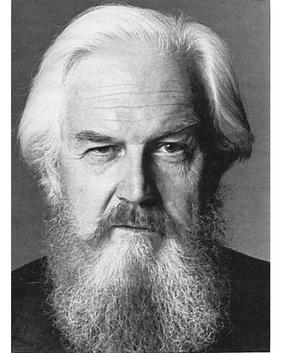
The World According to Garp, John Irving — The Introduction to the 40th anniversary (2018) of “Garp” is read aloud by Irving. And it’s excellent. He moves it through the eyes of his son Colin, now in his early 50s, who had read the manuscript at age 12 — the first thing of his Dad’s he’d ever read.
Irving says he worried initially that the kid would think it was autobiographical. (For example, the “Undertoad” from the novel is a real mishearing from Irving family’s younger brother Brendan.) It isn’t, Irving says. He mentions how lust is a driving force, and all who experience it in the story are doomed/disfigured. He talks about how during the writing he agonized over not letting the character Jenny overtake the Garp character, and raises concern that he failed in this. (Adds that the former Philadelphia Eagle, “Roberta,” is the novel’s only stable character).
Irving continues that Colin, at the age of 14, accompanied him to a reading at a prep school where Colin would soon be enrolling. Someone asked Colin during the Q&A portion, “Is Garp your dad?” He said, “No, but my father’s fears are Garp’s.” Irving brings this thoughtful piece in for a landing, saying that his barely-teenaged son had nailed that this story isn’t about sexual assassination, it is a novel primarily about the fears of any father.
He adds in that even the smallest details in the book are expressions of that fear (example cited: the pockmark on the face of the Viennese prostitute – looking a little bit like a small open grave… a child’s grave). And then Irving breaks this wonderful literary spell, by — of course — bitching about politics, making sure also to quote King Lear. Whatever, dude. Stick to wrestling, Bears and Vienna!
OTHERS IN ’21
The Big Sleep, Raymond Chandler — Eric recommended that I read it; thank you, Eric! Vivid writing, terrific settings and tough-guy humor.
The Punch, John Feinstein — The book was a gift and I have always been fascinated about the Rudy T/Kermit Washington moment. So I looked forward to sitting down with this one. I made it about 1/3 of the way and could stomach no more of Feinstein’s melodramatic BS. (He has always been a fraud in my opinion.) A post note on this, sadly in 2016 Washington embezzled $5M from a charity and is currently serving time.
150 Glimpses of The Beatles, Craig Brown — Really fun. Brown is an English columnist of some renown. I confess to knowing nothing about him prior to purchase of the audiobook. It’s oral histories from a variety of fan or celebrity perspectives. Example as best as I can recall, from one of my favorites of the vignettes:
In 1963 Paul McCartney was judging a UK television “Bandstand”-style contest and the 14-year-old who won, Melanie Coe, was from suburban London. Paul congratulated the girl, and off he went.
The girl was soon after offered a gig on the show as a regular/dancer. Rather than live life as a schoolkid, she got on a much faster track, much to her parent’s chagrin. Three years passed and she became pregnant and ran off — from her nice Mum and Dad and suburban home — to live with the boy in a far lesser locale/situation.
This is 1967, and McCartney picks up The Daily Mail to see a headline “A-Level Girl Dumps Car and Vanishes.”
This is the origin of “She’s Leaving Home,” and McCartney had no inkling that he had already met the girl in the excellent Sgt Pepper mini-drama he would write.
Relentless, Tim Grover — Staying cool in a shitstorm — It’s an incalculable talent, writes elite NBA trainer Grover in what might as well have been a Farmer’s Almanack for me this year. “Find that extra gear,” he writes. “Face fear and who you really are and make it work for you.”
 Stuart Wade