
 by
by A charter entry in the Stu Wade High School Experience Hall of Fame, The Cars by the band The Cars emerged fully formed with this self-titled debut, released in June 1978.
A record that ought to be in anyone’s collection today, the LP was such an instant classic — so loaded with radio hits — that even the band joked that it was their Greatest Hits.
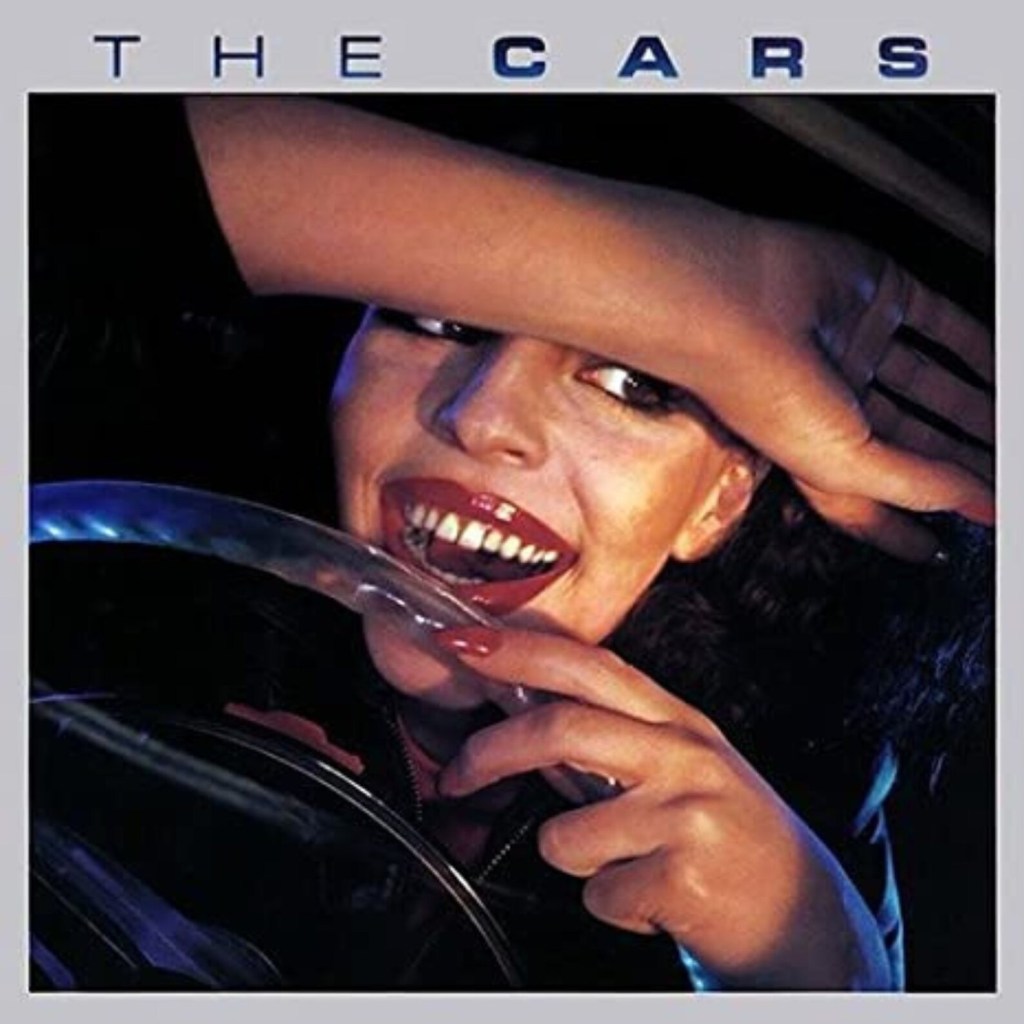
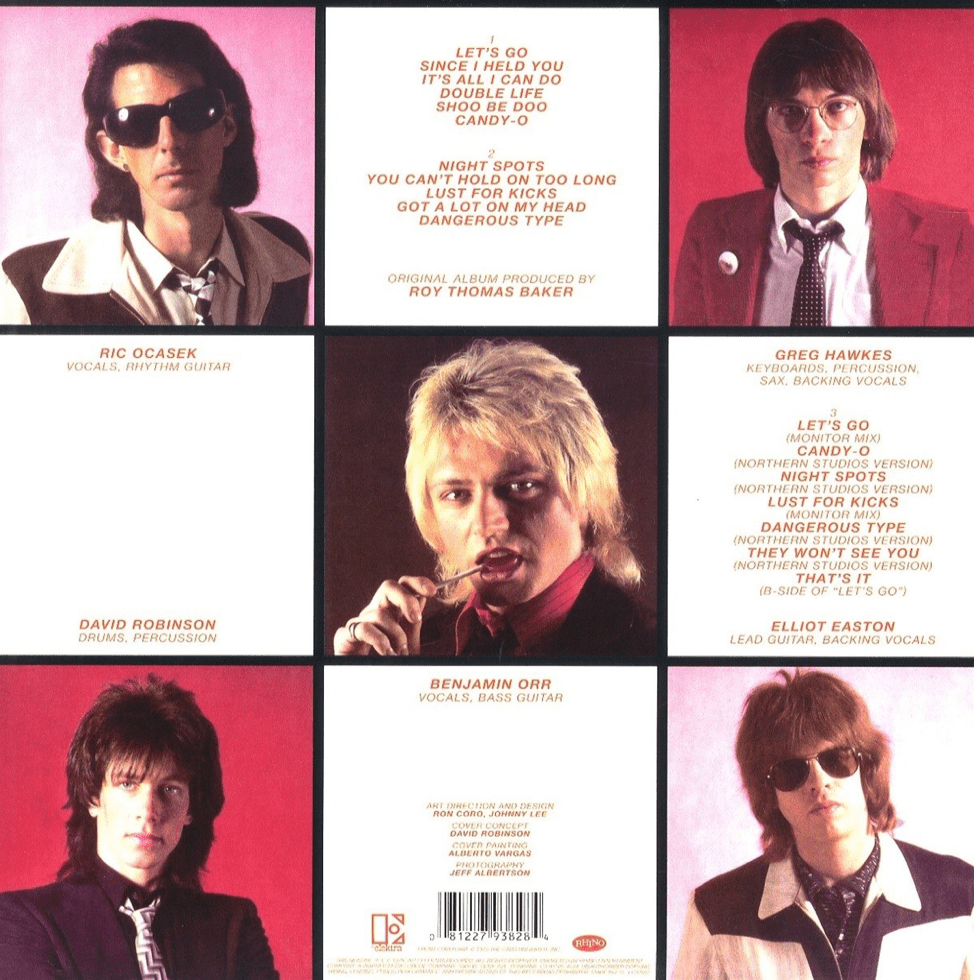
At the time The Cars were the most accessible and commercially successful club band in America. Based out of Boston, the lineup’s combination of new wave and pop, the vocals and songwriting of founder Ric Ocasek and the lead vocals of bassist Ben Orr formed the creative leadership.
But the backing band was also excellent. Incendiary guitar work from the phenomenal Elliot Easton and nervy, catchy keyboards from Greg Hawkes helped the band’s sound gain mass appeal. Lovers of real drumming on real drums, check out David Robinson on “Bye Bye Love” (and be sure to miss the entire 1984 Heartbeat City LP, for which Robinson reluctantly programmed a drum machine).
Is this the best debut album of the rock era? In 2022, it took a committee of ten Rolling Stone writers to rank the album 30th in this category, behind such luminaries as Cardi B, someone called “Eric B. and Rahim,” Frank Ocean…
…and Liz Phair, for chrissakes. (These geniuses also placed The Beatles’ Please Please Me 21st, and awarded The Ramones the top slot. Boston by Boston: Unranked. What a farce.)
Some of the actual best debut albums of the rock era include:
The Beatles – Please Please Me (1963)
Led Zeppelin – Led Zeppelin (1969)
Van Halen – Van Halen (1978)
Jimi Hendrix Experience – Are You Experienced (1967)
The Doors – The Doors (1967)
Fans of The Cars most often remember the record’s first three songs, “Good Times Roll,” “My Best Friend’s Girl” and “Just What I Needed.”
- From the opening bounce of the synth keyboard, the driving beat of “Good Times Roll” sets the tone for the music just ahead.
- Next is the big radio hit, “My Best Friend’s Girl,” which throws it back lyrically to 1950s’ teenage priorities (only with nuclear boots) – and then the story’s protagonist hits you with this memorable plot twist: “She used to be mine.” And that Easton solo. My god.
- “Just What I Needed” – Ask Siri now to play “Yummy Yummy Yummy” by Ohio Express and you’ll have the opening seconds of what became the other monster chart single from this LP.
All three were killer summer radio hits, album and concert successes, and then went on later to be swept up by Madison Avenue to sell hardware and electronics. (Oh, to be paid thrice – and handsomely – for your work.)
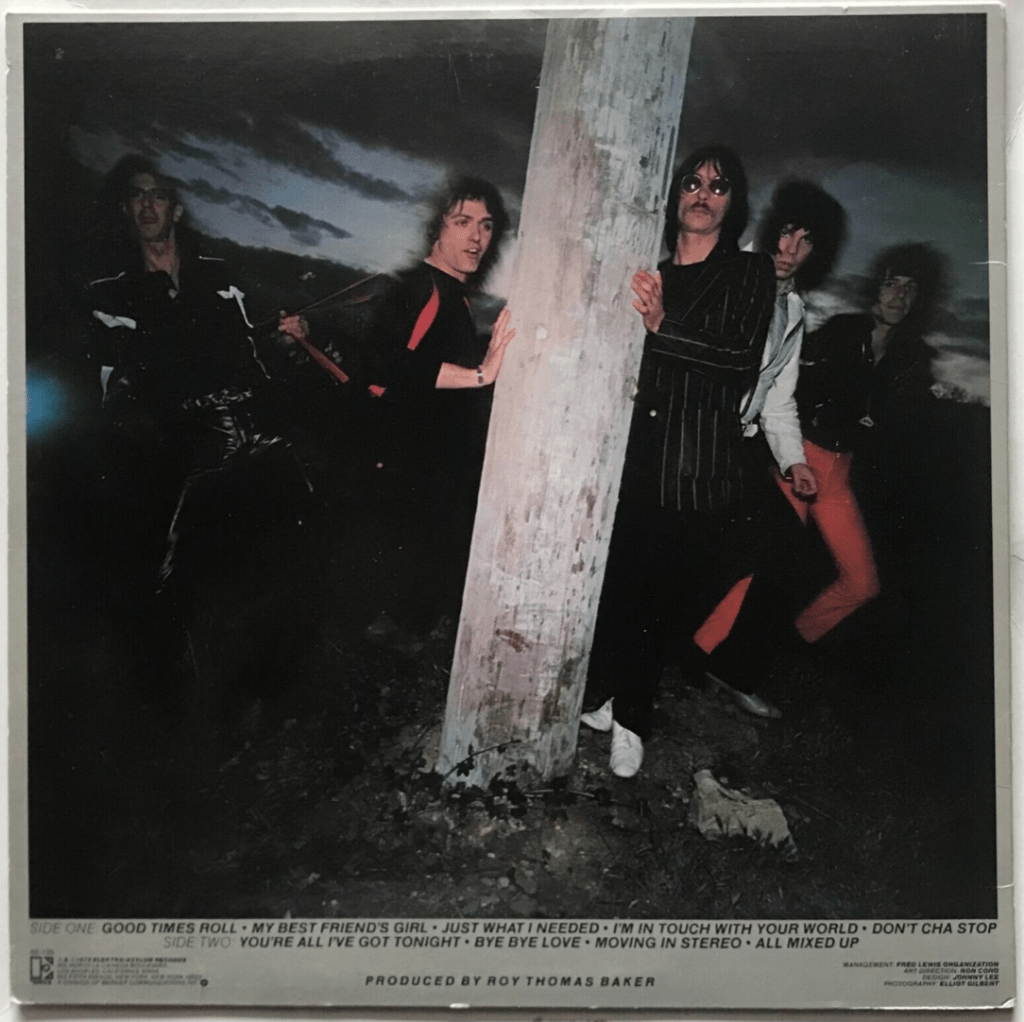
But really, let’s talk about Side Two, aka the final four tracks of The Cars:
- You’re All I’ve Got Tonight
- Bye Bye Love
- Moving in Stereo
- All Mixed Up
Ocasek wrote all four; Moving in Stereo is co-authored with Hawkes.
Could this be the greatest Side Two since Abbey Road? Because these four seamless tracks propel the action forward, as a whole greater than the sum of its parts, in a similar way that really only the suite on Abbey Road also does.
You’re All I’ve Got Tonight—Ocasek performed all of the vocals on Side One the record. On Side Two he sings the lead-off tune, “You’re All I’ve Got Tonight,” and thereafter bassist Orr takes over to close out the album.
Emphasizing simple lyrics and great guitar, “YAIGT” opens with a suspenseful pounding of drums. “I don’t care if you hurt me some more,” sings Ocasek, as our protagonist begins the story expecting some sort of retribution, before guitars and keyboards kick in.
Grab your headphones and turn it up for the solo that arrives 3:05. You can knock him, you can rock him. He don’t care… And then it’s immediately onto Ben Orr, without a break, for the next track —
Bye Bye Love — With his bass (and Robinson’s terrific percussion) leading the way, Orr takes the mic in the album’s most confident vocal performance. Hawkes steps forward with a keyboard solo break and a little later, Easton delivers yet another killer solo.
I attended Indiana University in the mid-80s and would be remiss if I failed to mention the excellent cover version of this song — “She’s always with some Sigma Chi…” — performed by Bloomington’s finest cover band back in the day, Rods & Cones (kudos to guitarist P.K. Lavengood).
“You think you’re so illustrious. You call yourself intense.”
And then as quickly as it arrived (and slipped into insane), “Bye Bye Love” vaporizes, straight into the next track…
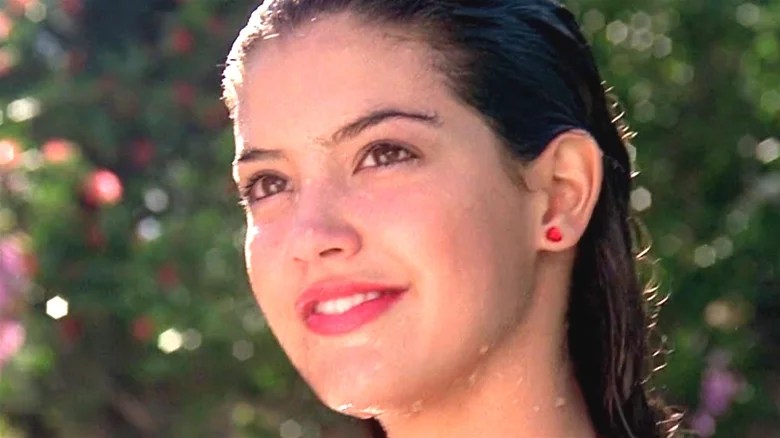
Moving in Stereo. Anytime an XM or an FM station plays “Bye Bye Love,” and lets it continue on to “Moving in Stereo,” well, right there’s a great DJ.
The second you hear the Hawkes ‘siren’ and Easton’s opening notes, the image it evokes is that of the iconic Phoebe Cates moment from Fast Times at Ridgemont High. And from there, this ominous, bass-driven epic – about advancing through this life in more than mono – lends a dark, cool vibe to the overall project. Orr’s brief bass solo, arriving late (3:57), simmers. It’s so easy to blow up your problems, yet — “It’s all inside of you.”
All Mixed Up. The ticking of time and a distant-sounding lick begin the atmospheric close of the album. In “All Mixed Up,” vocalist Orr strikes the lyrical balance between self-assurance and outright confusion. “She said leave it to me, everything’ll be alright.” A big, Phil Spector-esque drum break arrives out of nowhere — and in the fading seconds a Greg Hawkes saxophone solo completes the alienating effect.
And there you have it, 35 minutes and 40 seconds of masterful, totally fun, utterly original pop music… punctuated by one of the greatest album Sides ever.
I was the target age for this record — plus its superb follow-up Candy-O (1979). The band’s third album, Panorama (1980), was a step back (although Easton kills it on “Touch and Go”), and its fourth, 1981’s Shake It Up, had moments. All four corresponded perfectly with my high school years.
By college sophomore year 1984, the MTV revolution had oozed across the land, leaving behind a trail of Cars’ videos of diminishing nutritional value and far too many “Ric and Paulina” gossip columns.
The end point of The Cars for me was the band’s Heartbeat City Tour that same summer at Indy’s Market Square Arena.
Cars fans are well aware of the spectacle and ultimate failure (but not financial failure!) of the band’s 1984 summer tour. We witnessed a cold commercial endeavor in which the performers were content to stand still and simply recreate their studio sound note for note.
(One thing I’ve been amused to learn over the ensuing 40 years is that a surprising number of my school friends were also there that night — or they saw a different show on the same tour.)
I shouldn’t have been surprised. Perhaps by the ripe old age of 20, I had outgrown my high school heroes.
But back in 1978, The Cars were a band that walked on to heavy radio play — well-earned, mind you — but seemingly out of nowhere. [The group’s lineup was older than your average debut band: Ocasek was already 34, Orr 30, Robinson 29, Hawkes 26, Easton 25]
One day, no pop-cultural world included The Cars, unless you lived in Boston where they’d been busy honing their craft in the bars. And then “the next day,” they were the biggest thing going.
In retrospect, The Cars were the closest thing to a phenomenon or a “mania” that the kids at Memorial High School would have encountered (which is to say, not very close). Knowing about and owning The Cars early on was teenage currency—and the video era was yet to come. The band hadn’t yet dissolved into the sterile “perform the album note-for-note” operation that it was to become.
The band members went their separates ways in 1988.
It’s tragic that both lead singers are gone — Benjamin Orzechowski (aka Ben Orr) died at 53 of pancreatic cancer in 2000, and Ric Otcasek (aka Ocasek) left us in 2019 at age 75.
Before Ric passed, members of the The Cars did reform in differing lineups. In 2007, Easton and Hawkes joined Todd Rundgren in an offshoot project called The New Cars. Then in 2010, the surviving original members of the band reunited to record a seventh and final LP, Move Like This, which hit stores the following year. In 2018, the Cars were inducted into the Rock and Roll Hall of fame and performed at the induction ceremony – the band’s final performance with Ric Ocasek.
But the LP The Cars was, and is, consistently cool. It is that rarest of all monster hits that’s also universally accepted. The sportos, the motorheads, geeks, sluts, bloods, wastoids, dweebies, dickheads – they all love this record.
The Cars consisted of two lead singers, including a killer songwriter, and an ensemble of top musicians (world-class, in the case of guitarist Eliot Easton). As demos proved from the 1999 release of The Cars [Deluxe Edition] this was a unit that could take an Ocasek idea for a song’s structure and build it out amazingly well, to capture the musical moment – anxious keyboards, blues-rock rhythms and bass, slashing guitar theatrics and vocals that contained the best of the angst, quirk and confident cool of ’80s new wave.
In these writings I often find myself going back to the teenage years, to that stereo-equipped downstairs bedroom filled with great LPs and crammed bookshelves. The Cars was constantly on my turntable then.
If this isn’t the best debut record ever, I’d sure like to know what is.
 Stuart Wade
1 Comment