
 by
by Originally published in 2020
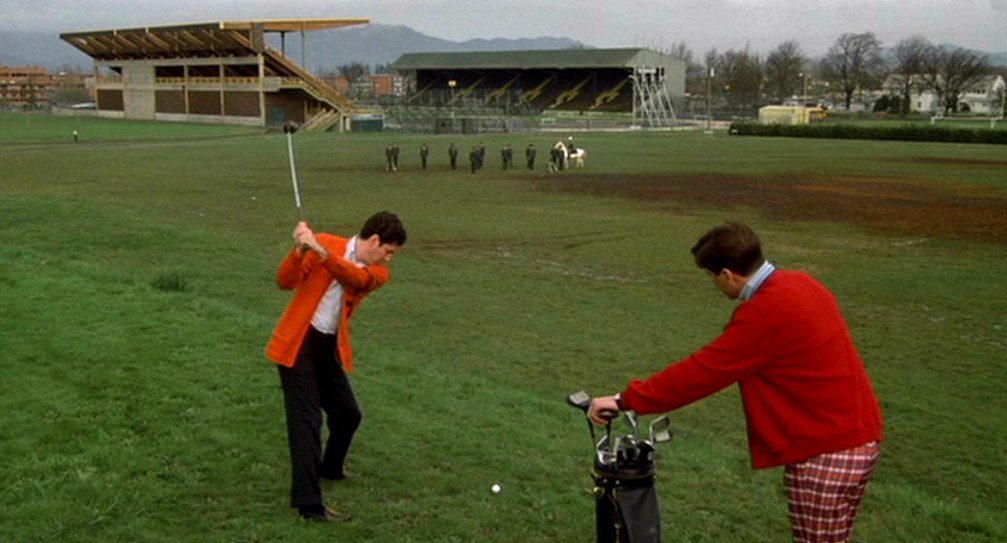
Got a feeling ’21 is gonna be a good year. Below is the result of about eight years of list-making… My annotated list of “formative” humor influences. Of course every list is subjective but I am seeking glaring omissions / any nominations to The Committee that you might make.
Faithfully Submitted,
Douglas C. Niedermayer
Sergeant-at-arms.
FORMATIVE HUMOR • Personal influences, 1968-The Present
Carol Burnett Show/Laugh In — Combined these, as they represent the beginnings of being able to stay up for a comedy show (after which it was bedtime). Mostly scattered memories — “Sock it to me” and “Missus-uh-Wiggins” — but I’ll crystalize a couple: Dan Rowan made my Dad laugh hard. That twinkle in Rowan’s eye was inspiring. As for “Carol Burnett,” everything Harvey Korman and Tim Conway did was funny to a young sprout. To this day, several friends and I still maintain huge affection for a signature Korman move — an over-the-top “stage bow” that his ham actor character Alfred Funt would perform (Whenever “Funt” would enter a scene, the audience would burst into applause, so he would break character and take a big bow before resuming the scene.) A stellar example is here at 1:52. Another here at 1:46.
MAD — Mad magazine, and its mascot Alfred E Neuman, was the entry point for non-kiddie parodies of current celebrities, TV shows and movies. There was the tiny cartoon-in-the-margins, Spy vs. Spy. There was Don Martin and his creation, Fester Bestertester. Each issue had a giant Al Jaffee Fold-In, in which a seemingly benign gatefold illustration, when folded back in on itself, would reveal a graphical “zinger” of a punchline. Possession of a Mad offered glimpses of the adult humor world to come. You knew something was funny, you just didn’t know why. Yet.
Comedy albums — One of the mostly parent-approved ways you learn about the adult world when you’re coming of age is via stand-up comedy recordings. When our son Ben was 11, he’d drift off to sleep to the Pandora “Jim Gaffigan Channel” he had created. In my day, it was the comedy album. During my formative years these recordings included performances by Bill Cosby, Bob Newhart, Steve Martin, and George Carlin, as well as a ten-inch 1950s Kermit Shafer “Pardon My Blooper” record my parents owned, and comedy albums from National Lampoon, Monty Python, Cheech & Chong, Richard Pryor owned by friends.
Monty Python’s Flying Circus — PBS stations nationwide began airing episodes in 1974–75. I was 11, the perfect age to be pulled into the lunacy. Even my freshman English teacher, Brother John Stout, seemed appalled but intrigued. Like Looney Tunes, Python slipped in just enough history and references that you absorbed a bit of culture without realizing it. The TV show was terrific, but the real sweet spot for me was the films. Holy Grail at the drive-in in 1975, Life of Brian in 1979 and especially The Meaning of Life in 1983. The fellas and I watched that one six or seven times during summer school.
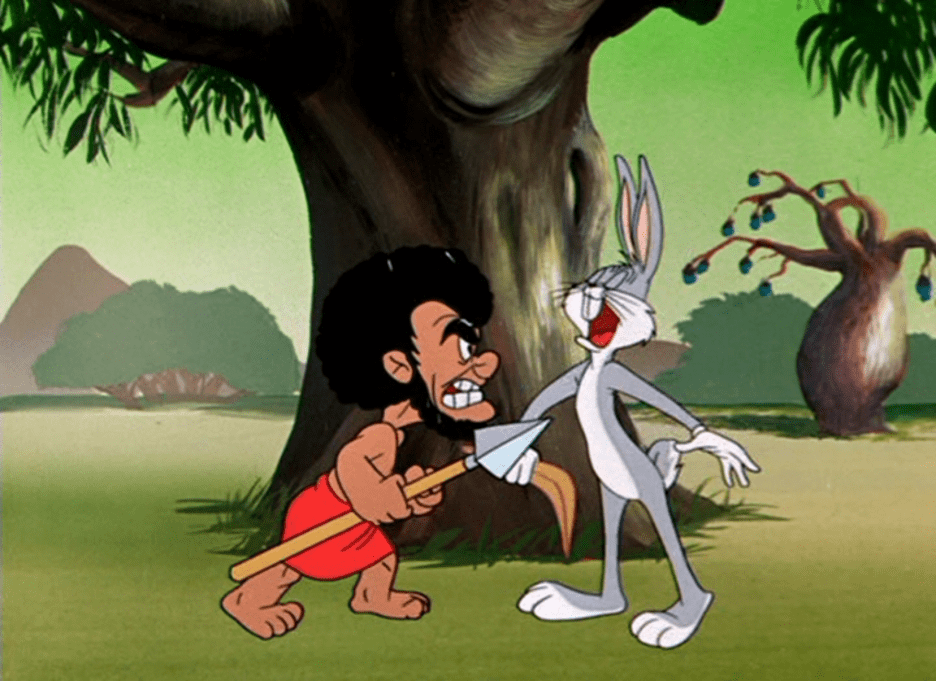
Looney Tunes and Merrie Melodies — Nothing and nobody beats the classic Warner Brothers cartoon… The one where Bugs encounters “Nature Boy” (who’s trying to shoot a poisonous apple at him through a blowgun), and Bugs calmly shoots it right back down NB’s throat. Or the one where Bugs and Daffy are Vaudeville performers. The crowd adores anything Bugs does and ignores Daffy. At the close, Daffy is dressed as Satan and blows himself up, etc. If there’s a funnier and more influential cartoonist than Chuck Jones out there, well then there’s hope.
Johnny Carson — Nearly 7,000 shows over 29 years, ending in 1992. Carson, Ed McMahon and Doc Severinsen were fixtures in American households after the late local news. My brother-in-law once summed it up perfectly. The sound of a happy 1970s childhood is drifting off to sleep upstairs while your parents laugh at Johnny Carson.
Talk-show guests — Robin, Pryor, Martin Mull, David Brenner, Billy Crystal… Moments, movies and TV roles, episode snippets and most of all, guest appearances on various talk shows loom large. I always looked forward to Leno as Dave’s guest. He was terrific with, “What’s my beef?” Don Rickles’ Tonight Show appearances and roasts were essential/formative.
The classic sitcoms — I’ll take “Cheers,” “Seinfeld,” “The Dick Van Dyke Show,” “The Andy Griffith Show,” “The Bob Newhart Show,” and “The Mary Tyler Moore Show.” “WKRP in Cincinnati,” “Barney Miller” are right there, too. Others including “Happy Days,” “Taxi,” “Soap,” “Welcome Back, Kotter” and “M*A*S*H” were influential but also spotty over the course of their lengthy tenures in the spotlight.
Assorted/random favorite episodes:
- The Peeper (Newhart)
- Turkey Drop (WKRP)
- Chuckles the Clown (Mary Tyler Moore)
- The Cheers where Coach and Sam go back to high school
- Any Andy Griffith with Ernest T. Bass
Young Frankenstein— Born in ’64, I missed the age cutoff for Mel Brooks’ Blazing Saddles, but barely. That’s fine, the older kids filled me in while shooting around on my neighbor’s driveway. So when my father took me to see the Brooks followup movie, Young Frankenstein (January 1975), also starring the underappreciated Gene Wilder (as Dr. Fron-ken-SHTEEN! and don’t mispronounce it), I wasn’t exactly sure what to expect. Filmed in black and white with glorious attention paid to the style of James Whale’s Frankenstein (1931) and Bride of Frankenstein (1935), it’s great fun on many levels. While Dad guffawed at the double entendres I couldn’t get enough of Marty Feldman’s updated take on the ever-faithful hunchbacked assistant, “EYE-Gor.”
Early SNL — Aside from just the sheer realization that this was not for our parents (as least, not mine), the debut of NBC’s “Saturday Night” arrived like a comet in October, 1975. The live sketch comedy dynamic delivered, as did the ensemble cast of previous unknowns, The Not Ready for Primetime Players. I could go many different directions, but will focus just on the list of characters created with perfect, odd originality by my favorite original cast member, Dan Aykroyd, who was only 23 when the show debuted:
- Telepsychic
- Leonard Pinth-Garnell
- Irwin Mainway
- Fred Garvin, Male Prostitute
- E. Buzz Miller (and Christie Christina)
- Jimmy Joe RedSky
- Jason (and his Old Lady, Sunshine)
- “Bassomatic ’76” pitchman
- Tom Snyder
- Jimmy Carter
- Nixon, looking at the portrait of JFK saying, “They’ll find out about you!”
- Yortak Festrunk, one of the Two Wild and Crazy Guys
- And of course, Elwood Blues.

National Lampoon (1978-1980) — Action Golf. Epic PJ O’Rourke essays. Pre-fame John Hughes stories. Boobage and doobage. Like an R-rated version of Mad, it was all too much for a wannabe hepcat like me. But I asked (and my parents permitted it) to pay for a subscription the edgy monthly during its second strong period (this one coming a little after early-70s staff writers like Michael “Mr. Mike” O’Donoghue, an all-time great, had achieved their NatLamp notoriety and moved onward and upward). Not to be overlooked: the NatLamp Specials, such as the Sunday Newspaper Parody and the 1964 High School Yearbook Parody, both brilliant.
Steve Martin — Steve’s emergence on the scene timed perfectly with my adolescent years. His comedy LPs, “Let’s Get Small,” and “A Wild and Crazy Guy,” the 1978 NBC Comedy Special (“Ray, Ray, Ray…”) his SNL appearances as Theodoric of York and Georg Festrunk, and his 1979 movie The Jerk all hit 15-year-old me squarely. The book Cruel Shoes and his clever noir send-up Dead Men Don’t Wear Plaid sent my friends and I scurrying in several fun directions as well. Steve went on a lengthy creative run in the public spotlight, culminating in Roxanne, that any modern comedian would kill for. His autobiography Born Standing Up is an enjoyable read. (I’m skipping the part of this writeup where I witnessed the 2017 Steve Martin/Martin Short Netflix special.)
Airplane/Naked Gun — Both still hold up, packed with some of the best slapstick ever filmed. The genius of the Zucker brothers and Jim Abrahams was casting serious actors like Leslie Nielsen, Lloyd Bridges and Robert Stack, then letting them play everything straight.
Animal House — Starting with the fact that I was 14 and persuaded my mom to bring me to the theater to gain “parent or guardian” access, to me National Lampoon’s Animal House is the world’s overall #1/#1 draft pick formative humor item of “pre-driver’s license” adolescence. Preppy fashions, fraternal pimpovers, Greek Council pressure: all of it was waiting to be lived for real, at a Large Midwestern University. This and the Caddyshack scripts inform many phrases my friends and I still use daily. “Everybody thought the Stork was brain-damaged.” The Stork was National Lampoon editor Doug Kenney, who wrote and produced Animal House and Caddyshack before his untimely demise at 33.
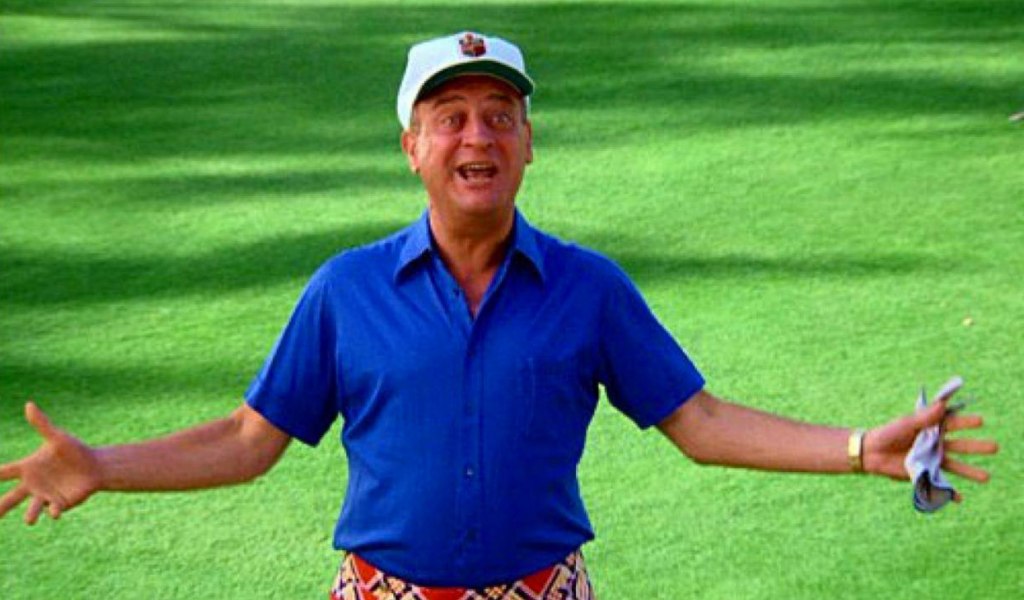
Caddyshack — The most over-quoted comedy of my lifetime, Caddyshack is now more than 40 years old. Harold Ramis, Doug Kenney, and Brian Doyle Murray (who had actually caddied at Indian Hill Club in Winnetka) fashioned something like a class-conscious Marx Brothers script, and it delivers fresh laughs every time. Judge Smails, Al Czervik, Ty Webb, Carl Spackler, Danny Noonan, The Bishop, Spaulding, Dr. Beeper, Mrs. Haverkamp — even the Gopher — each character has something previously under-observed going for him. Something my friends and I must immediately share with one another.
The movie also features the worst dramatic subplot of all time: Has young Danny knocked up Maggie, the Irish waitress? (Spoiler: who the fuck cares?) I could go on for days, but gotta stop here. As the bishop said, “I’m just a man!” …”Then you don’t get no Coke!”
Harold Ramis: Stripes, Ghostbusters & Groundhog Day — Ramis pulled off a rare combination as writer, performer and director, and he was consistently funny in all three roles. He was Russell Ziskey in Stripes, Egon Spengler in Ghostbusters and the creative force behind Caddyshack, Vacation and Groundhog Day. What stuck with me was his balance. The straight man who still nudged the absurd forward. His characters never chased the joke, they let it come to them. That restraint, paired with sharp writing, made everything land harder.
And Groundhog Day (1993) is an all-time classic. I had forgotten how much I enjoy the young married couple who think Phil Connors is the cats’ pajamas. It’s sweet and absolutely brilliant, and I will probably watch it again tonight. (He says, un-ironically.)
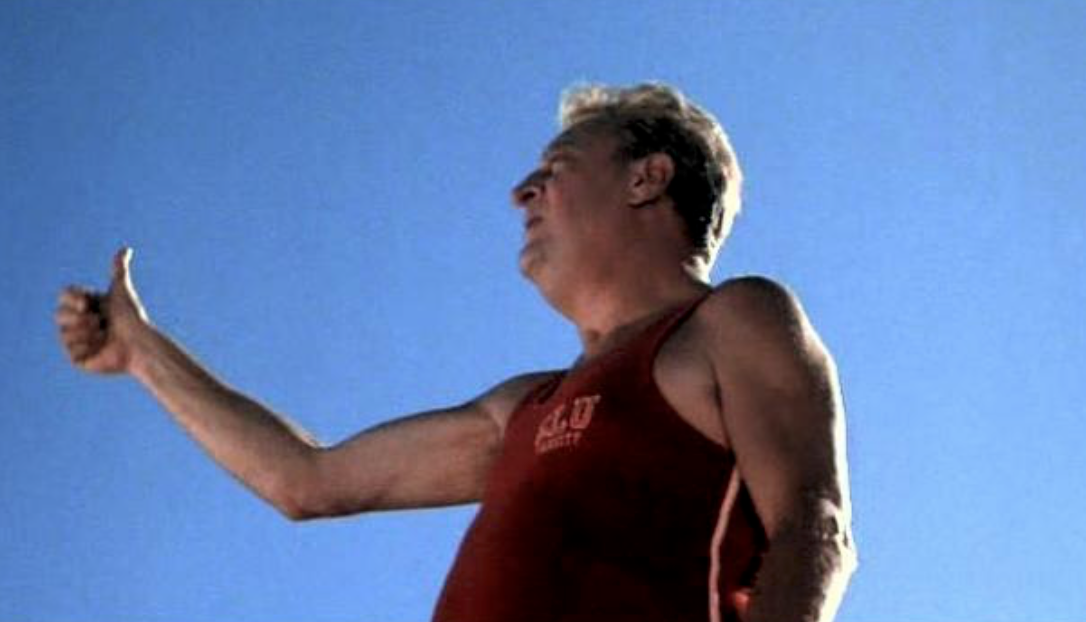
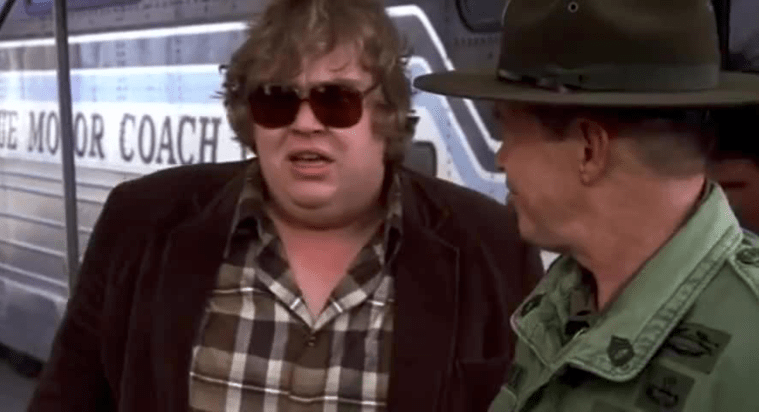
Below: Dewey Oxburger in Stripes: “How’s it goin, Eisenhower?”
Woody Allen: Play It Again, Sam, Bananas, Annie Hall, Love and Death and Without Feathers — We got one of the first Sony Betamax recorders, roughly the size of a Delta 88, and I used it to study Play It Again, Samand Bananas on repeat. Howard Cosell calling a banana-republic assassination like a prizefight is still comedy gold.
Love and Death might be the best joke-for-joke hitter in his catalog, and Without Feathers belongs in that conversation. At the time, his work felt sharp, original and unmistakably his own.
“The Muppet Show” — Syndicated, weekly variety show airing around 6:30 p.m. Saturdays in most markets. Usually hosted by an actor or celebrity playing himself. Really well written. Loved the Chef, Beaker, “Pigs in Space,” and of course, insult comedians Statler and Waldorf. The memories of this series are mostly during high school. I loved those cold winter Saturdays circa 1979-81:
- We had a fire burning perpetually in the fireplace, everyone wearing multiple layers up and two down
- Dad was without doubt going to be reading some obscure British military history book; Mom puttering in kitchen
- I would make chocolate-chip cookie dough, sometimes actually baking the chocolate chips [Later add visits by buddies Jim, Wanny, Mark, Mac, Billy or Bill AKA “Foz”]
- These viewings usually wrapped around an appearance in 1970s-80s Indiana, by the Farm Bureau mop lady “Martha,” and an IU Hoosiers basketball game
The Blues Brothers (1980) and Trading Places (1983) — John Landis’ big-budget Chicago comedy works so well because of the musical numbers (which revived the careers of Aretha, James Brown and Ray Charles) and not so well for the inane plot. Still I loved it then, and I’ll stop past it now if it’s airing on The Superstation.
Landis, whose career got going when he directed The Kentucky Fried Movie in 1977, again struck box-office gold with the holiday vibe of Philadelphia-based Trading Places. The financier Duke brothers (Ralph Bellamy and Don Ameche) cause a blue-blood, monied twerp in their employ (Dan Aykroyd) to lose everything one Christmas, while they groom a homeless con (Eddie Murphy) to replace him.

The script’s class jokes are pointed and the performances smart and funny, as Trading Places explores the time-honored “nature vs. nurture” debate. A close buddy and I still to this day will quote the scene in the prison lockup where Murphy’s “Billy Ray Valentine” lies to the two giant convicts with, “The phone in my limo is busted…!”
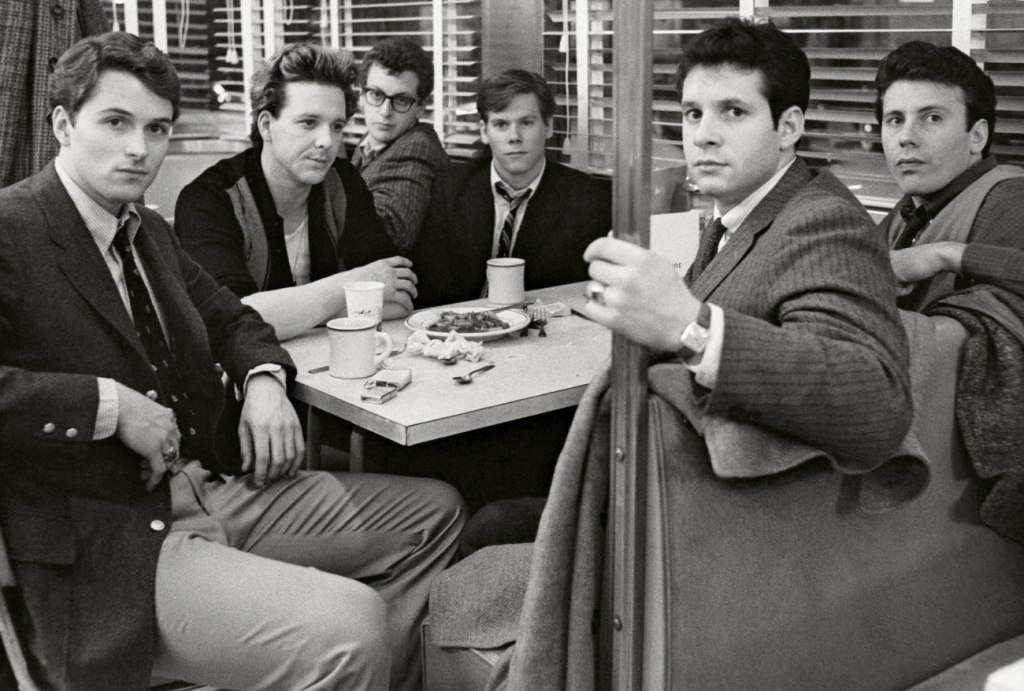
Diner — I was 18 and grabbed a Rolling Stone to learn of this observant comedy about a group of buddies on the verge of real-world adult responsibilities in late ’50s Baltimore. Wonderfully cast (Tim Daly, Mickey Rourke, Daniel Stern, Kevin Bacon, Steve Guttenberg, and Paul Reiser) and played, Barry Levinson’s quiet tale works because of the unexpected, and precise attention to detail. The influential script nails what guys talk about, what they value. When it comes to choosing a spouse, YES, basic knowledge of NFL franchise history matters. OF COURSE, the proper sorting of record albums should never be taken lightly. The movie soundtrack is killer, too.
This is Spinal Tap — The progenitor of the mockumentary gave us Nigel Tufnel AND Christopher Guest, and an ensemble so rich in characters and bits that it never seems past its sell-by date. Its influence is everywhere.
I enjoy but don’t revere Waiting for Guffman and the other Guest mockumentaries, but Tap is the granddaddy of ’em all. Special shoutout to the late Fred Willard, whose genial airbase tour-guide and the band name he invokes (“Four Jacks and a Jill”) is *mint*. It’s worth pausing on Guest’s achievement. He has created a comedy genre that now informs half the sitcoms on television.
[Guest’s 1989 directorial debut, The Big Picture, is affectionate, wise and the story (Kevin Bacon is a promising director who thinks he’s just gotten his “big break”) sharply lampoons the blind absurdity of show business. The movie (not a mockumentary) is hard to find today, I looked, but it’s a gem. Don’t miss Martin Short as self-styled superagent, Neil Sussman.]
Mid-period SNL (Chris Guest/Harry Shearer/Eddie Murphy/Martin Short) — After the first SNL decade, after Lorne Michaels left the show (replaced briefly by Dick Ebersole) and then returned, the cast offered an interesting split: Eddie Murphy’s explosive star power versus skits crafted by Christopher Guest, Harry Shearer and Billy Crystal. It was an odd marriage yet it produced memorable comedy over a multi-season span, roughly 1980-1984 — including masochistic security guards Willie and Frankie, Mister Robinson’s Neighborhood, Short’s SCTV characters Ed Grimley and Jackie Rogers, Jr., The Minkmans and Senor Cosa. All noteworthy personally, because of the collegiate timing.
NB: Eddie Murphy probably deserves a full call-out on this list. Only 19 when he broke in, his impact was immediate and enormous. Murphy got an entire generation thinking about sharp humor, about standup, and improv… and the difficulty of sustaining all of it — the energy, the fame and the massive audience. I won’t soon forget the odd feeling of disappointment upon hearing the news that he had stormed off after losing a Supporting Actor Oscar for “Dreamgirls.” He’s someone you find yourself pulling for and the idea that bitterness had consumed him said so much about how he views himself and his place in the pantheon. It’s good to see him back in action lately.
Albert Brooks — Modern Romance (1981), Lost in America (1985), Defending Your Life (1991) There’s something oddly therapeutic about watching an Albert Brooks character agonize over “Mercedes leather” versus real leather, or whether his BMW 325 looks like a turd next to the 750 parked nearby. Brooks built his smart-comedy niche around the all-American neurosis of comparative unhappiness — the relentless absurdity of wanting what we cannot have (or what others do have).
In Lost in America, Brooks wishes aloud that the colleague who ‘stole’ his promotion will have his new boat sink and be eaten by sharks. In Defending Your Life, he’s devastated to learn that in a past life he’s actually been eaten by a wild animal himself, while an acquaintance discovers she was Prince Valiant. In Modern Romance, he plays a sad-sack film editor who essentially stalks his own girlfriend. He breaks up with her in the opening scene, then spends the rest of the movie expending manic energy trying to win her back.
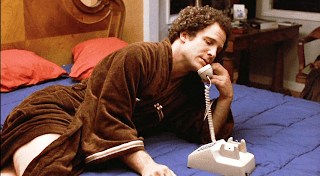
“God, I have so many great albums. I love my albums…”
Brooks’ anti-heroes are pathetic and funny, yet they keep pushing forward through futile material comparisons, bungled salary negotiations, and the abject terror of public speaking. They suffer humiliating, often hilarious defeat — and plod on anyway… And that’s the whole point.
SCTV — Second City TV on its worst day surpassed anything Saturday Night Live could hope to achieve. A shoestring budget and the demand to write multiple episodes months before production forced SCTV’s writers to develop their craft. Harold Ramis’ experience pushed series head writer Dave Thomas, creating healthy competition and character-driven work that had to stand apart from real-world events. When you’re scripting a fake newscast six months out, you have no choice but to create it from whole cloth.
“Play It Again, Woody.” No SNL writer from the last 30 casts could even get in the same area code as this terrific parody:
- Part 1 here: https://youtu.be/8GqbCrsfrfs
- Part 2 here: https://youtu.be/QvB5Ch0uN3U
From the SCTV “Midnight Cowboy II” episode, “Mel’s Rockpile,” a Bandstand-style skit with Eugene Levy as a cognitively diminished Dick Clark, delivers a punk-rock episode where Mel is eventually trampled. An early version of Martin Short’s awkward “Lawrence” character is interviewed, as one of the kid dancers. John Candy also kills in this sketch, as the uncomfortably nervous ‘Stefan Slurry from ‘Pre-Teen World'”. Amazing head-nodding and constant eye-blinking in a Candy performance for the ages (okay, slight exaggeration).
And finally: SCTV signs off (remember when television channels would actually sign off for the night?) with the “Mel Torme National Anthem/Signoff” – 1:28 of comedy gold.
The series may have been less high-profile or popular than SNL but its influence remains large. SCTV is huge on the formative humor lineup, however, it took some time until I was able to actually see the series. This is because stateside, the shows aired immediately after SNL in larger NBC markets (and not in mine). As a result, I wasn’t able to see many episodes until after I arrived to campus, and a larger NBC affiliate.
I’d be remiss if I failed now to mention the formative-humor magic of the ultimate viewing room of my later youth: Upstairs at Emery’s House, 1983-1987. My fraternity brother Jon’s home in Bloomington featured an expansive, upstairs “man fort” — billiards, a video setup and a revolving cast of FIJI brothers who spent many a weekend there. I owe the Emery household for my first exposure to SCTV and a long list of terrific comedies, classic films, and TV shows I might never have found otherwise.
“Late Night with David Letterman” — At its peak from 1985 to 1989, Late Night was the most disruptive, inventive and downright authority-challenging comedy show anyone had ever seen.
The show, hosted by a favorite son of Indiana, is probably the single greatest formative-humor influence on Young Adult Me. (Factored into this, the heady feat of having one of my PR clients on the show. In May 1989, I was able to spend 48 glorious hours in and around Rockefeller Plaza Studio 8H, leading to my client’s “Late Night” appearance. He was booked as an episode’s final guest with a live “sporting goods demo” that Dave simultaneously participated in, and mocked. I had a lovely time and got to see Kathleen Turner, Dana Delaney, Jeff Altman and other 80s faces.)
“NBC-era Dave” (1975-1993) encapsulated his rise and peak years. A recent re-run package on BRAVO reinforced the notion that no one has been able to duplicate the brilliance of those early seasons of “Late Night.” I realize, it was a time and place. But the will was strong every Monday through Thursday at 12:30 a.m. during my undergrad years (1983-86), to drop whatever else was happening on campus and find the other five like-minded “Dave guys” in the fraternity to watch together. For a representative taste of the show at its peak, check out a full episode from Thanksgiving 1986, The Late Night with David Letterman Second Annual Holiday Film Festival.
The CBS show never did it for me.
Still, “Late Night with David Letterman” was a hell of a run… groundbreaking material in comedy TV and appointment viewing for TwentySomething me.
Spy magazine — SPY enjoyed roughly 2.5 years of near-perfection before it got drunk on its own success. Aloof, cruel, and media-obsessed, it changed magazine journalism by committing to celebrity takedowns and scandalous subject matter other publications wouldn’t touch. Its peak year was 1988, when I was 24 and working at a downtown Chicago PR agency — the right age, business and nearly the right city to fully appreciate its irreverence and gossip. I still have a few copies and am proud to say I sold a handful of ideas to the Undead, post-relevance version of Spy in 1996. That and a dime will get me a cup of coffee.
“Seinfeld” — “Let me tell you why my series in the ’90s was so good, besides just an inordinate amount of just pure good fortune,” said Jerry Seinfeld in 2018. “In most series, 50 percent of the time is spent working on the show, 50 percent of the time is spent dealing with personality, political, and hierarchical issues of making something. We spent 99 percent of our time writing. Me and Larry [David]. The two of us. The door was closed. It’s closed. Somebody calls. We’re not taking the call. We were gonna make this thing funny. That’s why the show was good.”
Recent attempts by keyboard heroes in social media to cancel Jerry Seinfeld or diminish the series can all go pound sand. It’s still the best sitcom ever, and it gave rise to Larry David’s brilliant and exasperating followup, “Curb Your Enthusiasm.” Seinfeld had once pitched a way for the series to end, Jason Alexander told media recently. “It would be a regular episode, and we would be in the coffee shop afterward talking and talking and talking, until we ran out of things to say … and Jerry would say, ‘That’s enough.’”
1990-93 SNL seasons (Dana Carvey, Phil Hartman, Jan Hooks, Mike Myers, Dennis Miller, Kevin Nealon with young David Spade, Chris Farley, and Adam Sandler) — The only other truly great era of the show in my opinion: Motivational speaker Matt Foley. Dennis Miller (the greatest “Weekend Update” host ever, and it isn’t close. Who else could take the bathyscaphe down into the Marianas Trench of references the way Miller could? A highly subjective list of oft-cited, Favorite Miller References of mine includes: Topo Gigio, the Zapruder film, Tenzing Norgay, Blanche DuBois and Bob Crane). “Coffee Talk with Linda Richman.” Dana Carvey as both George H.W. Bush and Ross Perot, with Darrell Hammond as Clinton. The Chippendale’s audition sketch with Patrick Swayze and Chris Farley. Wayne’s World. Sprockets.
And for my money the peak skit of them all, from December 1990: “The Carl Sagan Global Warming Christmas Special” with Mike Myers as Sagan, Tom Hanks gloriously sending up Dean Martin, and Carvey’s spot-on Paul McCartney.
I stopped being a regular viewer around 2003. If forced to pinpoint the fateful moment, I can cite the first few times that the Weekend Update anchors suddenly began to break character to laugh at their own jokes. The show has become what it once lampooned so effectively: Establishment. I could be wrong. You’re invited to persuade me otherwise. I’ve missed at least the last two full cast eras, so perhaps SNL today isn’t safe. Perhaps it isn’t partisan. Perhaps it isn’t utterly predictable. Change my mind!
The Larry Sanders Show — In the recent Judd Apatow documentary about the late Garry Shandling, when Shandling turned away from a reputed offer to succeed Johnny Carson during the ’90s late-night wars involving Dave Letterman and Jay Leno, Shandling’s journals seemed to suggest that he was doing so in pursuit of Buddhism.
Others have suggested he turned away from becoming the next host of “The Tonight Show” not as a higher thing, but rather because he had already begun moving toward the fictionalized version. “Larry Sanders” was something he saw as being better and more original, and he was right (but he wasn’t trying to achieve Nirvana). What Shandling ended up creating was ahead of its time, sharp and closer to reality than Dave or Jay could ever have imagined — an HBO mockumentary comedy which brought to life an insecure talk show host and the hired staff trying hard to maintain his equilibrium, along with their own employment.
For six seasons, ”Sanders” was must-see TV, brilliantly made with exceptional primary characters — Rip Torn as Larry’s all-knowing Take No Prisoners producer, Artie, and Jeffrey Tambor as Hank Kingsley, Larry’s loyal, buffoon sidekick. The series was timely, relevant and wickedly on point from the first episode to the last.
**********
Also receiving votes: 1) Might write about, later. 2) Somewhere on the list, but would place below Pantheon level:
John Hughes, The Good Stuff only — which to me would include Sixteen Candles, Breakfast Club, Ferris Bueller, Weird Science, Planes Trains and Automobiles, Vacation and Christmas Vacation. Hughes has his detractors, but I’m not one. I think it’s because of timing. I knew his classic essays, “My Penis” and “Vacation,” from having been a National Lampoon reader. Then when I got to Chicago, I saw both Ferris and Weird Science — each filmed there (the latter movie, I viewed in the Water Tower Theater complex, a few steps from where one of the scenes takes place which brought the audience into a small frenzy).
Plus, he’s an ad guy from Chicago who “made it.” Double-plus, he wrote The Great Outdoors, which if you haven’t seen… Go to it! One of the all-time great Dan Aykroyd roles. So yeah, I choose on balance, to remember John Hughes fondly, and to sidestep the Curly Sue / Home Alone / Uncle Buck era.
Cameron Crowe — Fast Times (Dir. Amy Heckerling); Say Anything, Singles, Almost Famous
Bosom Buddies and the young Tom Hanks in general
Peter Sellers (especially the Pink Panther movies)
South Park
Mike Judge: Office Space, Beavis & Butthead, King of the Hill — Aside from the manic Cornholio era, a little bit late to call it Formative. Still, great stuff. A favorite detail from Office Space, The Bobs are each wearing Medic Alert bracelets.
That Thing You Do (Written just after the 2020 death of Adam Schlesinger, prolific songwriter and Fountains of Wayne co-founder, who wrote the film’s soundtrack.)
Released in 1996, this one also arrived a little late to qualify as Formative Humor, but belongs here anyway.
There’s a lot to love about the entire movie. It’s funny, sweet, and observational — not a bad line, scene, or character anywhere. Everything Steve “Lenny” Zahn says kills me (“Know what these are? Presidential flash cards!”). It just makes me smile all the way through: “A man in a really nice camper wants to put our song on the radio!”
Tom Hanks wrote the script during the production of Forrest Gump, reportedly worried about overexposure and seeking something smaller, an ensemble piece. He had period girl-group songs in mind for the other TTYD musical groups, but rights clearances proved too expensive so he brought in Adam Schlesinger and commissioned originals instead. Schlesinger delivered brilliant work that is both retro and vibrant, modern.
It’s a tribute to Schlesinger’s ability, and a rarity in movies, that the signature soundtrack tune, about a fictional hit song, sounded exactly like a hit song.
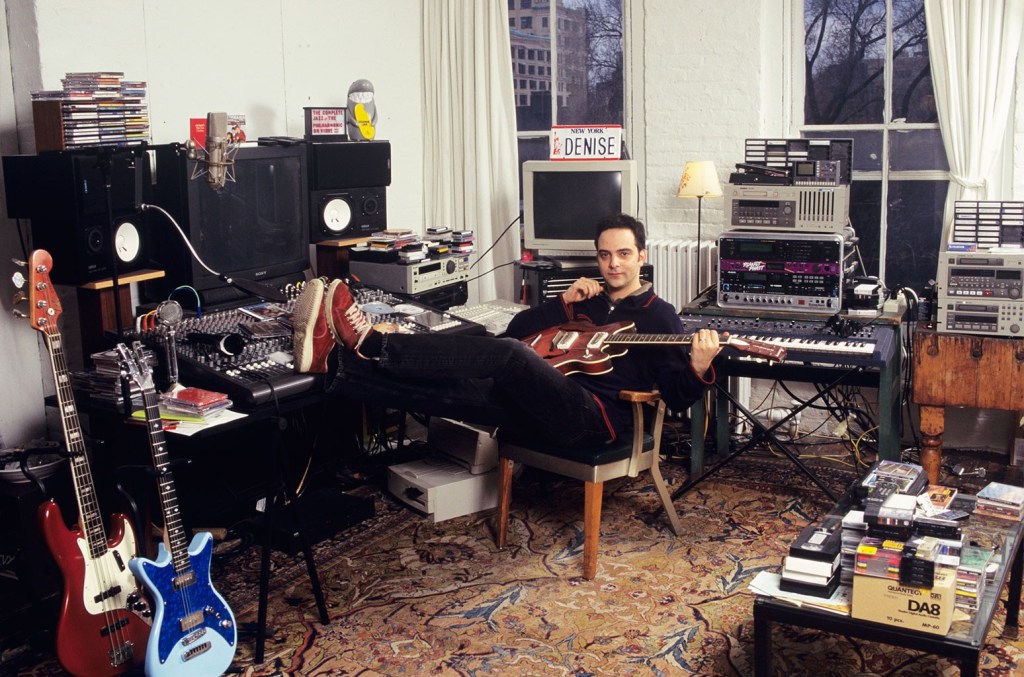
Schlesinger, a gifted genre “narc,” seems not only to have had talent but also the ability to poke fun. I always thought the other acts/songs on the That Thing You Do soundtrack were dead solid perfect. “Mr. Downtown,” “Drive Faster,” and the song by the Supreme-y girl band The Chantrellenes, are all really good songs, but all of them are great sendups as well. If you listen to the words of the girls’ song, “Hold My Hand, Hold My Heart,” it’s such utter tripe – like written by a 13-year-old. But so good! Just a half-tick below the real thing.
Mad Libs; Wacky Packages
Celebrity Roasts
Jonathan Winters/Robin Williams — Winters was a prodigious talent, but was “bipolar” and spent many years traversing mental issues. His spontaneous comedy defied predictably — here he is armed only with a stick, with Jack Paar back in 1964. Robin Williams was beloved and his demise shocked many; his big breakthrough hit “Mork and Mindy” was huge, but sort of a dippy show. Nevertheless, he had a huge following and brought massive numbers of people to think about improv comedy.
The Princess Bride
Fletch
Rushmore
Assorted ’80s comedies: Risky Business, Revenge Of the Nerds, Making The Grade
 Stuart Wade