
 by
by On Bobby Knight and Being a Hoosier
Robert Montgomery Knight died at age 83 on November 1, 2023
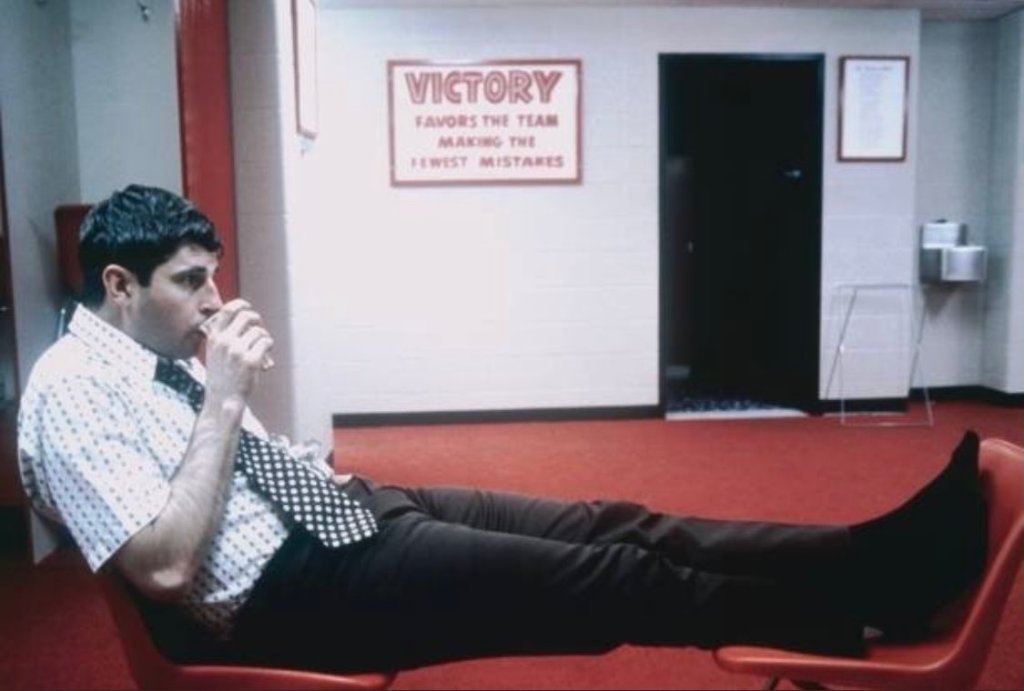
Fate placed me back in Bloomington, Indiana on Coach Bob Knight’s final day on the planet, in the IU athletic offices, no less.
The next night I was inside Assembly Hall, and although there was no tribute during that exhibition basketball win (a memorial is set for later), the crowd roared for a video replay of “RMK’s” final Hall appearance back in 2020.
His basketball legacy is undeniable and it starts with the motion offense. Following closely would be the preparation and his exacting, relentless focus on execution not just on the basketball court but also to get the young athletes who played for him well equipped for life beyond the game.
Standing 6-5 and 250, Coach Knight also imposed a larger than life presence on my home state and you could argue that to this day, the distinguishing traits of RMK are ingrained in the DNA of Indiana.
The motion offense. His lasting creation, the motion offense has to this day a huge influence on the game of basketball. After his first season at Indiana, Knight attended the 1972 Olympic Trials, where he and Cal head coach Pete Newell together talked through a mix of the Princeton back-cutting style with an offense Knight has been using at West Point that he called “reverse action.”
The two men established a set of rules for this new approach Knight dubbed “motion” that focused on spacing and constant movement. What made the offense so successful was its creativity and built-in adaptability. “Motion” emphasized the importance of reading and reacting to what the defense was giving you. Because of its basic rules the motion Indiana was going to run against you was predictable. You knew what was coming; the problem was stopping it.
“I don’t believe in luck. I believe in preparation.”
Preparation and discipline. Yes, there was the demanding coaching style, but Knight instilled discipline and a strong work ethic in his players, which translated into success on the court. Indiana and NBA alumnus from the 1990s, Brian Evans tells a great story illustrating this:
“The [Michigan Wolverines] Fab Five, their sophomore year, my redshirt freshman year they’re coming to town. We are ranked number one and undefeated in conference they were third in the country.
People still text me when it’s on because I played well and it was such a big game.
Coach never allowed us to underestimate anyone and always put a lot toward the same level of preparation, no matter who we were facing. But every now and then, like in this game, the energy and atmosphere felt different.
Two days prior to a typical game, we’d begin to prepare for the other team’s offense. We’d spend 20-30 minutes watching film of our upcoming opponent followed by a typical walk-through of the other team’s plays and sets on the basketball court.
However, for this particular game, he showed us one play, then we went out onto the court and walked through just that play for like 25 minutes. Then back into the side room for the next single Michigan offensive play. And then another.
We’re all young, remember, and students like anyone else in college and we’re all thinking, ‘We’re going to be here all night.’
We had never prepped like this before. For three days we went over the game plan.
I just remember in the first five minutes of that game I was going to be guarding Juwan Howard who is standing on the low “block” area underneath the basket. So I’m standing with Juwan as Jalen Rose brings the ball up the court.
Jalen’s got the ball on the top. He holds up a fist, he’s calling the play, and Juwan who is on the block is just kind of moving around, but he stays down on the block.
So I turn to him and say, ‘Juwan, you got to go to the elbow.'”
Now to the trademark intensity. The Knight reputation was earned.
The negatives were deserved, and nearly all came past the peak. Anybody can make the lazy-sportswriter case for all of it, and they wouldn’t be wrong. (Most who covered him would never admit to appreciating that they got a close-up view of this one-of-a-kind talent, flaws and all.)
But another way of looking at the exact same behavior: You are extremely competitive, you’re uncompromising and certain that you’re going to outwork and outprepare the opponent. (Anyone who’s ever competed in a workplace knows that a “closer” can get away with murder, as long as he’s racking up wins.)
He didn’t seem to mind burning bridges with coaching peers, broadcasters or officials — or belittling reporters with his antics which were often, “message correct” but definitely, “behavior questionable.”
The 1985 season, aka the Season on The Brink, I had the unique experience of sharing a room on campus with one of the student managers for the basketball team. First in the gym and last ones to leave, these student volunteers worked extremely hard and were as dedicated as any varsity player in assisting the athlete with extra access, practice or workouts.
This roommate would share stories from practice, a few of which ended up being included in the best-selling book of the same name for obvious reasons, and others that weren’t — also for obvious reasons.
- One such tale that did make it in: After a tough loss the day before, our friend told us, the players had been dreading that evening’s practice. Coach called everyone to the center circle. To their surprise, he brought out a fly-fishing rod and began casting, and talking — using the opportunity to reflect about not only basketball, but life as well. There would be no punishing extra work that night; just homespun philosophy.
Speaking of fly-fishing: A Texas acquaintance who grew up in Lubbock told me that in 2002, when he and his twin brother were in their mid-20s and avid fishermen, his brother cold-called Coach Knight’s Texas Tech office. He left a voicemail with tips on the best local fly-fishing spots. The next morning, Knight called him back. A couple weeks later, this guy was driving with Bob Knight to a stream in New Mexico. There, Knight focused on casting, catching fish and telling stories. Through those shared hours fly-fishing, the young Texas Tech fan forged a unique bond with the coach. From that point on, he had access – any tickets from Red Raiders athletics were his for the asking.
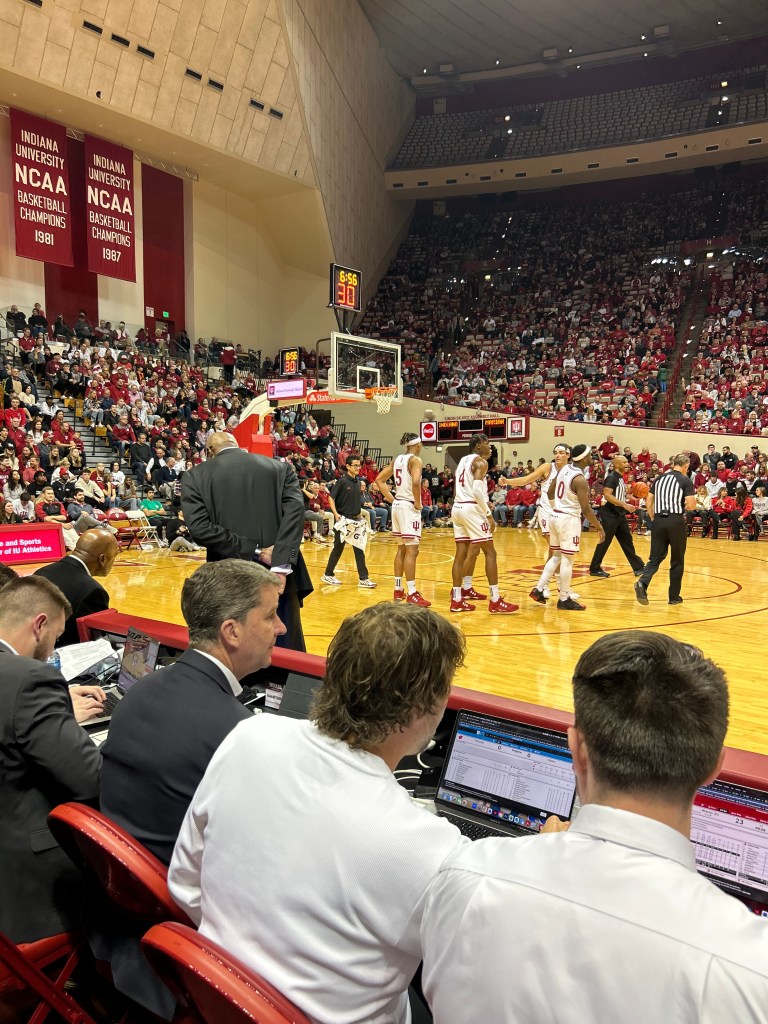
My all-time favorite Bob Knight story: There is one story, though, that I heard many years later from another source that has stuck with me for four decades. It was not from the same season and does not appear in any book that I am aware of.
- Charges in the aisles, 1983. After a particularly horrible, blown-lead loss at Minnesota or Iowa, aboard the charter flight afterward Knight — upset with a lack of toughness/physicality he perceived in the night’s loss — had the players practice taking charges at full speed in the aisle of the aircraft. (Coach later hung a “1983 Big Ten Champs” banner after the team clinched the conference title, sweeping their final three home games despite Ted Kitchel’s late-season injury.)
There it is right there, the madness and the “genius.”
The unsung stuff regarding graduating his players, donating 100% of his shoe-deal money to IU’s libraries, publicly bashing the impositions that NCAA and conference broadcast partners placed on student-athletes, and myriad other deeds never needed a publicist. It is just as real as all the other stuff.
“If you get caught cheating, they should shoot you.
Because you’re too dumb to be alive.“
The guy absolutely hated cheaters. He was unflinching on this and not interested in compromise, to a fault. He never cheated. (Not even the great John Wooden can match that claim. Google “Sam Gilbert UCLA.”)
This is why Kelvin Sampson is so despised at IU.
It’s also why IU hates Kentucky with the fire of a thousand suns. The Wildcats were bootleggers, gamblers and cheaters… and they were right across the Ohio River —wolves at the door!
They handed IU and Knight the program’s most bitter loss, in the 1975 Elite Eight, and yet they’re still whining about that Joe B. Hall headslap.
All of this helps explain the burning intensity of the IU-UK rivalry, the court-storming eruption of the December 2011 “Wat Shot,” and Calipari’s unilateral dropping of the annual December meeting of the schools for the next 15 seasons (the series will resume play in 2025).
Knight was a nice guy. When he wanted to be. And fiercely loyal. We’ve heard a lot of this before; I just wanted to add that sometime during the 1970s, after Coach delivered a speech to the Evansville Rotary Club, my Rotarian father, Jim Wade, presented him with a coffee-table history of the British army’s strategies during the American Revolution, a book that Coach Knight was delighted with. (Somewhere there’s a thankyou note from Coach to Dad confirming it.)
You will hear the lazy writers of a certain vintage describe RMK as “a complex man.” A backhanded compliment, and honestly, incorrect.
It’s simple.
Knight wasn’t a nice person, when he chose intensity over empathy; this was a man interested in executing precisely and communicating clearly, who knew damn well if he misspoke or misbehaved that the then-university president and the conference commissioner had his back. And he didn’t give a shit how poorly he looked doing all of it.
If he was your guy, you loved every moment. You loved him stuffing an LSU fan in a trashcan. You loved him calling out Dale Brown (“I was worried about losing until I looked down the floor and saw Dale Brown. Then I knew we had a chance”) or Lou Henson as utter frauds.
And if not, you wanted his head on a pike.
Both reality, both accurate.
The split. There are (or more precisely today: there were) two types of Indiana basketball fans: IU Fans and Bob Knight People. Everything that followed his 2000 dismissal followed that split line.
Also: There were the Indiana basketball devotees who wanted Bob Knight out earlier, and those who wanted him out later, but everyone — and I mean everyone —who supported the Cream and Crimson and wanted IU to win championships at one point or another wanted him gone.
To say you didn’t, or to say you didn’t ever question it, would make you a liar.
I have grown to despise the ongoing disagreement on how our school should have moved forward. I used to refer to the phenomenon as “The Nebraska Football Phase” — a program pursuing past glory, overshadowed by the legend that was.
Some would argue that it persists to this day. I’d suggest it began to lift when Mike Woodson arrived in 2021. A former IU captain under Knight, as a player Woodson led the Hoosiers to a Big Ten title, an NIT championship, and a gold medal, then played 11 NBA seasons before coaching the Atlanta Hawks and New York Knicks. Yet, after four seasons of underwhelming results, Woodson’s IU coaching tenure ended, leaving Indiana to confront its future once again.
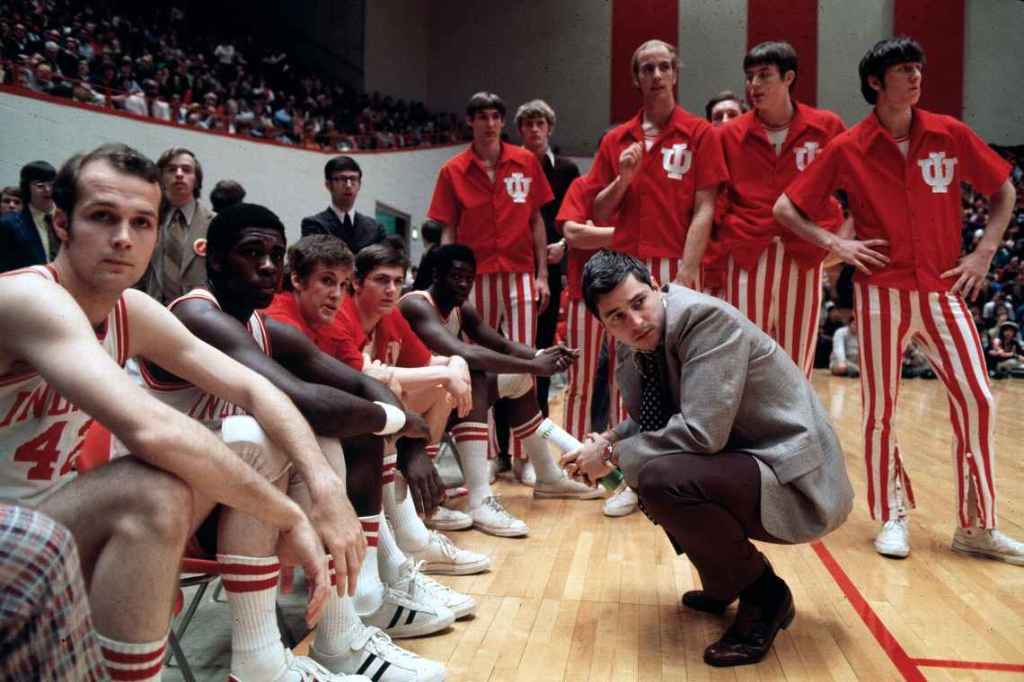
There are still plenty of Bob Knight People, some of whom I know personally, who like me graduated from IU during the peak years of Indiana basketball.
Now in their 50s, they’re searching for a mythical Knight clone to save their beloved program. And any time an Indiana coach falls short of this nonexistent skillset they’re chasing — hell, if IU loses three times in a row — you’re going to hear about it from them.
It’s what makes this scene from Hoosiers so accurate. It’s an almost unbelievable combination of dysfunction and insistence on hiring an Indiana man and recruiting only in-state talent, as if that will magically produce “BK 2.0.”
But the impact of RMK resonates far beyond the big screen and will continue to manifest in real conversations among real people.
College sports is probably the last bastion of totalitarianism in American culture. If you make the right hire, your program might enjoy 30 years of success, while making the wrong one can lead to years in the wilderness.
Indiana knows both.
It took a flyer in 1971 on an Ohio State product who was the Army head coach and brought in Bob Knight, at the age of 31. He proceeded to rack up 29 years of accolades and three NCAA championship banners and the school’s never been the same since.
RIP RMK — the person, the legend, the one and only.
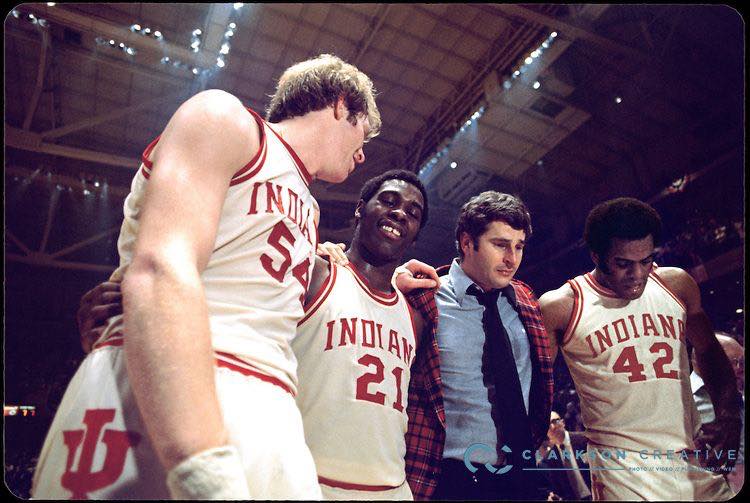
“Simplicity demands execution. If every athlete knows what to do and every opponent knows what will be done, the anticipation is of predictability. Because it is executed so well the opposition finds it cannot deal effectively with what they know is coming – and that is very disheartening. Simplicity says I will eliminate the unnecessary so that the necessary can be perfectly expressed. Simplicity is an indication of trust.” — Bob Knight, 1940-2023
 Stuart Wade
1 Comment