
 by
by 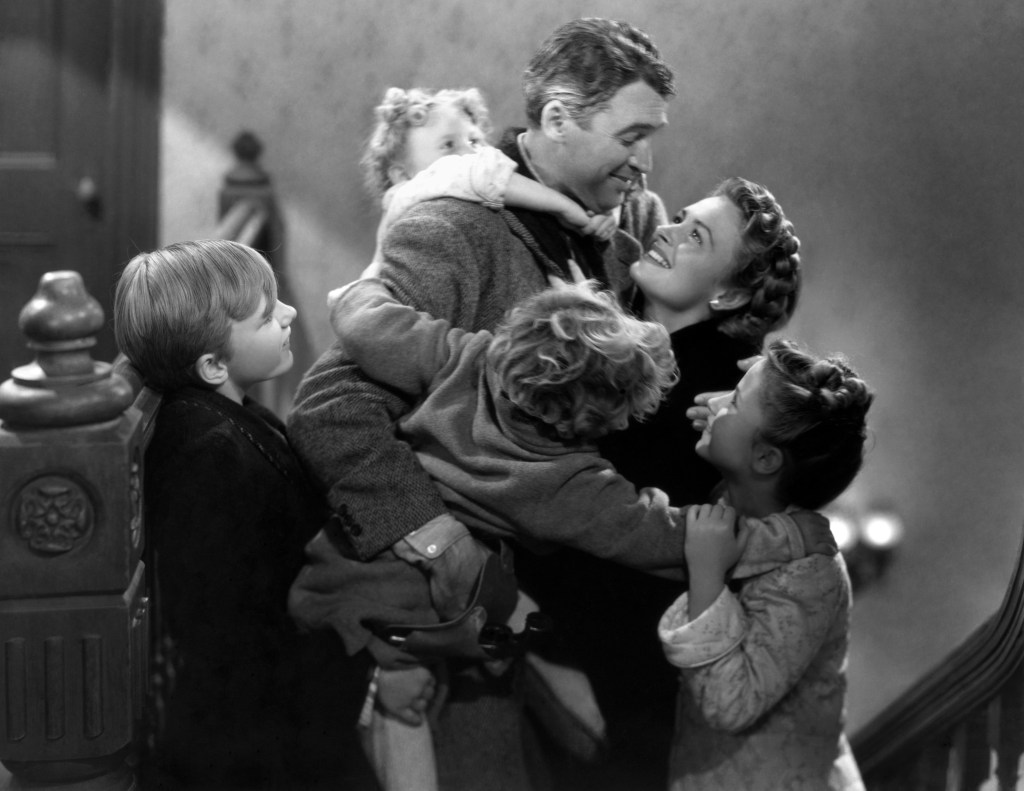
Back in March, a filmmaker/podcaster contacted me:
“As a documentary producer working on a deep dive into America through the film It’s a Wonderful Life I was impressed by your insights on Nick the Bartender. Would you be available to discuss further? Thank you for considering.”
I wrote this essay in 2000, the culmination of many Christmastimes’ thought, over multiple viewings of the Frank Capra 1946 comic fantasy. Over the years, I have been told that my piece is clever, closely observed and ‘wonderfully 14 degrees off-center.’
I penned it with zero politics in mind.
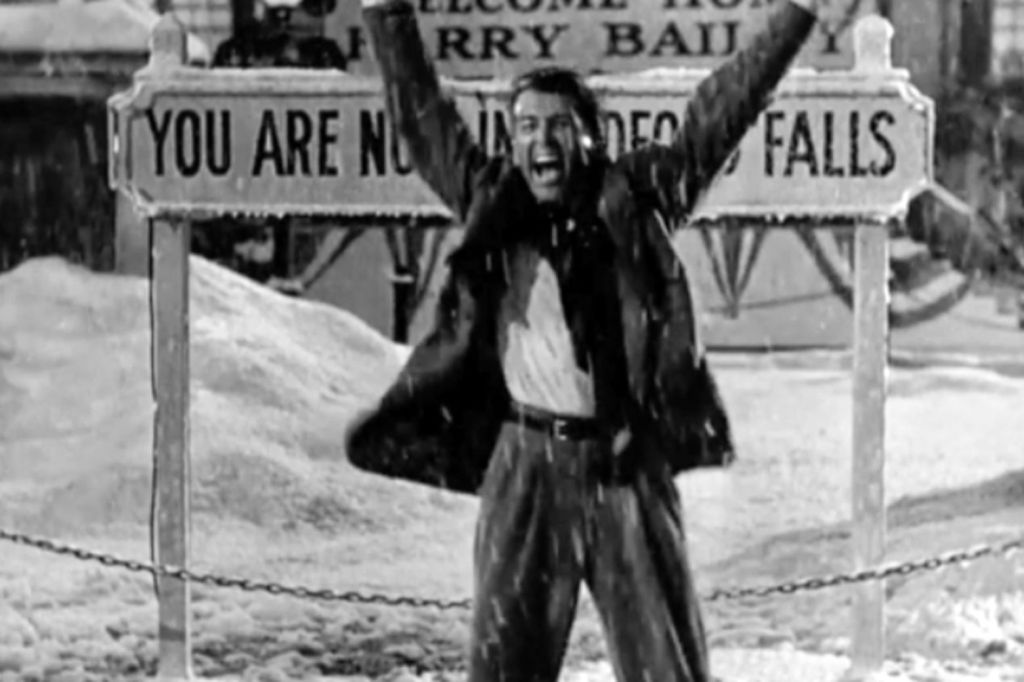
Although it was nice that somebody remembered a piece I wrote more than 20 years ago (and offered exposure), a cursory look at the inquisitor’s online presence uncovered reasons to doubt my participation in his project.
For openers, declaring in your bio that you’re “anti-fascist,” which the guy had included, is like saying, “I do not dislike puppies.” (What’s with the proclamation?) Looking at his past work, there were enough red flags for me to decide I was going to keep my distance [adding, 6/2025 – X account no longer exists]. I turned down the invitation with:
Although I am flattered you want to use my writing and essay ‘Nick: What Went Wrong,’ I prefer not to participate. Please- do not use my essay in your project. Thanks.
Surely, you don’t create a multi-episode saga about America expressed through this holiday classic without the overuse of several tired social/cultural tropes.
Knowing the movie plot well, my assumption here is the documentarian’s going to use the IAWL storyline to focus on the evils lurking beneath the surface of middle America — the inherent wrongness of capitalism, for example. And certainly: let’s make everything about race, gender, diversity and equity — 24/7.
Sure enough, the project’s website and a publicity article I read regarding the documentary go there almost immediately — referencing “the movie’s twin causes of affordable homeownership and suicide prevention” and something about its present-day “implications for the MAGA movement.”
I’m fundamentally uninterested in any kind of revisionist reinterpretation of the movie, especially if it ends up thinking that the movie was about those things. Can you not look at it from the timeframe that it was made?
The movie is simpler and more profound than any cultural theory. This classic tale of a man choosing his small town over his dreams is exactly what it appears to be.
This is a story of sacrifice. George Bailey doesn’t get to travel the world or build skyscrapers. He stays in Bedford Falls, runs a modest building and loan, and discovers that a meaningful life isn’t measured by how far you roam, but by how you’re connected into the lives of those around you.
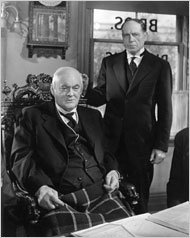


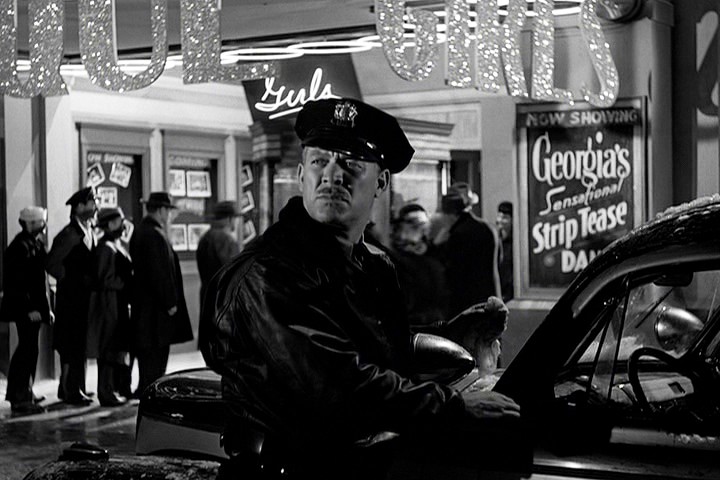

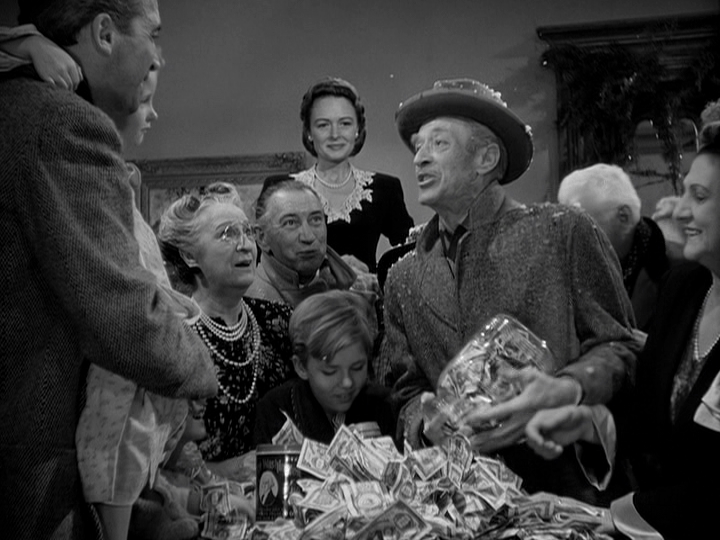
A sampling of things that never happened in “IAWL” Mr. Potter: Zero mentions of his being differently abled. Violet: Isn’t trafficked. Clarence: Not non-binary. Bert: No calls for stricter gun control legislation, in either Bedford Falls or Pottersville. Mr. Gower: No affiliations with either Big Pharma, or “experiencing homelessness.” Nick: Never ‘declares a major’ regarding his own geopolitical views.
Also, these sorts of requests by media only ever go in one direction. When you are approached in this manner, there’s a 99 percent chance they see you as the content du jour. They selectively edit perspectives to fit their vision, and will fold/spindle/mutilate your content to fit an overall narrative bearing little resemblance to the one you envision.
In this case in a direction that is far, far from what was in my mind when I first concocted this humor piece.
Kurt Vonnegut once wrote, “He who tries to put politics into a work of the imagination will foul it up beyond all recognition.”
The documentary is out today, and I have no plans to listen, or link to it.
And hey, maybe it would’ve gone swimmingly.
But as for my essay regarding the contrasting paths of Nick the Bartender in the parallel It’s a Wonderful Life universes of Bedford Falls and Pottersville, it’s one of my most favorite things I’ve ever written.
There is no F’n way I’m letting it anywhere near your steaming pile of sociological theories.
Hee-haw!
 Stuart Wade