
 by
by And why college basketball’s still the best
College basketball returns tonight.
Its annual arrival always gets me fired up.
Tonight, Ohio State and Texas ring in the new hoops season with an 8 p.m. CT tip in Las Vegas.
Good luck also to the UT Dallas Comets and Rob Wade! The Comets tip off at Louisiana Ragin’ Cajuns on Thursday at 7 CT on ESPN+!
The collegiate level of the sport has forever dominated my sports fandom, dating to the glory days of Indiana basketball in the early and mid 1970s when I was a kid.
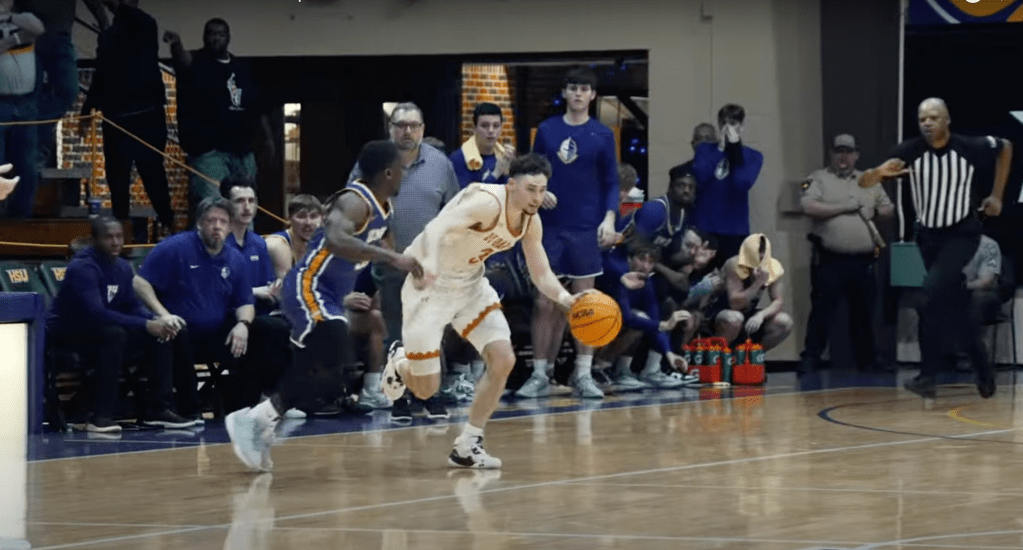
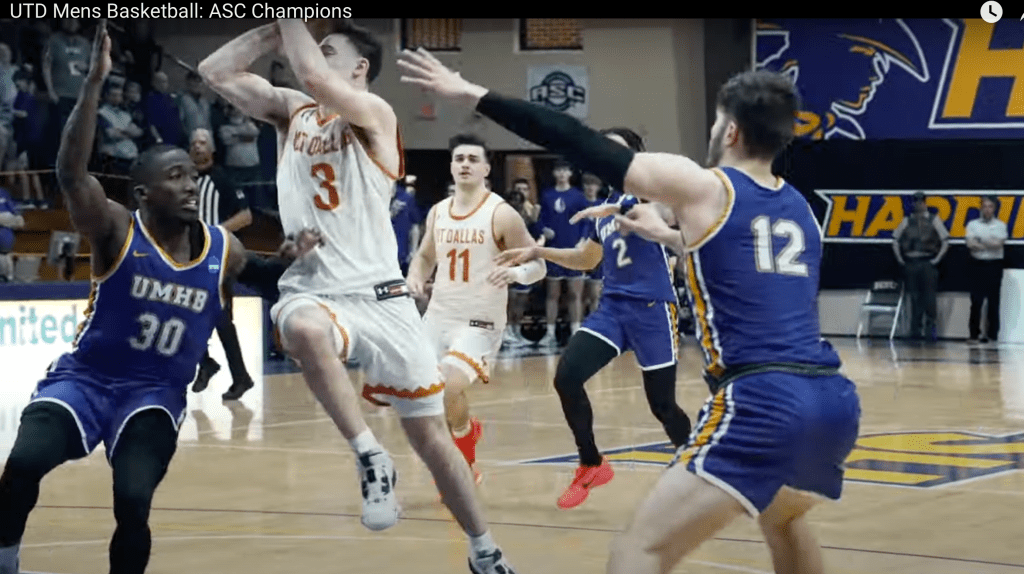
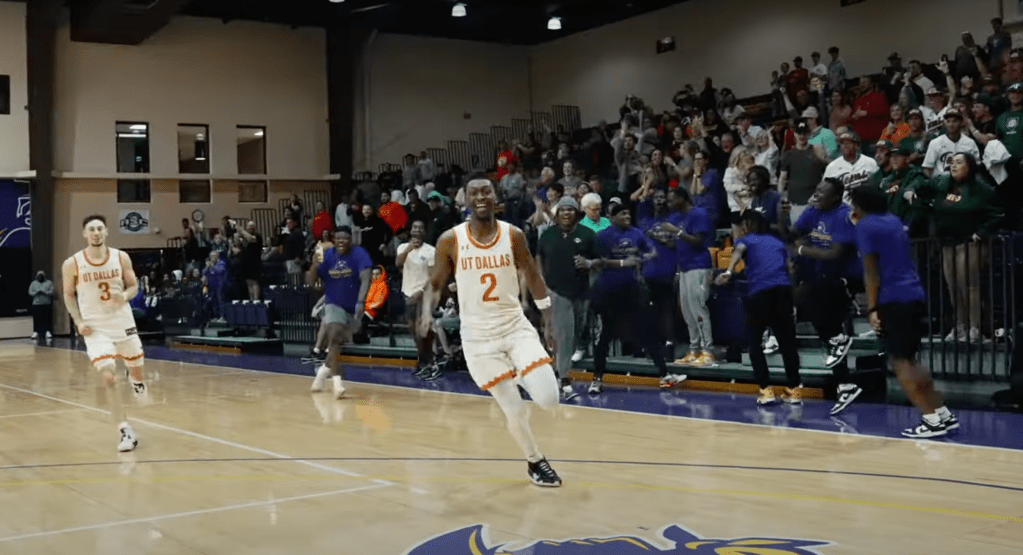
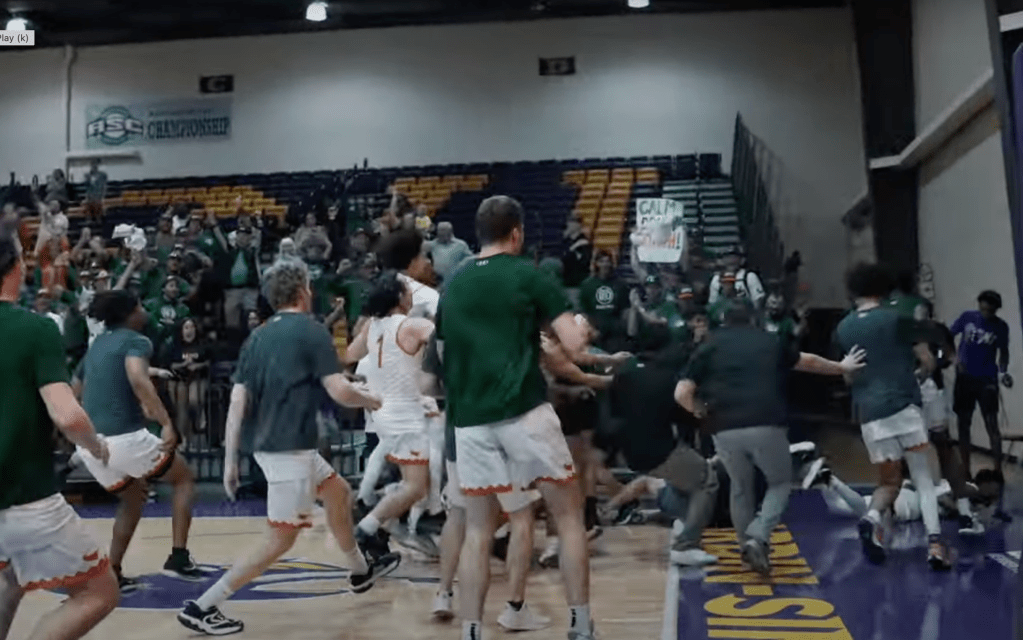
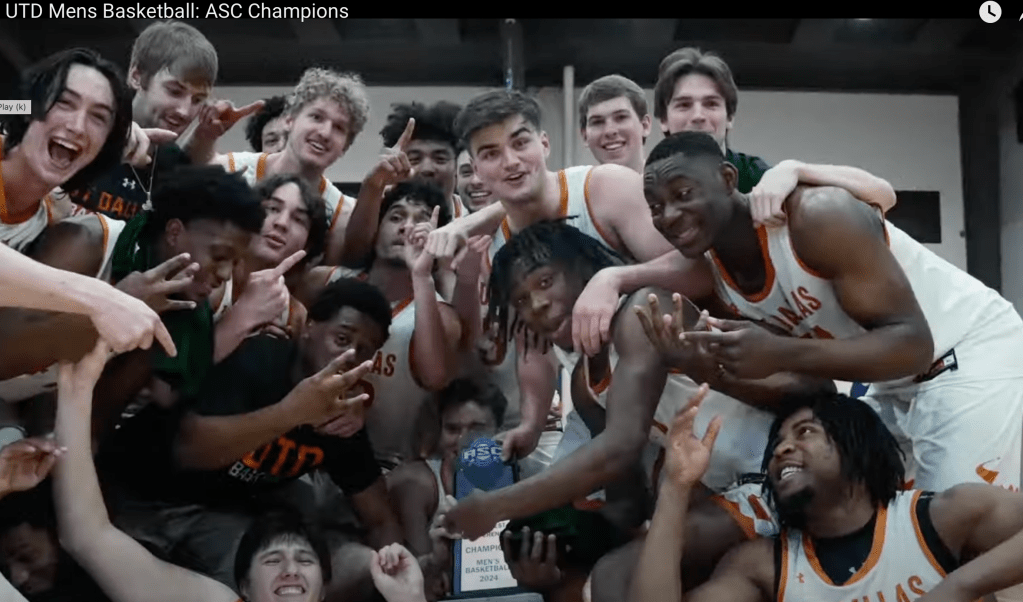
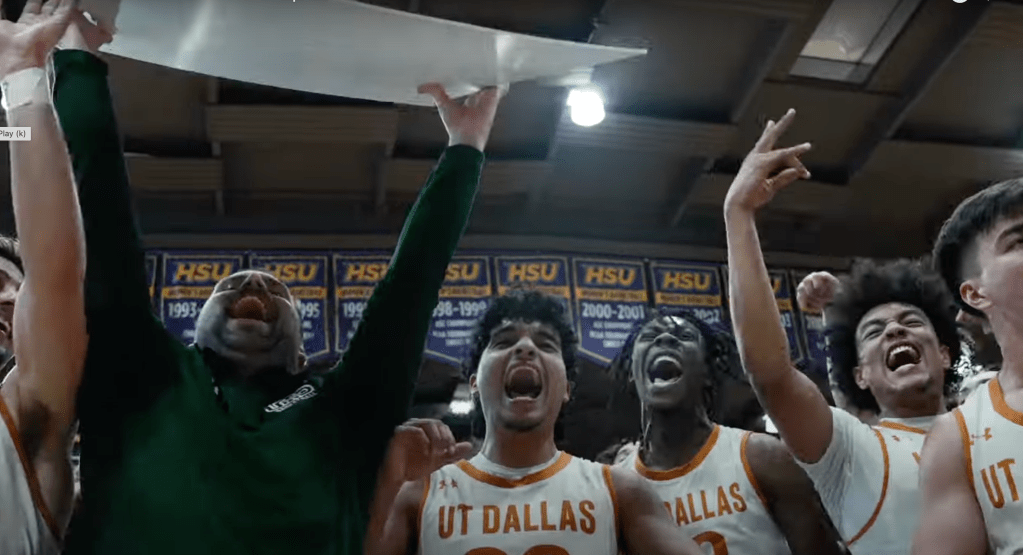
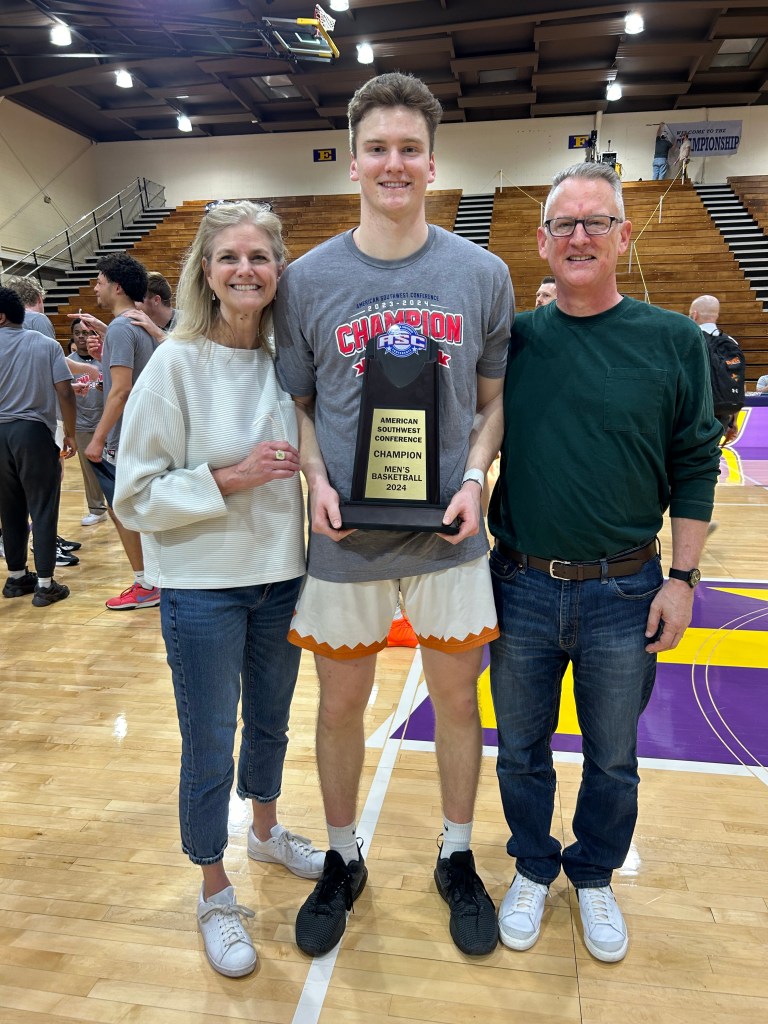
My connection to college basketball deepened when son Rob joined the University of Texas at Dallas Comets (now Division II). Now in his senior year, Rob has thrived for the last three seasons as sixth man, contributing significantly to a championship program, alongside talented young men led by an energetic young coaching staff.

Change
The sport is going through a metamorphosis now and there’s gonna be fallout:
- Driven by societal changes, essentially we’ve entered an era of free agency.
- Longtime coaches, some of the biggest names in both college football and basketball, are electing to leave now — retiring with the changing of the guard as the sport morphs to a professional minor league.
- Several factors drive these changes: the transfer portal, Name, Image and Likeness (NIL) compensation, new transfer rules and television revenue.
- Players earn money while in college now, allowing many to develop skills longer before pursuing professional careers. This period likely represents the peak of individual player power, which they may lose if court decisions eventually classify them as employees with collective bargaining agreements and contracts.
We’re also seeing players, already earning NIL money, changing jerseys season to season via relaxed “transfer portal” policies, sometimes making in-season moves based on how their school affiliation progresses. (Most notably in football, UNLV’s quarterback recently opted out of the season when his expected role didn’t materialize.)
In this new marketplace, successful players typically command more money, while those struggling often transfer to lower-level conferences seeking increased playing time. These changes bring unexpected consequences and I expect we’ll see more of this behavior and basketball will really feel the impact — compared to football — since one or two high-level talents on a single basketball team can push a program very far a whole lot more easily than one or two important players can on a much larger, football full roster.
The question remains: Is this sustainable? Should new rules be implemented, or is this the new normal?
When the transfer portal launched around 2021, I was intrigued and generally for the universal transfer rule, especially when used as a one-time option. Initially it did seem like eliminating the waiver process and requiring a redshirt year for second transfers would provide stability.
However, NIL earnings now compete with the benefits of redshirting which is unfortunate.
Historically, redshirting proved beneficial – looking at Villanova and Virginia’s 2018-2019 championship games, nine of 16 players had redshirted, including four first-round picks and two lottery picks.
Given the likely continuation of player movement, implementing a commitment deadline could help stabilize the system. With the portal opening after the tournament’s first week in March, setting a spring/early summer (June 1ish) commitment deadline – after which players would need to complete a residence year – might provide needed structure.
Atmosphere
College basketball’s atmosphere is truly unique, driven by passionate fanbases that bring unmatched pride and creativity to the game.
From the Cameron Crazies at Duke to Kansas’ faithful packing “The Phog” to tiny Taylor University’s “Silent Night” tradition, the home court advantage is a defining feature of college basketball — and is very real.
College hoops’ atmospheric elements are never compelling than during March Madness, when multiple fanbases converge in one venue. This can result in unexpected fanbase alliances — an entire arena with four fanbases can see three-fourths of the packed crowd turn on the blueblood, to rally behind the underdog team — transforming a neutral court into virtual a home game.
This fact was sorely in evidence during the fan-less 2021 pandemic version of the tourney, which demonstrated just how much crowd energy (and lack of same) can affect the outcome – from nutty pep band performances to a partisan influence on an officiating crew to the deafening atmospheres that opposing players and teams must deal with.
Iconic coaches (same as college football) are the draw here — with the legends (Wooden, Knight, Coach K) and the current deans (Izzo, Self) of the game helping shape the game’s legacy as well as where it’s headed next.
Iconic venues are just as big a draw to the sport as Fenway is to MLB or Madison Square Garden to the NBA:
- Allen Fieldhouse, University of Kansas. AKA “The Phog,” Allen retains its 1955 authenticity, cramming more than 16,000 within the no-frills bleachers of its lower bowl-like structure. It’s LOUD in there. In recent years KU added a terrific Naismith/basketball museum which features the original rules of basketball.
- Assembly Hall, Indiana. The Carnegie Hall of basketball known for its acoustics, its unique arched exterior and vertical character inside, is electric when a big rivalry game is underway. IU seats 17,000-plus.
- Breslin Student Events Center, Michigan State. I was fortunate enough to attend a few games here when the building was new and what strikes the visitor is immediately as the wisdom of designing the student section to be on the floor as opposed to placing a bunch of fat cat donors down there. I always enjoyed working games here and although this stadium, with a capacity of 14,000, is smaller the result is a homecourt advantage that is close to unmatched in a basketball conference that is extremely rivalry driven and fan rich.
- Cameron Indoor Stadium, Duke. Cameron Indoor Stadium is famous for its intimate atmosphere and the fervent “Cameron Crazies.” With just under 10,000 seats, students in the queue for seating will sleep outdoors in advance of a big rivalry game in “K-Ville” encampments.
- Hinkle Fieldhouse, Butler. “Hoosiers” (1987) was filmed here and the 2021 pandemic-constricted March Madness made extensive use of this tremendous piece of basketball history. From its completion in 1928 until 1950, it was the largest basketball arena in the United States. Though one of Division I’s smaller venues at 9,100 seats, Hinkle puts fans right on top of the action, creating an electric atmosphere.
Unpredictability
The sport’s so much fun because any team can get hot and knock off any other team, especially now as conference realignments bring parity and teams like Florida Atlantic (FAU) make the Final Four. While the Carolinas or the UConns might still dominate, it’s the mid-majors like Dusty May’s 2023 FAU program, who suddenly can and do actually make a Final Four run. That never used to be likely (I can remember Penn in 1979 or George Mason in 2006 getting it done; it’s going to happen much more often now). Conference realignment has intensified this unpredictability, creating new rivalries and leveling traditional “hierarchy” i.e. who’s “supposed” to win.
The game itself is better than NBA play. Its arguable, but I’d maintain that college basketball still emphasizes team play over individual showmanship. Unlike the NBA’s selective and sometimes non-existent defense, with the college game defense is actually being played. I do worry however that the laxity of rules being enforced at the professional level is slowly but surely permeating the college game. Take for example the travel rule and how it is very loosely enforced. Passing the ball inbounds after a made basket is also, increasingly, not properly enforced. Fouling shouldn’t be subjectively called. A foul is a foul! Officials try to get this right; trouble is the rules and the emphasis thereof, keep sliding – always in a direction favoring offense.
The greatest postseason in all of sports
Selection Sunday, the tournament — It’s the single-elimination format that makes March Madness so much fun. The potential for an historic upset looms large, Picking brackets keeps you involved in the upsets, the matchups you want to see and lets you pull for underdogs.
College basketball has been roaring in popularity ever since Magic and MSU met Larry and Indiana State for the title in 1979, still the highest-rated college game ever televised. The game is changing but it’s still the greatest. Happy “New Year” !
 Stuart Wade