
 by
by Mike Woodson’s IU tenure ends with a whimper
As new Indiana basketball coach Darian DeVries begins his tenure in Bloomington, it’s worth reflecting on the Mike Woodson era: what went right, what went wrong, and why sometimes even the most well-intentioned homecomings don’t work out as planned.
IU basketball tips off its three-game exhibition tour in Puerto Rico tonight against Universidad de Puerto Rico Bayamón. The Hoosiers will also play the Serbian team Mega Superbet on Saturday.
When Mike Woodson returned to his alma mater in 2021, it felt like closure.
Here was an Indiana Hoosiers basketball legend — a former All-American coming home to restore glory to a program he starred for. He arrived as Indiana’s first coaching hire to have also been a former player under legendary coach Bob Knight.
Woodson’s hire made emotional sense. Inheriting a program coming off Archie Miller’s uninspiring run — marked by a stunning lack of achievement and a failure to embrace IU’s passionate basketball culture — bringing back a beloved alum felt like a natural reset.
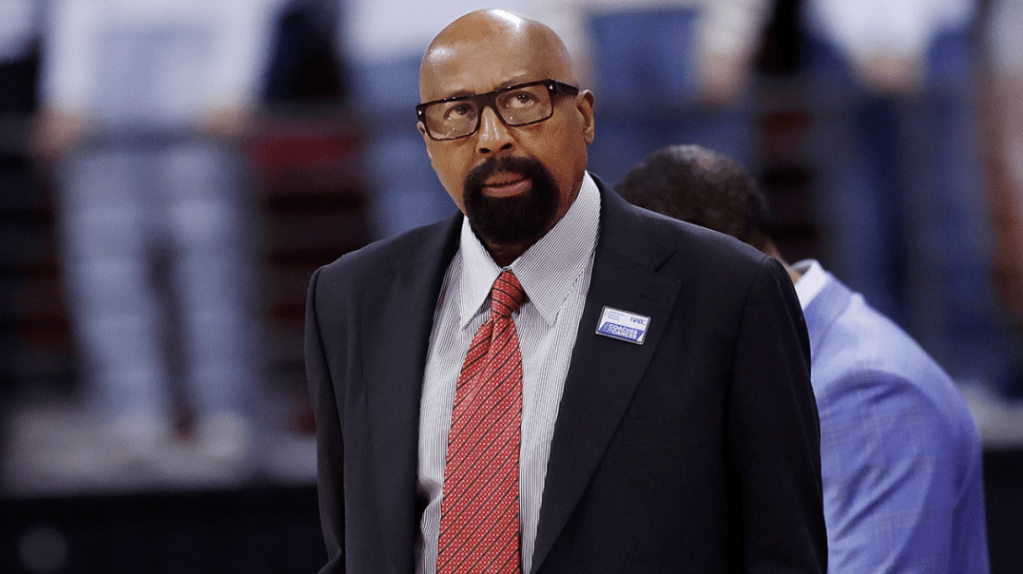
Woodson’s first two seasons delivered results that fueled optimism. With players like Trayce Jackson-Davis and Race Thompson anchoring the roster, IU made back-to-back NCAA Tournament appearances, including a play-in berth in 2022, and a first-round win in 2023 before an upset loss.
Recruiting also looked strong early on. Woodson landed high-profile recruits like Jalen Hood-Schifino (a 2023 NBA Draft pick), Mackenzie Mgbako and Malik Reneau along with a commitment from five-star prospect Liam McNeeley in October 2023. These successes suggested Woodson could restore IU’s ability to recruit at the highest level, showcasing his NBA experience to attract talent.
But it was during his third season that cracks began to show, both in performance and in Woodson’s relationship with the Indiana basketball community. Weirdly enough the pressure of coaching at his alma mater — where expectations remain sky-high despite recent struggles — seemed to weigh on Woodson.
Off the court, his tenure was marred by missteps. His firing of assistant coach Dane Fife, a beloved IU alum, in the 2022 offseason raised eyebrows. His reluctance to engage in the recruiting grind and media obligations — key components of coaching at a program like IU — further alienated him from the fanbase.
The turning point came when Woodson, facing intense criticism after a series of poor decisions and a 5-game losing streak that eliminated IU from tournament contention, made his infamous “true fans” comment.
The remark revealed his inability to handle criticism and suggested that disappointed fans didn’t understand what real support looked like:
“Before I thank these guys behind me, I’d like to thank Pam Whitten our president and Scott Dolson our AD,” Woodson said on IU’s Senior Day 2024. “I know our students are out on break but we have to thank them… and most of all our true fans, our true fans. I’ll say that again, our true fans.”
Equally damaging was the coach’s third-season decision to simply ignore Don Fischer, the legendary play-by-play announcer who has been the voice of Indiana basketball for decades. Woodson simply stopped showing up for his own weekly radio show, after Fischer had voiced in-game frustrations.
An institution, Fischer is beloved by generations of Hoosier sports fans. (He’s the only IU basketball and football play-by-play voice I’ve ever known.) Alienating ‘Fisch’ was a significant misstep and a probably fatal disconnect by Woodson from the program’s culture.
These weren’t just public relations problems — they reflected deeper issues with Woodson’s approach. His NBA-style offense, which worked in theory, struggled in execution at the college level. And far worse, the Hoosiers consistently failed to shoot enough three-pointers, or make them, at an efficient rate, a foolish strategy that underscored Woodson’s lack of understanding regarding modern college basketball.
Squaring off against major non-conference foes every November and December, Woodson’s Indiana teams repeatedly laid an egg, including embarrassing shellackings at Arizona, at Kansas and against Louisville in the Bahamas that epitomized the program’s lack of preparation and inability to hang with elite competition.
By the end of Woodson’s third season, the calls for his dismissal were loud. Longtime supporters were expressing frustration with the direction of the program. But here’s where Indiana found itself in an almost impossible position: how do you dismiss a program legend?
Woodson wasn’t just any coach — he was one of Indiana’s all-time greats. There’s an unwritten rule in college athletics that you don’t unceremoniously dump beloved alumni unless they’ve truly crossed a line somewhere. Woodson hadn’t.
So, Indiana waited. They gave him one more season, hoping for improvement that never materialized.
By the time the 2024-25 season was getting underway, the writing was on the wall. Despite claims that IU “won the portal” with new additions, the team’s performance didn’t match the hype. With a 19-13 campaign, Indiana and Woodson had missed another NCAA postseason tournament.
Perhaps the most damaging aspect of Woodson’s final seasons was the recruiting collapse that occurred behind the scenes. March 7, 2024, marked the beginning of the end when five-star recruit Liam McNeeley decommitted from Indiana (for UConn).
The June 2025 NBA first-round draft pick’s departure highlighted a troubling trend. Despite Woodson’s NBA pedigree initially attracting top recruits — he had landed five of Indiana’s top-11 rated recruits since 2004 — the word on the recruiting trail had turned toxic. NBA agents and scouts were actively steering prospects away from Indiana, citing concerns about player development and strategic approach.
The 2025 NBA Draft served as a stark reminder of what could have been. Four first-round picks — Dylan Harper (No. 2), Derik Queen (No. 13), Asa Newell (No. 23), and McNeeley (No. 29) — had all taken official visits to Indiana. Each had shown genuine interest. None chose IU.
What Woodson got right: Despite the ultimate disappointment, Woodson deserves the following credit.
His 4-4 record against arch-rival Purdue was no small feat — beating the Boilermakers had become increasingly difficult for recent Indiana teams. Archie Miller never beat Purdue; Tom Crean fared little better, going 1-5 in his final six games versus Indiana’s archrival.
Woodson also showed genuine ability to develop big men, with Trayce Jackson-Davis becoming a dominant force and Kel’el Ware showing terrific NBA potential while with the Hoosiers.
Woodson’s love for IU was undeniable, but his vision didn’t align with the program’s lofty expectations. When Indiana finally made the change, moving on from Woodson after season number four, it felt like a mutual recognition that the fit simply wasn’t right.
Woodson’s return to the NBA as an assistant coach with the Sacramento Kings suggested that everyone involved understood where his strengths truly lie.
The Woodson era serves as a reminder that the nice story, the emotionally satisfying hire, often isn’t the most practical one. College basketball and professional basketball require different skill sets, different approaches to player development, and different ways of building program culture.
Woodson’s NBA skill set as mainly a popular assistant coach (and twice, head coach) couldn’t translate to the college game, despite his deep connection to Indiana.
Forward with DeVries
Tonight the Darian (pronounced Darren) DeVries era begins with optimism and a scrappy, energetic group of 13 scholarship players, all of whom are new to IU. The Hoosiers return no one from last season.
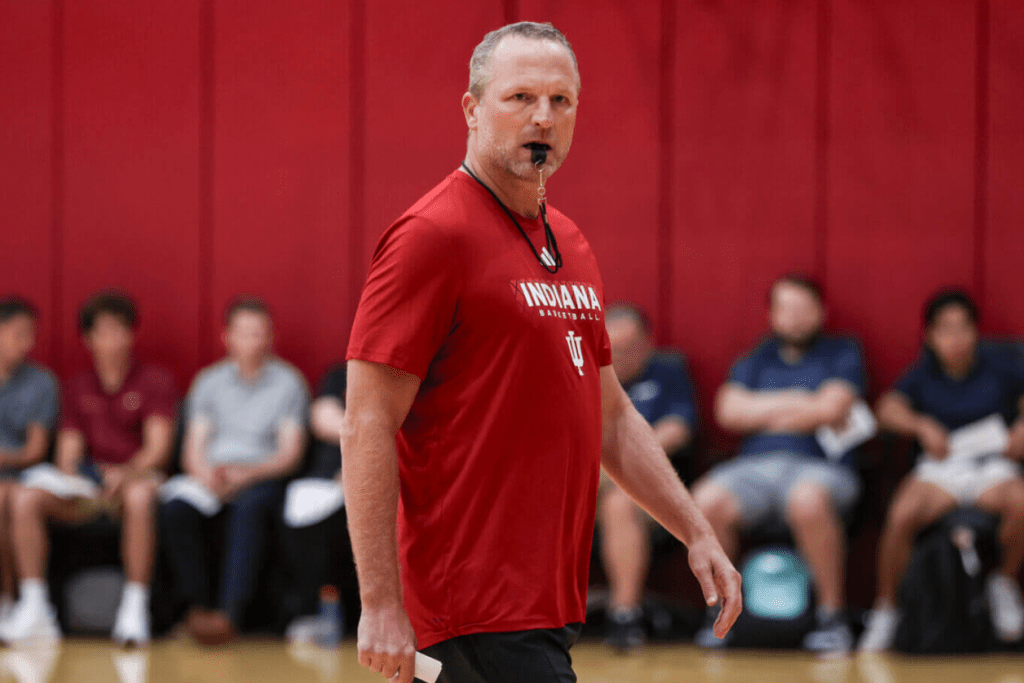
Good teams have an identity and the DeVries resume — seven consecutive seasons with at least 19 wins and three NCAA Tournament appearances —suggests he understands how to build and succeed at the college level.
DeVries has assembled what many consider a top-10 transfer portal class nationally, emphasizing the perimeter shooting and guard play that were lacking during the Woodson years. His teams at Drake were known for their three-point shooting and defensive intensity —precisely what Indiana needs.
The blueprint seems clear. Build around shooting and defending, embrace the modern game, and reconnect with Indiana’s basketball traditions without being trapped by them.
As DeVries takes the helm, early signs are encouraging. We’ll learn more over the next three nights in Puerto Rico.
 Stuart Wade