
 by
by Remembering Paul “Pableaux” Johnson one year after his death
A winter storm arrived this weekend, a burst of arctic air and frozen rain that shut down Austin all day Sunday and Monday.
By afternoon today the sun shone, the precip had passed (we will however have another freeze tonight), but as I stepped from the car in the melted driveway this afternoon, none of this mattered anymore.
I remembered that today’s the one-year anniversary of Paul Johnson’s death.
None of this storm stuff compares to the stunning, sudden loss on Jan 26, 2025 of Pableaux. I got the call (it was a Sunday), just after we’d returned from a Dallas weekend, for Rob’s UTDallas basketball homestand.
We departed from Richardson and rolled in by 11 a.m. and dumped our stuff. Christi had barely left the house again, to go visit her Dad, when my phone rang:
Paul was gone. Just like that.
I couldn’t believe it. I’d spoken to him a couple days before. He’d sounded like himself — vibrant, scattered. Planning.
Paul was my first connection in Austin when we moved here in 1995. Introduced through a mutual friend who wrote about food for the local weekly, he and I clicked instantly.
He had this “young Steve Martin” look and energy — a razor-sharp wit paired with a pop-culture encyclopedia on nuclear steroids for a brain.
A writer, foodie, web design guy and all-around raconteur, he lived life on his terms, paycheck be damned, which sometimes/frequently worried a lot of us. To that point, his Austin apartments grew smaller over the years, dwindling into spaces that felt at times more like a college dorm situation.
Once, he brought over a crate of CDs — his collection, easily as big as mine at its peak — because his space didn’t have room for them. “Host them for me,” he said. “I have nowhere to put them.”
I did, for about a year, diving deep into funk and classic rock but also late-’50s Blue Note jazz because of him. He was fired up upon learning this, and imparted all the Cool Jazz-era knowledge he could.
This was Paul, living on a thin line. And this was Paul, ever ready to share.
He was a writer, and a damned good one — cleverly combining unexpected word choices that made you listen more closely. Also he had the gift of writing exactly as he spoke. If you knew him, and then read something of his, you could hear his voice in your head.
Today reading his stuff, I think I miss that voice, maybe the most. Or the energy. Or the humor.
You get my point.
Paul could often be chaotic and larger than life, the kind of guy who’d throw a party drawing a hundred people without even trying. Here in Austin, he’d host these red beans and rice Sundays aka “fooyays” at his place on Landon Lane (where he was living when Christi and I arrived).
Those were the salad days — South by Southwest Interactive was still interesting, and Paul was at the heart of it, helping me to cover SXSW panels for the Austin Chronicle or introducing me to ‘his people.’
And he had people, let me tell you. Like nobody else.
He helped me find my footing as a freelancer in the late ’90s, giving me confidence to chase bylines when I was still figuring things out.
I got decently far along. My “high point” was selling a magazine cover story to one outlet, scoring a few humor bylines on digital websites of existing news brands and also to newer, online media, and then a reprint in Harper’s…
And yet, it just wasn’t for me. Too much, for too little, so I went back into the corporate world.
Paul kept on. As well he should have. He sacrificed, moving to New Orleans in 2001, where it all seemed to click for him.
He wrote for travel sections, including the New York Times, jetting off to places like Spain and Ireland.
In New Orleans, those occasional Austin fooyays evolved into the weekly Monday red beans dinners that became his signature, his gift to that city and its people. And with it, he became something of a minor celebrity, though I didn’t realize the scope of it until after his death. (Few of us here did, really.)
He deep-dived into photography, too, capturing the city’s second-line parades with an enthusiasm I didn’t initially grasp. At the time I was distracted with a young family and other stuff. I’d see his Instagram posts and wonder, why so devoted to these projects — assuming that they were a side hobby.
They weren’t.
I didn’t know they’d end up in museum exhibits or earn him recognition as Louisiana Endowment for the Humanities Documentary Photographer of the Year.
“I don’t know how to process it,” he said as he told me about this honor during our final phone call. I said it was classic imposter syndrome, that accepting a compliment is exactly what to do.
Just say, “Thank you.” (Or, I joked, go hard in the other direction — Pull out a thick/folded manuscript from your jacket pocket, and go full Foghorn Leghorn: “Unaccustomed As I Am to Public Speaking…”
He roared.
His energy, massive network of food media connections, and status as a local figure explain why Paul’s fatal heart attack at 59 — while shooting a Second Line — drew tributes from The Times, Washington Post, and even The Economist. Exactly the kind of recognition he would have mocked.
Classic Groucho Marx. Paul would not have wanted to belong to any club that would have him as a member.
I visited him twice in New Orleans. Once, when he lived on Magazine and took Todd and me to Snake and Jakes. The other time, I brought Christi. He’d moved to a new apartment by then, though I’ve forgotten that address. This was before he settled into his final place.
Christi and I also caught the Red Beans Road Show when it stopped in Austin at Home Slice on South Congress. But I never made it to the table at his house for a Monday night. That one hurts.
Back in his early Texas days, Paul drove a light brown Toyota pickup—”a toolbox on wheels,” he called it. It had “Chank-a-Chank / Breaux Bridge” and ¡Viva Terlingua! bumper stickers. He’d park it facing the wrong direction in front of our apartment on Enfield, which drove my straight-outta-Chicago sensibilities crazy. He loved giving me shit about it. I’d just come from a city where you get ticketed for looking at a meter maid wrong. He found this hilarious.
He had strong opinions about everything, including what should replace the national anthem. His proposed alternatives: “Low Rider” by War, “King of the Road,” Parliament’s “Mothership Connection,” “Word Up” by Cameo, “Land of 1000 Dances,” and “Brick House” by The Commodores.
Perfect.
I spoke at his Austin memorial last April — about 60 friends gathered at Zilker Clubhouse on an unseasonably warm Saturday. Ben came too, and I was glad he wanted to be there.
One point I made: I want to be better at staying connected, at building new relationships. That’s the Paul legacy I’m trying to honor. So far, so (pretty) good.
The dude set a high bar. The highest.
On that final phone call a year and a couple of days ago, he’d said he’d been to 79 cities since the pandemic, hosting his “red beans” moveable feast.
The guy knew everyone, from food editors to creatives and even to diplomats who’d help him travel in India.
At a Fall 2024 lunch here with Paul and Todd, he told us about that trip, laughing about how overwhelmed he was by the chaos of normal street life outside the embassy compound where he was staying.
There in India, Paul, who thrived on energy, had actually met his match. LOL.
Our last one-on-one hang time together was May 2024, a quiet Monday at Hank’s. We sat at the bar, ate pizza, and traded stories about freelance headaches and various hilarities.
It was light, fun. Felt like old times, which was always the case with him. He and I had learned to sidestep certain topics over the years (socialized healthcare), and on that night all was grand.
It was longtime friends, after having Paused a few months, hitting Play again.
That’s the image I am holding onto.
Paul leaves a legacy I’m still unraveling. He was a pied piper, storyteller and brilliant friend who made the world much more fun.
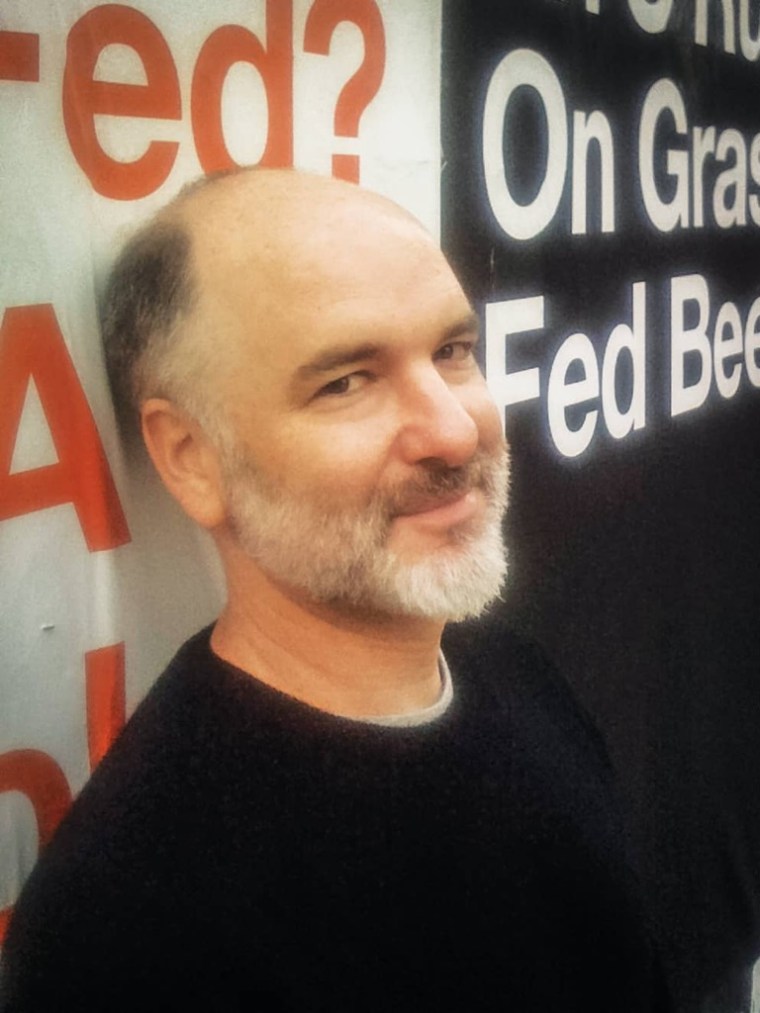
 Stuart Wade