
 by
by The understated excellence of the Montblanc 221
Christmas 1984, my junior year at Indiana University, my brother gave me a Montblanc fountain pen he had acquired while studying abroad. I hadn’t asked for one, but I liked it immediately.
For college lecture note-taking, I still stuck with a Bic, moving as fast as I could on ordinary spiral notebook paper. But later that Christmas night, I picked up the pen again and all through that holiday, kept finding reasons to use it.
It became my go-to, but after I moved to Chicago, time passed and the pen vanished. I never forgot how much I had enjoyed it. So in 2013, from Austin, I tracked down a mint-condition replacement on eBay: the Montblanc 221.
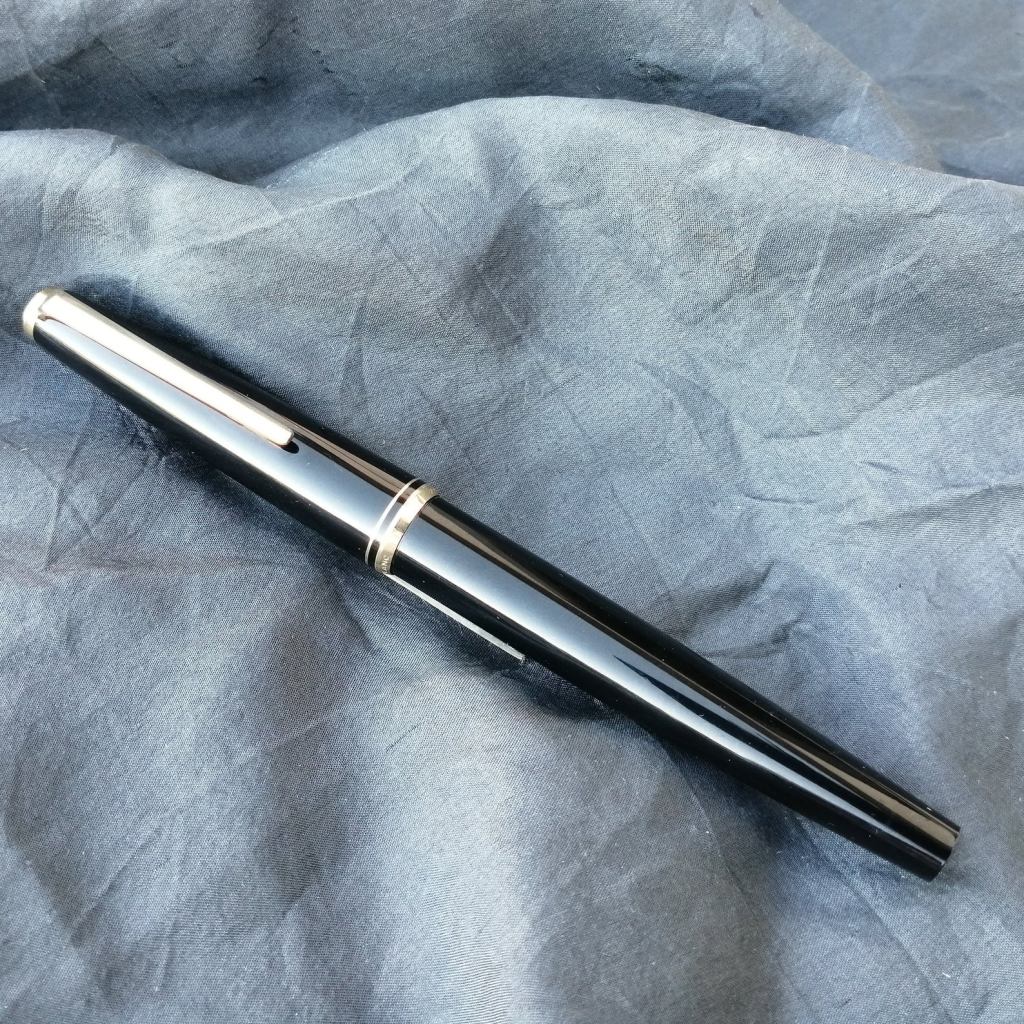
Montblanc made these affordable pens during the 1970s, and they remain a pleasure to use half a century later. Slim, light and comfortable, the 221 balances well in the hand. Perhaps because it was my first, I’ve always preferred its understated design.
Most people who recognize a Montblanc probably picture one of the larger, cigar-shaped pens that became familiar in pop culture during the 1980s. The 221 goes about its business with far less ceremony.
The springy 14-karat gold nib ‘gives’ a little as you write, with a smooth responsiveness that makes you want to keep going. My favorites have oblique broad nibs, which produce variations in line width as the pen glides across the page. Write in cursive and you get to watch the strokes widen and narrow through the letters. The result takes on a touch of calligraphy.

And you don’t need extravagant paper to enjoy this. I buy Rhodia pads off Amazon which are a little nicer but don’t cost a ton. Decent paper gives the nib a chance to show what it can do, adding pleasure to something as simple as writing a few sentences.
Buying used pens carries some uncertainty. A previous owner may have dropped or damaged it, or a promising purchase may turn out to have a nib that feels scratchy on paper. By and large, though, mine have been terrific.
As fountain pens go these are among the most convenient. The 221 takes ink cartridges, so refilling’s easy and not messy. At my rate of use, a new cartridge lasts roughly two months. An ink-view window lets me check the supply.

My favorite pens lay down a smooth, continuous line. They never stutter or miss. They’re convenient, too. The 221 takes ink cartridges, so refilling requires little fuss. At my rate of use, a cartridge lasts roughly two months. An ink-view window lets me check the supply.
The Montblanc name can suggest an expensive indulgence. Vintage models offer another way in. I’ve found that an older 221 can deliver an extraordinary amount of enjoyment for a fraction of the cost of a new Montblanc. Condition matters, and finding a good one may take patience. Mine have rewarded the effort.
I own some of the bigger Montblancs as well, including two 146s and a 149. I enjoy them, but I keep choosing the slim, less fancy 1970s models. I take one along almost everywhere and use them at my desk or the coffee shop up the street.
In 2020, I returned to writing journal entries longhand. The 221 made the habit easy to resume. Decades after that first Christmas, I still enjoy picking one up.


1 Comment