
 by
by November 20, 2021
I’m writing daily during November. At times this month I’ve used “hacks” (which I’ve also written about) to get my head in the right space for a blog post. They include brewing a special coffee blend, sitting in a certain spot or writing in a certain venue at a set time.
Chief among these has been listening to music, particularly the spinning of an entire album as I work. And when I have needed the perfect creative background LP, Aja by Steely Dan is high on my list.
The pinnacle of Steely Dan’s creativity, Aja stands alongside a stacked field of terrific releases.
1977 was a watershed year in music. Disco and punk were surging. Artists like Blondie, The Clash, and Talking Heads pushed radio boundaries. Iconic LPs Rumours, The Stranger and Saturday Night Fever helped define the year. David Bowie’s Low and Heroes and The Sex Pistols’ Never Mind The Bollocks broke new ground. One Elvis left the building, and another arrived. Lynyrd Skynyrd released Street Survivors three days before a plane crash killed Ronnie Van Zant and five others.
And there was Steely Dan, who sounded like nobody else with their jazz-informed perfectionism and odd lyrics. Despite fitting no category they were by turns revered, loathed and played on FM radio. Often.
Walter Becker and Donald Fagen arrived in Los Angeles in 1971 as a package deal. Producer Gary Katz, newly on staff at ABC/Dunhill, hired them together as staff songwriters. Their songs proved too complex for the label’s artists, so Katz pushed the pair to form a band and record the songs themselves.
The band behind their 1972 debut, Can’t Buy a Thrill, paired Becker on bass and Fagen on keyboards with guitarists Denny Dias and Jeff “Skunk” Baxter and drummer Jim Hodder. Singer David Palmer joined late in the sessions so the stage-shy Fagen wouldn’t have to front the band on tour. Palmer was gone by April 1973, but the group hit the road again behind Countdown to Ecstasy and Pretzel Logic.
Becker and Fagen hated touring. After the Pretzel Logic tour wrapped in July 1974, they left the road for nearly two decades. They let the band go and turned Steely Dan into a two-man studio operation, building each track from a rotating cast of session players. By the time they made Aja three years later, they had the money and clout to chase any sound they wanted, with no bandmates to please and no stage show to protect. Everybody’s favorite YouTuber Rick Beato traces this transition in a video worth your time here.
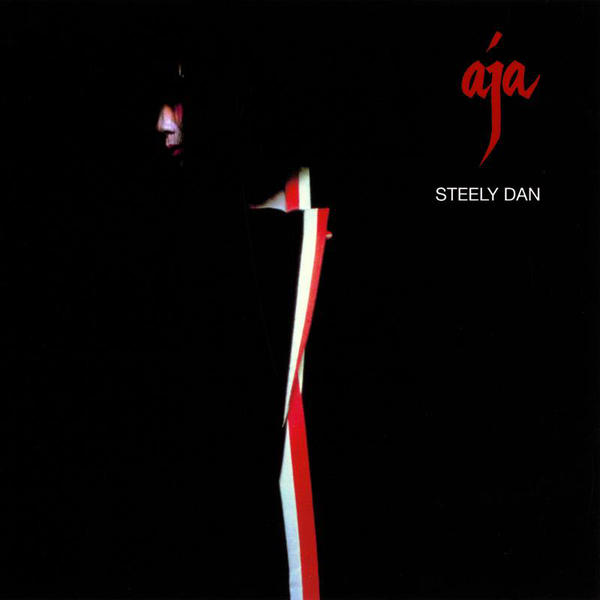
as being “all about that space-age bachelor-pad vibe”
Aja has got to be one of the most remarkable albums of this time period. Clocking in at just 39 minutes, the jazz-pop record that Becker and Fagen made with a small army of session musicians (40!) is still a sonic original.
Black Cow – “Drink your big black cow… and get outta here.” I was 13 and Bill Murray had just arrived at Saturday Night Live. His role as the entertainment correspondent for Weekend Update, punctuated by the catchphrase, “Get outta here,” was an instant favorite. My older brother told me that, whenever “Black Cow” came on, his friends thought that line was great and would sing it “Bill Murray style.”
The song is about a strained relationship, possibly a breakup. (Never easy to know with Steely Dan.) The protagonist is “very high” and seems to be leafing through a little black book. Evidently the track title is not about an alcoholic drink, but rather an ice cream treat of the same name.
I love the rising notes on “Black Cow” just as Fagen sings “Down to Green Street…” Paul Humphrey, a session drummer who played on Joe Cocker’s “Feeling All Right,” gives a great performance on this song. He is joined by the great tenor saxophonist Tom Scott; Joe Sample of the popular jazz quintet The Crusaders on clavinet; and Chuck Rainey – the all-purpose bassist on this record. Sample reflects what Rainey is up to, to great effect.
Tight horns and good tension lead to really good piano and sax solo breaks. Overall it’s a great way to kick off Steely Dan‘s masterpiece, and it’s my second favorite Aja track.
(Apologies if this sounds like an imitation of the Patrick Bateman character, right before he slaughters the Paul Allen character in “American Psycho”).
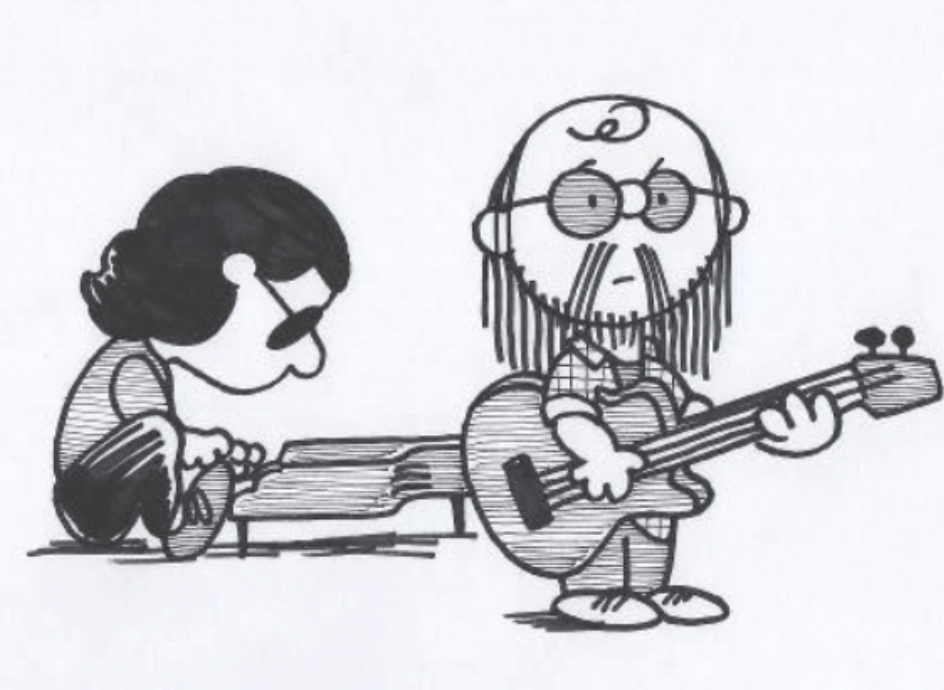
Aja – The lengthy title track leans instrumental, with lyrics secondary to the playing. Elusive and reluctant to join the session, saxophonist Wayne Shorter blew six takes of the solo in half an hour and left. Becker and Fagen spliced them into the solo on the record, a rarity in Steely Dan’s meticulous world.
Steve Gadd’s drumming stands out here, as great drumming does across the album. Gadd is doing amazing things under the Shorter solo. YouTuber Beato raves here about the Gadd-Shorter work.
A footnote for the audiophiles. When engineers went looking for the multitrack masters of “Black Cow” and “Aja” years later to build a surround-sound mix, both had vanished. Fagen has offered a reward for their return, which remains unclaimed.
Not long ago a friend told me about the “secret Steely Dan chord,” mu major, which appears via Fagen’s keyboard in many songs. It’s here and on “Deacon Blues.” Here’s a link describing this kinda cool trivia item.
Deacon Blues — By “Deacon Blues,” even Steely Dan fanatics sense this album departs from anything that came before. Jazz instrumentation overshadows pop. Lyrics maintain vivid imagery but not of the sort built for radio. Weather Report’s Heavy Weather, released the same year, also blended jazz fusion with accessible melodies, notable for 1977 but unlike Aja it never played on FM radio where I lived.
The case against Steely Dan was always that their lyrics are cryptic and/or meaningless (undeniable) and that Becker and Fagen were/are full of themselves. Again, I don’t think you have a debate to lose, but the real question is whether the music speaks to you.
Other anti-Dan points, all valid. You couldn’t see them live. After a July 1974 show at the Santa Monica Civic Auditorium, they retreated to the studio and didn’t tour again until 1993. Becker and Fagen pushed terrific musicians harder than necessary. Production dragged, budgets went over, and who do they think they were, really? Much of it is true though they weren’t alone.
To me, the behavior embodies the delusion and indulgence of that rock era. By then the duo had earned the freedom to do what they wanted.
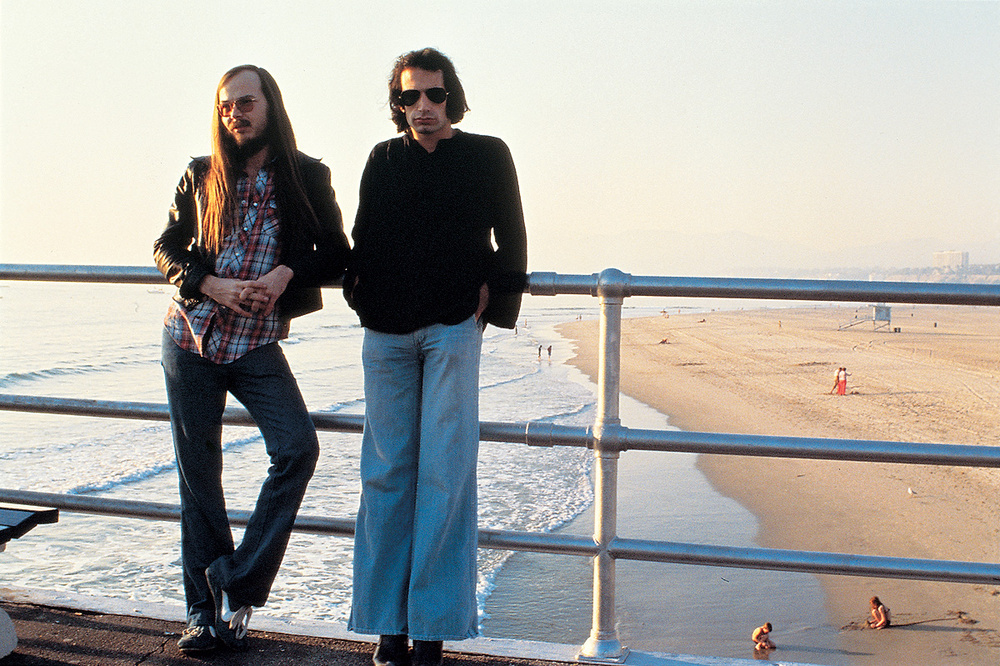
Their self-importance bordered on ridiculous yet the results speak for themselves, perfectly crafted songs about imperfect people. It’s an American Bandstand decision: Is this a groove “you can dance to?” For me, it definitely is.
The Deacon Blues lyric has been picked apart pretty well:
Drink scotch whiskey all night long and die behind the wheel.
A ‘broken dream of a broken man living a broken life’ [said Becker], the song is about midlife crisis.
Becker and Fagen were fans of Deacon Jones, the defensive end of the LA Rams, best known for his signature (also: equal-rights) head-slap move. Fagen was living in Malibu at the time.
Possibly the coolest story regarding the song is when “Tonight Show” band saxophonist Pete Christlieb was asked to come in and play. He was told, “play just what you feel.”
Said Christlieb: “I was gone in a half-hour. The next thing I know, I’m hearing myself in every airport bathroom in the world.” The WSJ offers details.
Peg – The final song recorded and the album’s shortest, Peg is clearly the single.
Is Peg somebody’s name? Is she famous?
Yes. No. Who knows?
The song, which peaked at number 11 on the Billboard pop chart, features a funky groove from the start with wicked bass playing by Rainey and a lyricon, a true ’70s artifact, played by saxman Scott.
For the solo the duo brought in five different guitarists, one after another, only to scrap every performance — and a sixth by Becker himself before choosing the solo on the record. The “winner” was session player Jay Graydon.
This track marks the first appearance on the record by Doobie Brothers’ lead singer Michael McDonald, who has that distinctive background falsetto that cannot be missed on many hits of the ’70s, including Christopher Cross’ big hit, “Ride Like The Wind.”
If you have never seen this Rick Moranis-as-McDonald SCTV skit, check it out here. An all-time classic.
Home at Last – My favorite song ever written about Odysseus, “Home at Last” is also my favorite on Aja. Becker and Fagen asked New York drummer Bernard Purdie to come up with something original. Thus the funky, half-time ‘Purdie Shuffle’ was born. (It and Purdie appear also on the next album, Gaucho.)
Purdie’s contribution and Victor Feldman’s on piano (he also plays on “Black Cow”) make the song memorable. When the chorus kicks in, “Well the/Danger on the rocks is surely past,” it has been written that Fagen and Becker spent six studio hours obsessing over how “Well the,” would fit into the verse. Dicks!
Anyway.
The drumming is a highlight, Feldman’s piano is infectious throughout along with Larry Carlton’s bluesy guitar fills, and let it be said that the late Walter Becker sizzles here on the lead break.
I Got The News – Originally written during The Royal Scam timeframe. There is great wordplay in verse one:
You
In your lark
You’re a mark
You’re a screamer
You know
How to hustle
Daddy
Is a rare
Millionaire
I don’t care
Yeah you
Got the muscle
I got the news
Rainey’s bass is terrific on this track, so grab your headphones. Guitar legend Carlton, best known for the sizzling pair of solos on the earlier Steely track Kid Charlemagne, delivers the solo here. It’s his only solo on Aja, though he plays on five of its seven tracks. Victor Feldman is again on piano, while Fagen plays synthesizer. After verse one McDonald is back on backing vocals, and the lyrics describe a sexual encounter.
Josie — A bad woman comes home to the neighborhood (from jail?), and a pack of reprobates turns out to celebrate. The track marks top session drummer Jim Keltner’s only appearance with Steely Dan. Edgy rhythm guitar and Rainey’s bass set a menacing tone. Becker solos, and Tom Scott’s bright horn arrangement closes the track and the album. “Josie” became the album’s third single, after “Peg” and “Deacon Blues.”
Aja peaked at number three in the US and number five in the UK and became Steely Dan’s best-selling album. Cameron Crowe wrote a fascinating piece (covering not only Aja but the duo’s terrible reputations at the time) for Rolling Stone that can be found here.
I have fond associations with the music dating to being a kid in that downstairs room but spanning to the present day as a means to get myself revved to write (along with a few other classic LPs from back in the day).
* * * * *
This just in: This utterly fascinating 2023 article tells the story of an unearthed Steely Dan track, “Second Arrangement,” recorded by engineer Roger Nichols during the Aja sessions. You can listen to the tape at the link.
* * * * *
[NOTE: Even though the glorious “My Old School” is from Countdown to Ecstasy (1973) I cannot resist throwing this in here… If you haven’t yet encountered this note-perfect cover of the song by Leonid & Friends, take a listen.

