
 by
by I’ve always loved November because of the way it compresses things. It’s a short month. The clocks change, the days get darker. College basketball returns. It’s that good in-between moment. The holidays are close, fires in the fireplace just ahead. As in years past, I’ll be writing more often this month. Check back.
Tomorrow marks 50 years since I first put pen(cil) to paper in what would become an unbroken practice of journal keeping. November 7, 1975. I was young… The handwriting there is definitely done with a dull No. 2 pencil.
I don’t remember deciding to keep a journal. I don’t remember anyone suggesting it. I just started writing stuff down and I’m still at it.
What’s actually in there? People always ask if I go back and read old entries. Sometimes, definitely. Usually by accident, when I’m looking for something specific — a date, a name, a sequence of events I can’t quite pin down.
What I find is rarely what I’m looking for.
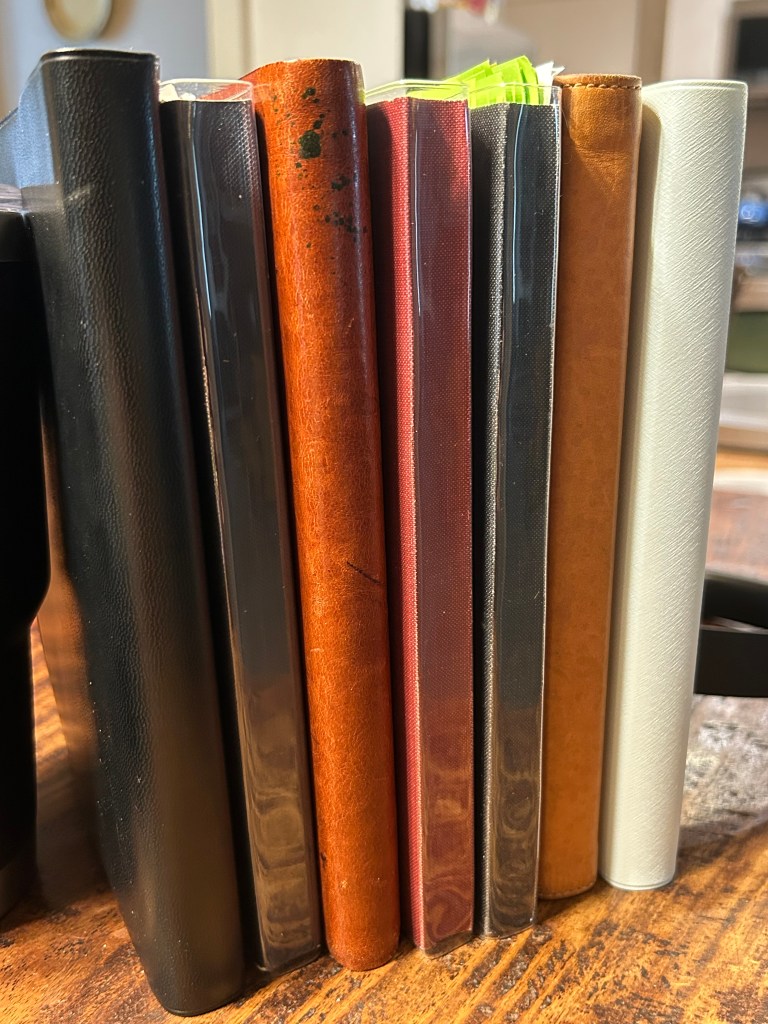
Mostly I find evidence of someone who worried about the same stuff. Who repeated the same mistakes with impressive consistency. Who had breakthroughs or insights or adventures that, upon encountering them years later, I’d forgotten and needed to remind myself of again.
But this post isn’t actually about 50 years of journal self-discovery BS… That more celebratory remembrance publishes later tonight at midnight – ON the actual 50th anniversary.
This one’s about the other archive, the accidental one.
Around 1988, I started something different. Not a daily journal, but a running business file I called my “manifesto” (until the Unabomber ruined that word for everyone).
It became a catch-all for anything I wanted to remember: advice from mentors, quotes from books, hard-won lessons from experiences that didn’t work out, notes from seminars, rules I made for myself and sometimes broke.
For nearly forty years, whenever I encountered something worth keeping, into the file it went. Bullet points from management best-sellers. Observations from watching what worked and what didn’t in a dozen different workplaces. The whole glorious mess feeding into what I now call The Field Guide, an operating manual that fits how I work, or try to.
Samples from The Field Guide
- On career: “Don’t climb the corporate ladder, expand like an amoeba instead. Never give up your original job, keep flowing like lava.” (Michael Korda)
- On fear: “Results are inversely proportional to how intimidated you are.”
- On writing: “Refuse to write the cliché lead. Tell a story that’s never been told.” (Tom Junod)
- On energy: “Enthusiasm & energy are required, since nearly everyone else lacks them.”
- On life: “It’s your movie. Nobody has higher authority in it than you do.”
The act of writing has been the point, not that there’s an archive. I’ve filled the shelf with bound journals and digital files, which is nice. But the practice of daily writing, of forcing yourself to articulate what happened and what it meant, is where the value exists. Writing makes you a witness and observer as well as participant — a very good thing.
Patterns emerge whether you want them to or not. When you write every day for 50 years, the same conflicts/concerns keep showing up. Being unable to hide from your own self-sabotage is either frustrating or liberating, depending on the day. Mostly it’s both.
Memory is a liar, but the page doesn’t forget. I’ve gone back to entries about events I remembered one way, only to discover I remembered them wrong. The journal is a better historian than I am.
Nobody else needs to read it. The minute you start writing for an audience, even a future version of you, you’re performing. The best journal entries are the ones written with zero concern for how they’ll read later. Ugly, raw, unedited and probably scrawled out next to a grocery list, those are truth. The best writing happens when you don’t GAF at the actual moment of the writing.
I don’t have a ritual. I write whenever the day or the moment requires. Sometimes that’s in the morning. It could be late at night when I finally have five minutes. Sometimes I miss a day, or several days, then catch up. What matters is that I keep coming back 50 Novembers in.
 Stuart Wade