
 by
by Capturing the daily grind has been great
I rarely go anywhere without a notebook. The journal originates for me November 7, 1975 — Day One of a writing habit that continues to the present. The practice of just being consistent on paper would go on to help shape my life in ways I couldn’t have imagined as a kid, scribbling those earliest notes about Little League (my team was “Tri State Bearings”), summer campouts at Shakamak or whatever else struck my fancy.
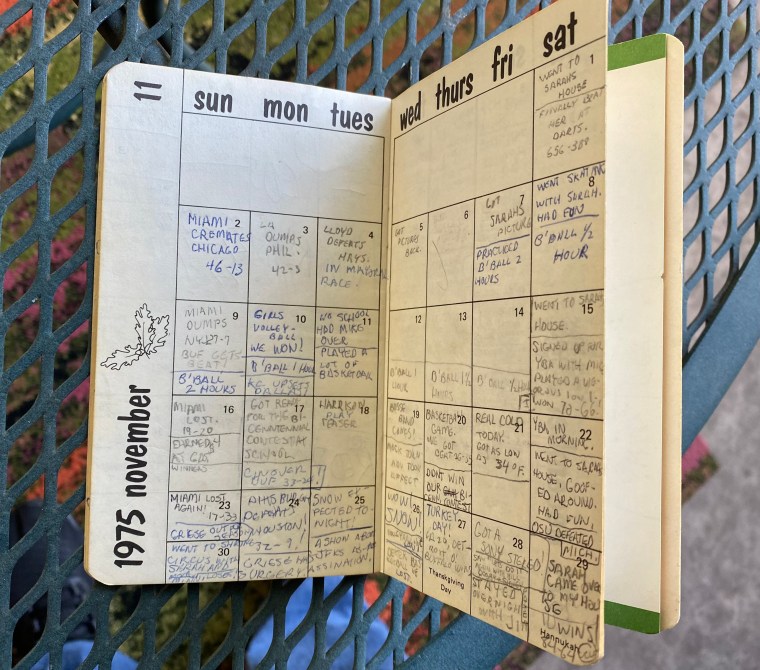
Fifty years to the day, and more than 13,000 entries later, the words — first tiny manuscript in IU pocket calendars, then evolving through typewritten pages, then Word files, and later .txt notes stashed in the cloud — reside today in the pages of a sleek, analog notebook.
Yep, I’m all the way back again to, “by hand.” And the act of (almost) daily writing in these pages remains a cornerstone habit, maybe the cornerstone habit, where I organize and capture everything.
The return to analog arrived in 2020. I spent many hours on our porch to help each of the five of us “distance” in our household. To be more mobile then, I’d purchased an iPad with a clever keyboard cover-wrap and used it at that patio table.
Until I dug out an overlooked notebook — high-quality Japanese paper wrapped in a swank leather cover, no less — and resolved to use it alongside the iPad. But within days, the device sat pushed aside while my fountain nib glided across the page. The weight of the pen, the slight resistance of the nib on paper and the ink absorbing into the fiber brought a satisfying, physical connection to the words themselves that you don’t get staring at a screen.

“Fill a notebook by hand” became the new norm. Thus the handwritten journal thing (along with the .txts I’ll still preserve out of habit as I work online) has exploded, with more than 2,700 analog pages since June of ’20. That’s been cool.
So yes, the journal, and what’s in it. Often it’s just a sentence or two per day. What we did, who I saw. Who won. And at other times, it’s a lengthy dive into reactions to events and surroundings. Could be a shopping list. It’s all here and obviously, the journal has preserved detail that would’ve long been forgotten, and has on occasion delivered a life-altering insight.
The dots connect in ways you’d otherwise never notice. Scattered ‘80s thoughts connect to career choices years later. A casual conversation recorded in 1986 Chicago reveals the seed of an idea that became central to life in 2025 Austin, and so on.
Take a list of freelance story ideas I jotted down nearly 30 years ago. Stumbling back on it recently, I realized that every single idea had come to fruition — some immediately and others, years later, each converted to a creative sale or bylined piece. Pretty satisfying to see that checklist fully completed.
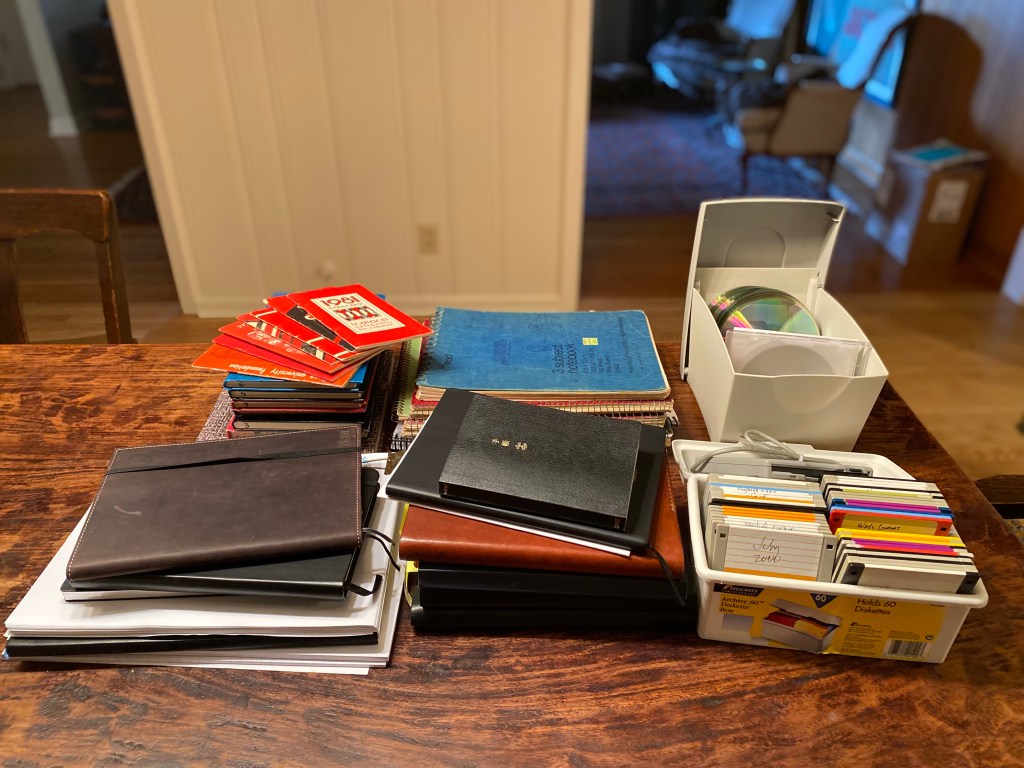
The journal also helps clear the haze of memory, settling the occasional dispute about who was with us on a particular evening or where we dined when a significant Whatever took place years ago. A 1996 entry reads: “Ran Town Lake loop with Cedric. Talked about whether to stay in Austin or return to Chicago/Indy. Still not sure.” Reading that now, I can see I was wrestling with a decision for months that felt enormous then. But the surrounding entries, the excitement about landing freelance clients, Christi starting grad school, show we were already building the life we’d choose.
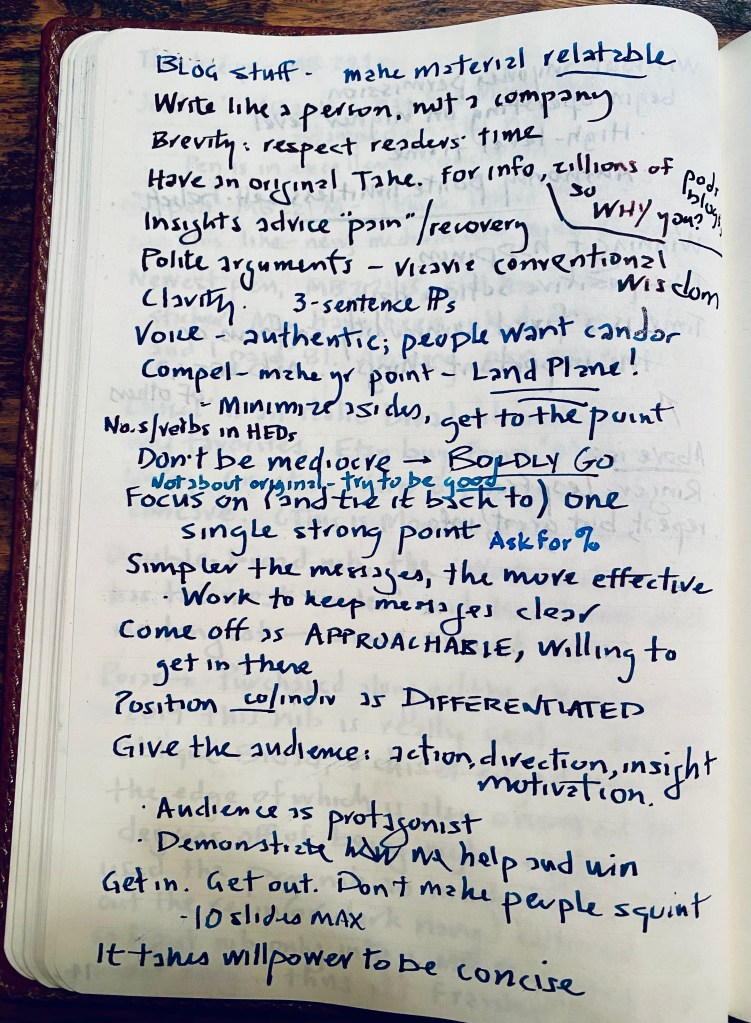
The routine of putting thoughts to the page has real merit. The years have formed a habit of observation. You notice more and begin to preserve extra detail — someone’s quirky outfit, something you heard, the mood, something about the book you’re currently reading and how it applies to random thoughts from another corner of everyday existence.
The journal also reveals your progression as a thinker. Early adult-life entries show a mind confronting challenges through sheer will. Giving way to “more recent” (i.e., also old!) ones that demonstrate better questions, clearer reasoning. You can literally track how your process advanced. You got organized.
Perhaps the real fun exists in the smaller moments. For example, items from that first journal year of 1975 include my neighbor friend Chris’ 10th birthday party (Chris passed away in 2024), winning the sixth-grade 50-yard dash (Dale, who was definitely the fastest kid in our grade, chose the 100 — and you could only choose one sprint).
• The syrupy taste of a Slush served in a mini-batting helmet cup (I wanted a Reds helmet, but the Stop-n-Go only had Phillies helmets that week). Damn the Phils. First this, then they steal Pete Rose.
• The thrill of riding The Sleeping Bear Dunes on summer vacation in Michigan in a Jeepster (vehicles on the dunes long ago having been banned), or helping a refugee classmate on the first day of school later that Fall (Vietnamese kid Thien Van Nong, who spoke little English then, and is today a husband and father, an engineer living in California) — details that would’ve vanished otherwise.
Meaningful now are the references to conversations with or about my late father — casual exchanges I captured without knowing they would one day be a way to “hear” him again.
Beyond preservation, the journal becomes a pattern-recognition tool. A deep dive into any year reveals when things were amazing, frustrating or just on hold. Even the mundane daily nothings — and there are plenty — stacked one on top of another conjure up a timeframe, bring back a long-ago vibe.
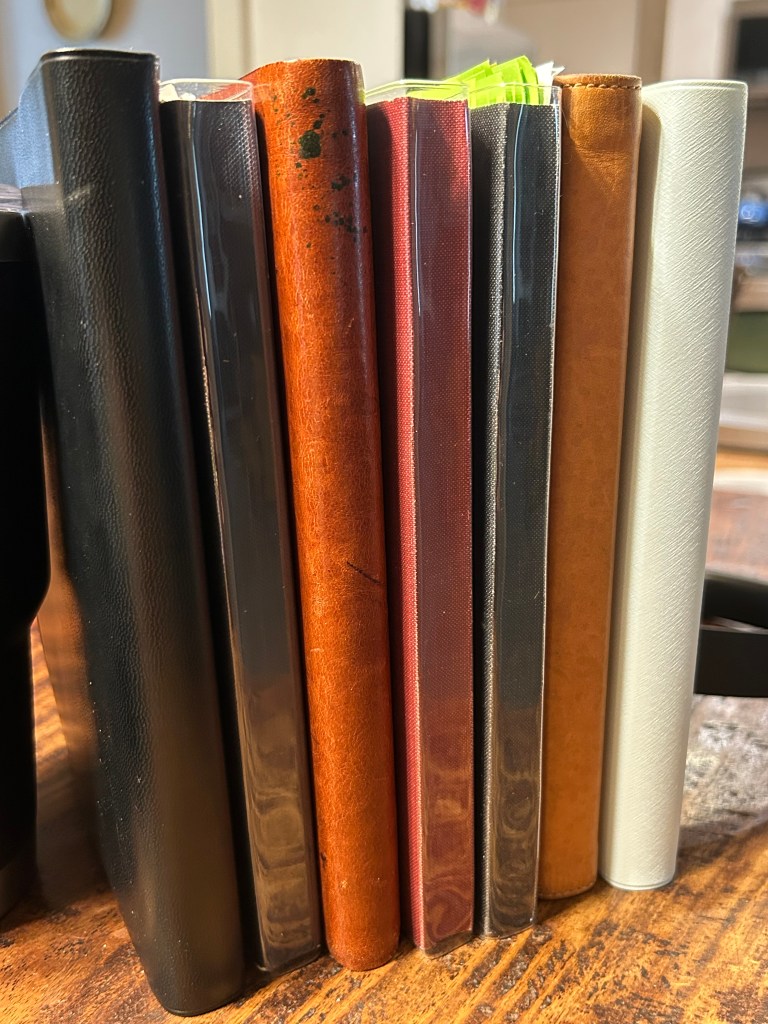
These pages are ultimately about reconnecting with forgotten aspects of ourselves. Going back through the entries reveals patterns and preferences that shaped who we became — and sometimes, rediscovering those early interests can point the way forward.
Which leads me to a small bit of seriousness: Do whatever it takes to get a different perspective.
A buddy who died in early 2025 used to hammer this notion. Like a photographer, he’d say, you can get a completely different picture by altering your vantage point. So make sure you do that in writing as well.
To continue the analogy… Once you’re sure you got the shot, look up, down, and walk around your subject. You’ll have a dozen new “pictures.”
Writing in this manner allows you to approach a day or a memory from different angles. The daily habit becomes a way of changing perspective. The beauty of this altitude change is you can zoom in on a single conversation that mattered, then pull it back to see how it fits into the larger trajectory you’re on (or think you’re on).
Fifty years, today. Pretty cool, the many days and moments recorded here have trained me to look for the story hiding in the ordinary Thursday. And I look forward to the next 50.
 Stuart Wade
1 Comment