
 by
by * Before the Internet
Cable television is near death. Household penetration peaked above 80% in 2011. By last year more than 80 million subscribers had cut the cord. However, the specialized world it built is still very much here.
I know the date because I wrote it down. Our family got cable TV on October 2, 1979.
I was 15, and sometime during the holidays, or perhaps into the summer of 1980, came an afternoon when the house was all mine, the downstairs TV mine to control.
I had watched Halloween once already at Eastland cinema, paying my own money, in a theater full of kids who screamed at all the right moments. Now I watched it again at home on HBO. Unedited, in full, in the middle of the afternoon.
This was not, it should be said, a household starved for stimulation.
My father sold insurance and spent his free time reading military history — enough that you half-expected to find him loading a musket in full Revolutionary War regalia. My mother taught nursery school and read constantly: bestsellers, magazines, crossword puzzles in ink. (Still does.)
Books came up at our dinner table every night. You assumed that was normal. Everybody read. Everybody talked about what they read.
But into our house that day in ’79 arrived a black box on top of the Sony. VHS followed a year or two later. (My father had already cycled through a Betamax and arrived at the same conclusion everyone eventually did… Betamax lost.)
Cable reached American households the way most disruptive technologies do: gradually, then all at once. It slipped into daily life as something novel, but would soon become unimaginable to live without, and it would leave the same way.
To understand cable’s influence when it was new, consider what network television offered a high schooler in 1979.
Movies on network TV showed up years after their theatrical run, chopped for content and interrupted every twelve minutes by commercials. Network broadcast standards then ensured nothing onscreen would alarm a CBS executive or agitate the FCC. Cable however operated apart from many of these restrictions, and programmers took advantage.
Beyond ABC, CBS, NBC and PBS, your options ran thin. UHF delivered local programming of variable quality and syndicated reruns at hours suggesting the stations themselves weren’t really trying.
That was the full menu until cable changed your options entirely — and not just through HBO.
Ted Turner’s TBS beamed out of Atlanta arrived as “The Superstation,” airing syndicated shows, old movies and Atlanta Braves baseball to cable systems nationwide. Watching the Braves on a summer afternoon in Indiana felt strange and wonderful.
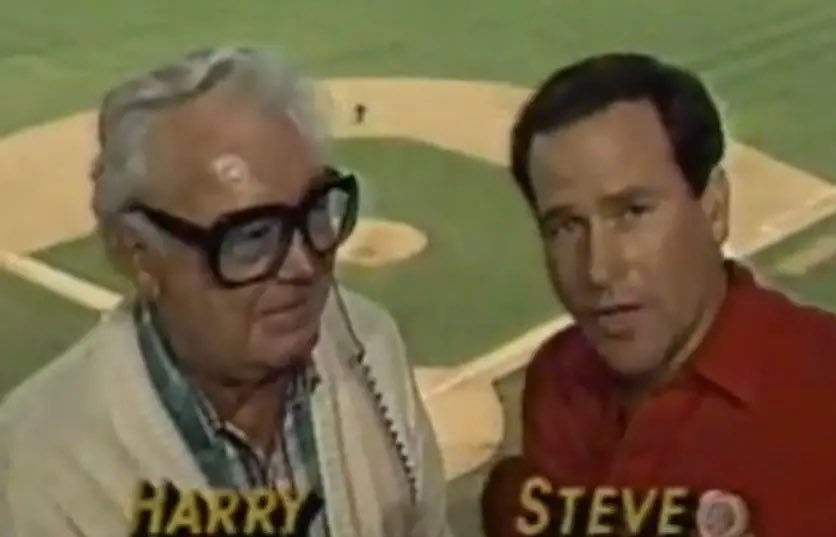
WGN out of Chicago ran similarly: Cubs games called by Harry Caray and Steve Stone, The Bob Newhart Show, old westerns and movies no network affiliate would touch.
Turner wasn’t done. CNN launched June 1, 1980, and its idea — news, all day, all night, whenever you wanted it — was so foreign to the existing media landscape that most people didn’t know what to make of. The three networks still ran a nightly broadcast at 5:30. CNN bet on its 24-hour news strategy, an argument it eventually would win. In 1980 though, it mostly meant watching correspondents fill time from bureaus around the world.
ESPN launched September 7, 1979 and its early years rewarded the patient and the curious. The channel needed content badly and filled hours with Australian rules football, slow-pitch softball championships, and college sports the networks ignored entirely. You never knew what you might find. That the same network would eventually become the most powerful force in American sports media — controlling rights, setting what leagues charged and what fans ultimately paid — traces directly back to those scrappy, early years.
USA Network’s “Night Flight” (starting June 1981) became its own kind of education. Weekend nights from 11 p.m. to 7 a.m., it aired the first national pop, new wave and punk video before MTV existed, along with cult films, avant-garde animation, and documentaries no broadcast station would touch. One night Pink Flamingos, the next Fantastic Planet or a raw segment on the New York punk scene. Watching in the basement at 1 a.m. on a Saturday was like receiving a transmission from a world nobody in high school even knew existed.
HBO delivered full-length features, the real thing, uncut and with no commercial breaks. It also demonstrated to networks that viewers would pay extra for the privilege of not being advertised to.
For a kid already living inside a decently rich media environment, I was blown away by HBO’s sudden full access to stuff that had previously required either a theater ticket, an accommodating older sibling, or a just plain luck.
The movies alone covered a lot of ground: The Warriors, which I’d already seen at Eastland in a theater where the audience made the case that the movie might not be entirely fiction. Wolfen. Sharky’s Machine. The China Syndrome. Phantasm.
Magic — the Anthony Hopkins ventriloquist horror film that disturbed me in ways I couldn’t articulate then and still can’t.
Over the Edge, the 1979 Matt Dillon film about suburban teenagers burning their own school down, which nobody I knew had seen and which captured something about being 15 that the networks never came close to.
Halloween, which viewed in an empty house at 2 p.m. was somehow scarier than it had been in a theater full of screaming kids.
Then the original programming. Inside the NFL you watched obsessively, Fraggle Rock you’d discuss with friends just as much as the NFL stuff then.
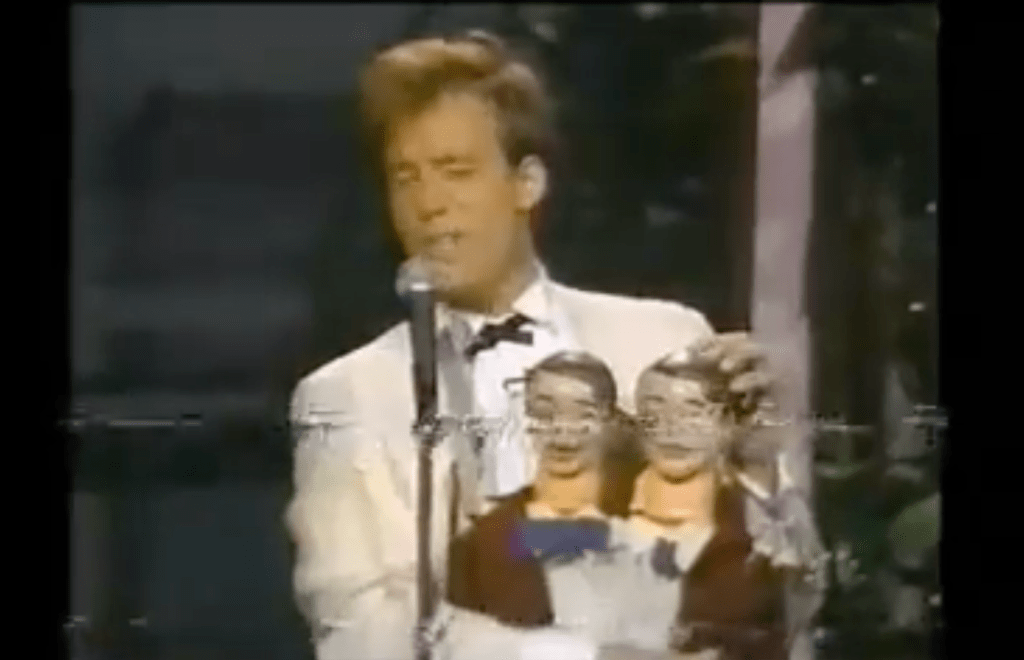
There were the “Young Comedians” specials — HBO had been running these since 1975, introducing club stand-ups who hadn’t been on The Tonight Show, doing material network television wouldn’t have showcased. So watching a pre-fame Jim Carrey or a young Jerry Seinfeld work through an eight-minute set was a pretty cool experience.
“Richard Pryor: Live in Concert” aired in 1979. It was the first major stand-up special broadcast uncut, language intact, no network standards applied. A different category of television entirely.
HBO boxing in the early 1980s featured Sugar Ray Leonard, Marvin Hagler and Thomas “Hit Man” Hearns, arguably the sport’s golden era. As a young sports fan, you did not miss those fights.
And the scheduling was its own revolution. A movie playing Tuesday at 3 p.m. would run again Thursday at 7, and again on Saturday at 11. You could watch the same movie three times in a week!? For a teenager used to rationing whatever the three networks chose to show, this was radical.
MTV launched August 1, 1981 — “Ladies and gentlemen, rock and roll,” then the Buggles, then five hours of programming that influenced not only the next several years of pop music but pretty much all of pop culture.
Our family hadn’t splurged for MTV, which ran as an add-on. My parents passed — but Greg’s family subscribed and what followed was tremendous. Our two basements became a circuit, each serving its purpose (they had MTV and SHO, we had HBO and MAX), as we worked through our high school-to-college era (the end of ’85), when MTV was breaking artists and establishing the visual language of my generation.
The arrival of cable carried a social dimension that’s hard to convey now. It brought the viewer a fragmented universe of choices — a distinct flavor for every member of the family. A channel could now carry a defined identity and a specific audience. That specialized world was arriving, and it has never left. (I had some fun with this in 1998.)
On any given night I’d sit at my desk doing homework — Coke, Doritos, my Pioneer turntable spinning LPs — while a game or movie played muted, or not, on the Trinitron visible to me in the next room. With my older siblings gone, the downstairs realm belonged to me in a way the upstairs couldn’t.
The revelation, for me, was independence. Cable gave me media I could run entirely on my own. The uncut movie I’d never heard of, the live game from Seattle or somewhere that I’d have never have seen otherwise, or the stand-up NBC would never have scheduled — suddenly available, without bothering anybody in my house’s schedule.
It added a parallel media “track” alongside books and magazines and albums (and crappy network shows) – never competing with them.
Every subscription service running today — the ones that track your viewing history, build your preferences and your feed, or aim a distinct item or channel at each member of your household — uses that blueprint. Cable TV did it first, streaming just executed more precisely.
Before cable, you chose just the one thing. After cable, you no longer needed to.


5 Comments