
 by
Who they were and why the hero couldn’t make it without them
Certain burning questions go unasked far too long.
Why do some heroes need a sidekick while others travel alone? What separates the genuine article from the ordinary friend, partner or second-in-command? And why does the arrangement so often collapse when the sidekick steps into the spotlight?
The hero needs someone to witness the heroism.
Sherlock Holmes without Watson is a man talking to himself in a room full of chemistry equipment. The Lone Ranger without Tonto is a masked stranger carrying a sidearm on public ground. Batman without Robin is a troubled tycoon in an underground lair, surrounded by expensive equipment and talking to Alfred.
The sidekick gives the hero someone to explain things to, someone to rescue and someone who will remember what happened. He keeps one foot in the ordinary world while the hero charges off toward giants, Moriarty or Mount Doom.
He also understands the arrangement. Robin knows whose name comes first. Tonto stays with the horses. Sam calls Frodo “Mr. Frodo” all the way to Mordor.
The role has boundaries. The Sundance Kid gets equal billing, and partners get a say. George Costanza or Dwight Shrute occupy the opposite extreme. Each spends several seasons convinced they’re the leading man.
Every so often, though, the second banana turns out to be the more interesting character.
Sancho
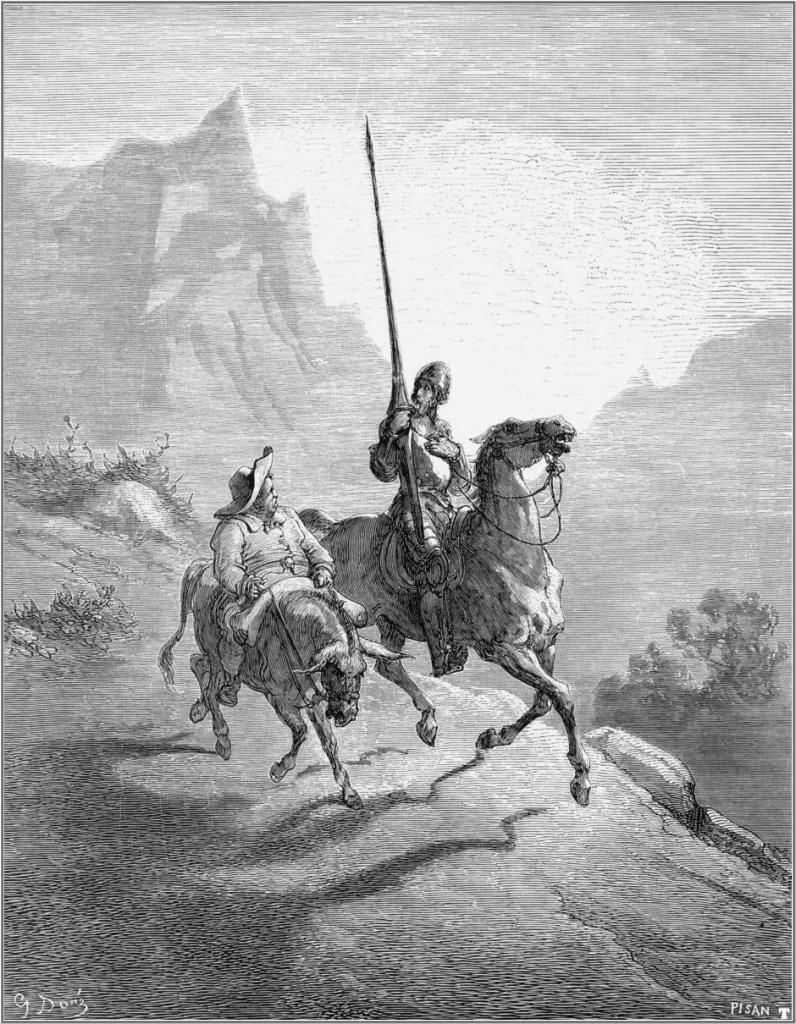
Before Tonto, before Robin, there was Sancho Panza. What Cervantes achieved with Don Quixote in 1605 was to take the familiar role of the knight’s squire, give him a voice and a donkey and invent the sidekick as we know him.
Where Don Quixote saw giants, Sancho saw windmills. Every sidekick author since has been working from the same idea: the hero needs someone tethered to the actual world.
Cervantes invented the form. Shrek‘s Donkey is what you end up with when DreamWorks gets hold of it.
Sancho followed his master through all of it. Promised the governorship of an island, he received ten days running a town before rejoining Quixote on the road. He considered this acceptable, which is either the defining quality of the sidekick or a personality disorder. Possibly both.
Watson
Sherlock Holmes is the greatest detective in the English language and might have remained obscure without John H. Watson, M.D.
The stories exist because Watson told them. Holmes observed, deduced and solved. Watson recorded, published and created the legend. Baker Street, the cases, even the detective’s mystique reached the world through the second man.
Few sidekicks ever acquire such influence. Tonto never wrote the Lone Ranger’s biography. Robin did not manage Batman’s public image. Watson decided what the world would remember.
Holmes kept him close as confidant, chronicler and occasional target of a condescension that sometimes resembles anxiety more than superiority.
Tonto
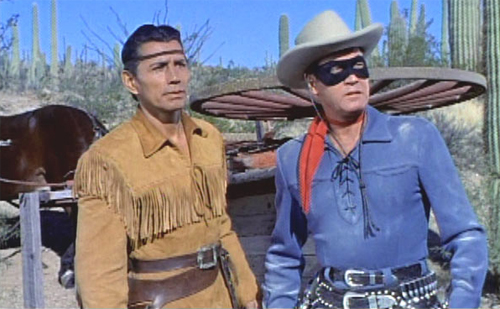
Jay Silverheels, the Mohawk actor who played Tonto in 221 television episodes beginning in 1949, was by most available measures the more compelling screen presence.
While the Lone Ranger announced, Tonto observed. Tonto worked as an unpaid logistics contractor with occasional combat obligations and no path to equity. He tracked. He scouted. He stayed with the horses while the Lone Ranger went inside.
When captured, and he was captured with a regularity that would concern any reasonable HR department, his rescue usually counted as a minor interruption in Kemosabe’s day.
Without Tonto, however, the Lone Ranger had no witness and no name.
Robin
When ABC premiered Batman in 1966, the primary colors, comic-book captions and villains who explained their plans before carrying them out made the series an immediate sensation.
Batman still needed someone riding shotgun, somebody to exclaim, “Holy Alter Ego!” and mean it. Robin gave Batman a witness, an audience and someone to rescue when the plot required it.
Without Dick Grayson, Bruce Wayne was a troubled tycoon in a kick-ass lair with really expensive equipment and nobody to talk to but Alfred.
Ed
Like Clyde Tolson, most sidekicks would prefer you not notice what they’re doing. Ed McMahon was the exception.
For thirty years on NBC, Ed McMahon performed one of the least-appreciated jobs in American entertainment. He controlled the atmosphere of the room so another man could be funny in it.
Humor was Johnny Carson’s mission, and McMahon understood the chain of command the way any good lieutenant does.
Ed’s tools were the laugh, the setup and the credulous pause.
The laugh gave the audience permission to find the moment funny. The setup handed Carson the ball at the right point. The pause assured viewers that their reaction was correct.
On The Tonight Show Starring Johnny Carson, Ed functioned as a living laugh track, though that description understates his skill. A laugh track reacts the same way every time. McMahon knew when to roar, when to wait and when to let Carson’s expression finish the joke.
When McMahon died in 2009, Carson had already been gone four years. The obituaries were respectful and faintly puzzled about what exactly to say. He was, they all agreed, there. Reliably, skillfully, essentially there.
As epitaphs go, the sidekick has heard worse.
Barney
In The Andy Griffith Show, Sheriff Andy Taylor and Deputy Barney Fife maintained order in a town where order faced little danger.
What made the partnership work was Andy’s careful management of Barney’s access to actual authority.
Andy allowed Barney one bullet. It stayed not in the chamber but in his shirt pocket, available for deployment upon authorization, which was rarely granted. This was by design. Sheriff Taylor knew that a Barney Fife with a loaded weapon was an incident report waiting to happen.
Barney needed Andy because Andy was the only person who could see both what Barney was and what Barney believed himself to be, then love him equally for both.
For the role, Don Knotts received five Emmy nominations for Outstanding Supporting Actor.
He went five for five.
Samwise
A school of thought holds that Samwise Gamgee is the true hero of The Lord of the Rings and Frodo a delivery mechanism.
Tolkien called Sam his “chief hero,” a statement that caused some retroactive discomfort among readers who had spent a thousand pages cheering for the other guy.
Sam carries the Ring when Frodo cannot. Later, he carries Frodo. At the critical moment on the slopes of Mount Doom, Sam gets them there and Frodo declines to finish the job.
Yet Sam never mistakes the assignment. He calls Frodo “Mr. Frodo” throughout the journey, a form of address that encodes the hierarchy of the partnership. Sam may be stronger, steadier and more interesting, but he knows whose story they are in.
The Shire eventually made him mayor.
Jerry
From its start in 1946, the partnership of Dean Martin and Jerry Lewis offered a 10-year study in imbalance.
Dean stood at the microphone with the ease of a man who had decided the world would come to him. Jerry was everything Dean wasn’t – the noise, the chaos, the physical comedy that seemed an awful lot like a nervous system in open revolt. Dean was the straight man and Jerry was the condition he was straight against.
The arrangement made them America’s most popular act. Dean was funny because Jerry was present. Without Jerry, Dean was a good-looking fella with a pleasant voice and a scotch and soda. Take Dean away and Jerry became, exactly as he meant to prove, an auteur.
Jerry Lewis wanted desperately to be taken seriously. He gave interviews of Proustian solemnity about the art of comedy and made French critics feel that they alone had perceived his genius, which may be the most Jerry Lewis thing that ever happened.
None of this was funny, which was the funniest thing about it.
In 1956, Jerry decided he had finished playing Dean’s sidekick. The split was abrupt and final. The two men did not speak for twenty years.
Dean took the separation with characteristic detachment and spent the rest of his career perfecting the art of appearing not to try. He was magnificent at it.
Jerry went to France.
Twenty years later, Frank Sinatra engineered a reunion at the MDA telethon without telling Jerry. Martin walked onstage, Lewis looked up and the audience responded with more emotion than either man appeared to expect.
Both proved they could lead. Dean’s television show ran for nine seasons. Jerry made films, directed himself and acquired the solemn reputation he had always wanted.
But the culture remembered them as a pair.
Al Powell
The minimum viable sidekick is a volleyball with a handprint face.
In Cast Away, Tom Hanks talked to Wilson for four years. Even a man marooned beyond human contact will invent someone to hear the story.
Al Powell stayed on the radio for much the same reason.
On Christmas Eve 1988, LAPD Sergeant Al Powell responded to a disturbance call at Nakatomi Plaza in Century City, found nothing wrong and was headed back to his patrol car and his Twinkies when a body landed on his hood.
In Die Hard, Powell didn’t sign on to be anyone’s sidekick. The partnership with John McClane formed the way the best ones sometimes do — through proximity, persistence and one person hanging in there, when everyone else had written the other one off. What Powell provided was faith in a man he had never met, trapped in a building he couldn’t enter during a crisis everyone else had misread.
Most sidekick relationships are built over time, tested slowly, deepened by accumulation. Powell and McClane had one night. But when the moment arrived for Powell to act — the first time he’d drawn his weapon in years — he didn’t hesitate.
He is the accidental sidekick: no origin, no history, no Batcave. Just a parking lot, a working radio and the desire to keep talking.
Paulie
Peter Paul Gualtieri, known to everyone who mattered in The Sopranos as Paulie Walnuts, had served as a soldier in the DiMeo crime family since approximately the Eisenhower administration.
Paulie was Tony Soprano’s factotum. He remained loyal to the point of dysfunction, lethal on assignment and blessed with the conversational range of a man who really needed to tell you something he saw on television last night.
Tone needed Paulie the way a general needs a sergeant who has stopped asking why. Paulie’s loyalty carried little complication from ambition, which made it one of the rarest commodities in the New Jersey outfit.
Silvio Dante occupied another position in the same orbit. As consigliere, Silvio ran the daily operation. Paulie supplied muscle, Silvio counsel.
Outside Satriale’s during the series finale, Tony offers Paulie the captaincy of the Aprile crew. Paulie declines. Every man who held the job before him is dead. He accepts only after Tony threatens to give it to someone else.
Before that, Paulie offers a thought, “In the midst of life, we are in death. Or is it: in the midst of death, we are in life?” Paulie isn’t sure which. Tony doesn’t answer.
Then Paulie is outside alone in a lawn chair, sunning himself in the cold. He has done this since Ike. He will continue until he can’t. For Paulie Walnuts, this is enough.
Kim Wexler
Kim Wexler was, by any available measure, the most competent person in Better Call Saul. A better lawyer than Jimmy McGill, a better strategist, more disciplined and more honest.
She knew exactly what Jimmy was. Something in his particular chaos answered something in Kim that her own life had suppressed.
Jimmy was the door she kept opening despite knowing damn well what was on the other side.
Every other sidekick in this account was assigned, drafted or fell into the role through circumstance. Even Jesse Pinkman was recruited in Breaking Bad rather than self-selecting. Kim chose.
She looked at the full situation, including the probable ending, and went in anyway. Yes, she walked away eventually — not because the role had broken her, but because she recognized the moment when the contract had finally cost more than she could pay.
Most sidekicks enter the role through assignment, recruitment or circumstance. Kim chose. In the history of the form, from Sancho Panza to the streets of Albuquerque, no one had managed that before.
The door, to her credit, she closed herself.
Falstaff
Sir John Falstaff is the funniest man in Shakespeare.
Drinking, scheming and delivering immortal speeches on honor and cowardice alongside young Prince Hal in Henry IV, Parts I and II, Falstaff is fat, broke, dishonest and more alive than anyone else in the plays. His creed: “The better part of valour is discretion.”
Which makes what happens to him either the Bard’s cruelest or most honest moment.
When Hal becomes king, Falstaff rushes to greet him. The new monarch looks at his old companion before the court he now means to impress and delivers six words:
“I know thee not, old man.”
Falstaff represents more than an embarrassing friendship. He knows Hal before the crown, before the speeches and before the transformation into Henry V. He remembers the taverns, the jokes and the young prince who could afford to waste time.
The new king cannot allow that witness to remain at his side.
Falstaff is too real, too much evidence of a life Henry can no longer afford to have lived. He dies in Act II of the next play. Henry appears not to have noticed.
The hero gets the entrance, the title and the close-up. The sidekick gets the horse, the radio, the bullet in his shirt pocket and the task of remembering what actually happened.
That may explain why the second banana so often proves more interesting. The hero must protect the myth but the sidekick sees the man.
He knows which giants were actually windmills, how much help the victories required and what fear lay behind the immortal speeches.
And still, the sidekick follows.

