
 by
by Who they were and why the hero couldn’t make it without them
Certain burning questions go unasked far too long.
Why do some heroes need a sidekick, while others don’t? What separates the genuine sidekick from the discount version? And why, when the sidekick dares to step into the spotlight, does the whole arrangement fall apart?
A sidekick is not simply a companion. Companions are for pleasure. Sidekicks are chosen, sometimes against the hero’s better judgment, because something in the hero’s makeup is missing, and without that missing piece the whole enterprise teeters.
Sherlock Holmes without Watson is a guy talking to himself in a room full of chemistry equipment. The Lone Ranger minus Tonto is just a masked man on public ground with a sidearm.
A true sidekick satisfies at least three of the following four conditions.
- He is recognizable but not necessarily by name: the big Wookiee, the boy wonder, the little guy in the tux on the island.
- He has a signature trait so consistent it becomes the partnership’s shorthand: Barney’s bullet, Tonto’s “Kemosabe,” Ed McMahon’s laugh.
- He cannot, under any circumstances, lead. He has tried, or we’ve let ourselves imagine it for a moment, and the experiment did not go well. Ed Norton followed Ralph Kramden into every bad Honeymoonersidea since 1955 without appearing to consider an alternative.
- And finally he is, in a way the hero would never admit, the more interesting of the duo.
Not every famous second-in-command qualifies.
Spock is a category error. Captain James T. Kirk’s starship Enterprise benefited from the friction between them, which makes Star Trek’s Mr. Spock a partner, not a sidekick — the distinction being that partners get to be right.
Watson is more than just a sidekick to Sherlock. He is a narrator with a medical degree, which is a different and more powerful job, and we will get to him.
And then there are the stealth cases: the ones who function as sidekicks but would be genuinely offended by the designation. George Costanza believed, for nine Seinfeld seasons, that he was the lead of his own life. He was wrong, the show knew it, the viewers were in on it. Yet George was the only one who didn’t see it that way.
Jeff Garlin’s character on Curb Your Enthusiasm performed the same function for Larry David — the necessary sounding board, the voice that said maybe don’t approximately once per episode to no discernible effect. Ethel Mertz had been performing the same function for Lucy Ricardo way back in 1951.
The Rolling Stones are rock and roll’s clearest case. Mick is the show, but Keith wrote the riffs, built the legend and has been dying for fifty years… to ascend above the erroneous sidekick label.
Each tells us something about the hero he served — and about the thankless, occasionally heroic work of being second banana.
Sancho Panza, and the View from the Donkey
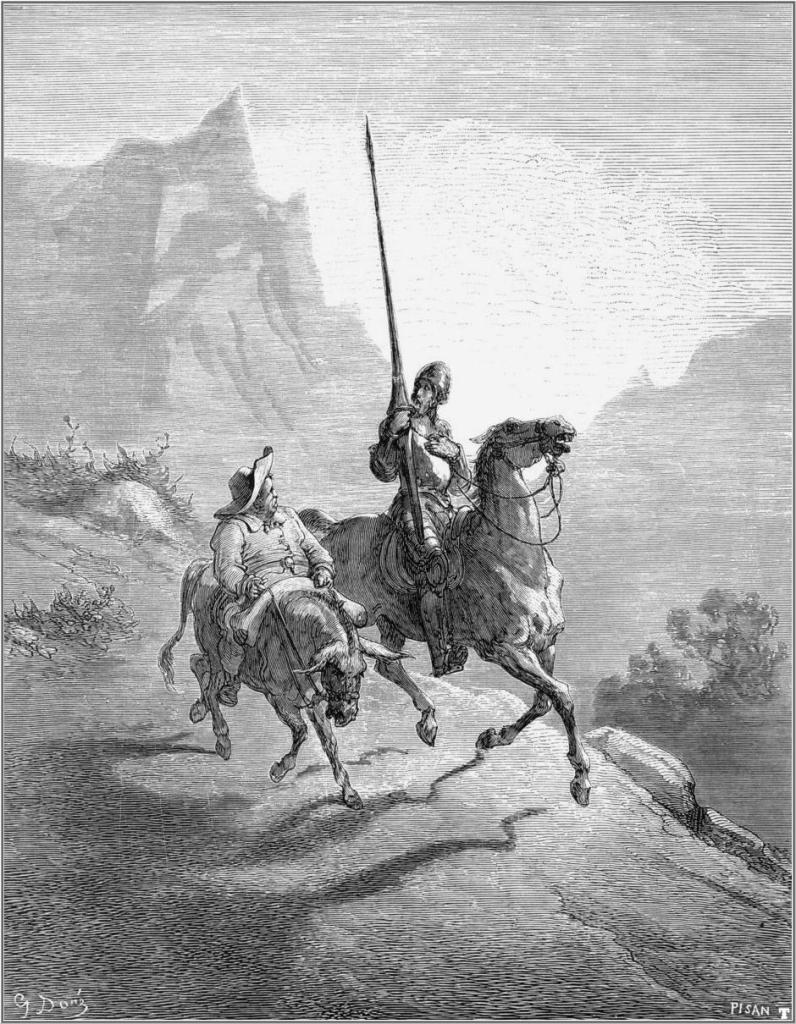
Before Tonto, before Robin, there was Sancho Panza. What Cervantes achieved with Don Quixote in 1605 was to transform the role of knight’s squire—give it a voice and a donkey—and, presto: the sidekick as we know it came into existence.
Where Don Quixote saw giants, Sancho saw windmills. Every sidekick author since has been working from the same idea: the hero needs someone tethered to the actual world.
Cervantes invented the form. Shrek‘s Donkey is what happens when it’s handed to DreamWorks.
Sancho followed his master through all of it. Promised the governorship of an island, he got ten days running a town before rejoining Quixote on the road. He considered this acceptable—which is either the defining quality of the sidekick or a personality disorder. Possibly both.
Falstaff and What Happens at the End
Sir John Falstaff is the funniest man in Shakespeare. Drinking, scheming, lying magnificently, and delivering immortal soliloquies on honor and cowardice alongside young Prince Hal in Henry IV, Parts I and II, Falstaff is fat, broke, dishonest, and more alive than anyone else in the plays.
Which makes what happens to him either the Bard’s cruelest or most honest moment.
When Hal becomes king, he looks Falstaff in the eye before the court he means to impress and delivers six words:
I know thee not, old man.
Falstaff is too real, too much evidence of a life the new king cannot afford to have lived. He is dead by Act II of the next play. Henry appears not to have noticed.
Dr. Watson, and the Power of the Pen
Sherlock Holmes is the greatest detective in the English language and would have remained entirely unknown without John H. Watson, M.D.
These stories exist because Watson told them. While Holmes deduced and solved, Watson logged, published, and narrated. The Baker Street address burned into memory, the legend itself—all of it was built by the second man in the room.
This is a level of influence most sidekicks never attain. Tonto did not write the Lone Ranger’s biography. Robin did not oversee Batman’s publicity. Watson decided what posterity would know. Holmes kept him close as confidant and occasional target of a condescension that, on reflection, looks a lot like anxiety.
Tonto, and the View from the Horses
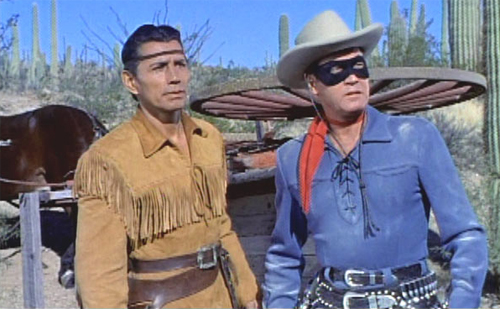
Jay Silverheels, the Mohawk actor who played Tonto in 221 television episodes beginning in 1949, was by most available measures the more compelling screen presence. He carried the authority of a man who has assessed the situation and chosen not to share his own conclusions. While the Lone Ranger announced, Tonto observed.
Tonto’s role was essentially that of an unpaid logistics contractor with occasional combat obligations and no path to equity. He tracked. He scouted. He stayed with the horses while the Lone Ranger went inside. When captured, and he was captured with a regularity that would concern any reasonable HR department, his rescue was usually treated as a minor disruption in Kemosabe’s day. Without Tonto, the Lone Ranger had no witness and no name.
Ed McMahon, or: The Profession Made Visible
Like Clyde Tolson, most sidekicks would prefer you not notice what they’re doing. Ed McMahon was the exception.
For thirty years on NBC, McMahon performed perhaps the least appreciated function of any right-hand man in American entertainment: he managed the atmosphere of the room, so that another man could be funny in it. Funny was Johnny Carson’s mission, and McMahon grasped chain of command the way any good lieutenant does.
Ed’s tools were the laugh, the setup, and the credulous pause.
The laugh was permission granted to the audience to find this funny. The setup handed Carson the ball at the right point. The credulous pause told the audience their reaction was correct.
On The Tonight Show Starring Johnny Carson, Ed was the laugh track. Doc Severinsen and Tommy Newsom were always third, behind Carson and McMahon, a reminder that the talk show format is a hierarchy with the house band at the bottom.
Paul Shaffer, by contrast, occupied a genuinely different role as the musical director for Late Night with David Letterman. Shafe was less a reactive instrument than he was a creative collaborator, the rare sidekick whom the network kept calling a sidekick even in official biographies.
The Larry Sanders Show gave the arrangement a fictional approximation of Ed: Jeffrey Tambor as Hank Kingsley, loyal buffoon to Garry Shandling’s Larry.
When Ed McMahon died in 2009, Carson had already been gone four years. The obituaries were respectful and faintly puzzled about what exactly to say. He was, they agreed, there. Reliably, skillfully, essentially… There. As epitaphs go, the sidekick has heard worse.
Bud Abbott, a Brief Note on Lou Costello
Bud Abbott did not attend Lou Costello’s funeral. Some partnerships are clarified by their endings.
Robin, and the Witness
When ABC premiered Batman on January 12, 1966, it attempted something American television had never quite managed before: a comic book brought fully to life — the primary colors, the onomatopoeia, the villains who announced the diabolical details first and then pursued them anyway. The show was the comic-book page, moving.
But Batman needed a foil, a witness, someone to ride shotgun in that awesome vehicle. Somebody had to say Holy Alter Ego! and mean it. Without the youthful ward Dick Grayson aka Robin, Bruce Wayne was a troubled tycoon, in a kick-ass lair, with expensive technology and nobody to talk to but Alfred.
Samwise Gamgee, and the Question of Who Actually Did It
There is a school of thought that Samwise Gamgee is the true hero of The Lord of the Rings and that Frodo is a mere delivery mechanism.
Tolkien called Sam his “chief hero,” a statement that caused considerable retroactive embarrassment among readers who spent a thousand pages rooting for the other one.
Sam carries the Ring when Frodo cannot… Sam carries Frodo when Frodo cannot. At the critical moment on the slopes of Mount Doom it is Sam who gets them there, and Frodo who declines to finish the job.
And yet Sam is not the hero. He calls Frodo “Mr. Frodo” for the entire journey, a form of address that encodes the power structure of their partnership. He is the more interesting of the two, yet he somehow knows it is not his story.
The Shire eventually made him mayor.
Barney Fife, and the Bullet
In The Andy Griffith Show, Sheriff Andy Taylor and Deputy Barney Fife maintained order in a town where order was in little danger. What made the partnership work was the careful management of Barney’s access to actual authority.
Andy allowed Barney the one bullet. It was to be kept not in the chamber but in the shirt pocket, available for deployment upon authorization, which was never granted. This was by design. Sheriff Andy knew that a Barney Fife with a loaded weapon was an incident report waiting to happen.
Barney needed Andy because Andy was the only person who could see both what Barney was and what Barney believed himself to be, and love him equally for both.
For the Barney role, Don Knotts was nominated for the Emmy for Outstanding Supporting Actor five times. He went 5-for-5.
Jerry Lewis, and the Coup
The partnership of Dean Martin and Jerry Lewis was, from its inception in 1946, a study in imbalance. Dean stood at the microphone with the ease of someone who had decided the world would come to him. Jerry was everything else: the noise, the chaos, the physical comedy that looked like a nervous system in open revolt. Dean was the straight man and Jerry was the condition he was straight against.
For ten years the arrangement made them the most popular act in America. Dean was funny because Jerry was there. Remove Jerry and Dean was a good-looking fella with a pleasant voice and a scotch and soda.
Remove Dean and Jerry was, as he intended to prove, an auteur.
Jerry Lewis, the man who desperately wanted to be taken seriously, gave interviews of Proustian solemnity about the art of comedy. He made French critics feel they alone had perceived his genius, which is the most Jerry Lewis thing that has ever happened.
None of this was funny, which was the funniest thing about it.
In 1956 Jerry decided he was done being Dean’s sidekick. The split was abrupt, final and the two men did not speak for the next 20 years. Dean took the parting with characteristic detachment and spent his career perfecting the art of not appearing to try. He was magnificent at it.
Jerry went to France.
Twenty years later, Frank Sinatra engineered a reunion at the MDA telethon without telling Jerry. Martin walked out onstage, and Lewis did not see it coming. The audience response suggested the culture had been waiting for a reunion with more emotion invested than either man had anticipated.
The sidekick who escapes discovers something the record does not prepare him for. The hero’s role is lonelier than it looks. Dean Martin’s television show ran for nine seasons. Audiences watched with the faint but persistent sense that something was missing.
There was nothing missing.
That was the problem. The sidekick who escapes the arrangement finds the stage larger and the light harsher than it appeared from the wings.
The Sundance Kid, and the Better Man
The title of Butch Cassidy and the Sundance Kid lists Butch first. This is the central lie of the film, and William Goldman intended this when he wrote it.
Butch Cassidy runs on ideas and schemes, carried along by an optimism so stubborn it refuses to admit how bad things have gotten. Paul Newman played the role with the ease of someone who knew he was the lead and was generous about it.
Sundance doesn’t talk so much. He shoots, and with a precision that the film presents as almost supernatural — drawing while moving, the gun already where it needs to be before the decision to draw has been made.
Robert Redford’s Sundance is the more dangerous man and the one who follows. Butch is the one with the vision, however deluded, and Sundance has assessed the vision, found it wanting, and signed on anyway.
The partnership ends, famously, in Bolivia, in a courtyard, surrounded by the Bolivian army. We don’t see them die. Goldman and director George Roy Hill cut away before the ending that everyone knows is coming, and the freeze frame holds them mid-charge. The legend requires the leap but not the aftermath.
Dwight Schrute, and the Sidekick Who Didn’t Know
Every sidekick examined here has understood, at some level, his position in the hierarchy. Tonto knew. Robin knew. They all knew…
All except for Dwight K. Schrute III, who did not get the memo.
As Assistant Regional Manager — a title he awarded himself — Dwight operated under the conviction that he was the most capable person in the Scranton branch of Dunder Mifflin and that Michael Scott’s tenure was an anomaly that history would soon correct.
Dwight was more competent than Michael in every measurable category: sales, security, situational awareness, beet farming and the identification of regional wildlife. What he could not supply, and what Michael Scott had in apparently inexhaustible quantities, was the irrational warmth that makes people follow someone they really shouldn’t.
Whereas Michael Scott was a catastrophe that people loved, Dwight was a system that people feared. Dunder Mifflin Scranton needed both. Dwight is also the rare sidekick who eventually gets the job, which should feel like vindication.
Chewbacca, a Brief Note
Chewbacca did not speak. He did not receive a medal at the end of A New Hope, despite having been present for the relevant military engagement. He has been co-piloting the Millennium Falcon since before Han Solo was born, a fact the franchise mentions once and does not pursue. Han needed Chewie because Chewie was the only crew member who would never leave, never negotiate, and never need an explanation.
Chewie keeps showing up anyway. Some things about the sidekick condition cannot be improved upon by analysis.
(Kirk’s starship Enterprise ran on a different logic entirely — too many candidates, none of them quite fitting the definition. As we mentioned Spock was a partner, McCoy was the conscience and Scotty kept the lights on. When every seat at the table is occupied, no one gets to be sidekick.)
Al Powell, and the Accidental Partnership
The minimum viable sidekick is a volleyball with a handprint face. In Cast Away, Tom Hanks talked to “Wilson” for four years and proved something the whole form rests upon, that the hero requires a witness.
Al Powell stayed on the radio for that same reason. On Christmas Eve 1988, LAPD Sergeant Al Powell responded to a disturbance call at Nakatomi Plaza in Century City, found nothing obviously wrong, and was heading back to his patrol car and his Twinkies when a body landed on his hood.
In Die Hard, Powell didn’t sign up to be anyone’s sidekick. The partnership with John McClane formed the way the best ones sometimes do — through proximity, persistence and one person hanging in there, when everyone else had written the other one off. What Powell provided was faith, belief he maintained on a radio channel, in a man he had never met, in a building he couldn’t enter, in a situation that by every assessment had already gone sideways.
Most sidekick relationships are built over time, tested slowly, deepened by accumulation. Powell and McClane had one night. But when the moment arrived for Powell to act — the first time he’d drawn his weapon in years — he didn’t hesitate.
He is the accidental sidekick: no origin, no history, no Batcave. Just a parking lot, a working radio and the desire to keep talking.
Paulie Walnuts, and the Sidekick as Vocation
Peter Paul Gualtieri — Paulie Walnuts to everyone who knew him, which was everyone who mattered in his world — had been a soldier in the DiMeo crime family since approximately the Eisenhower administration.
Paulie was Tony Soprano’s factotum: loyal to the point of dysfunction, lethal on assignment, and possessed of a social manner that somehow combined genuine menace with the conversational range of a man who really needed to tell you something he’d seen last night on TV.
Tone needed Paulie the way a general needs a sergeant who has stopped asking why. Paulie’s loyalty was not complicated by aspiration, which made it the rarest commodity in the New Jersey outfit.
Silvio Dante occupied a different position in the same orbit. As Tony’s consigliere, Silvio ran the daily operation and was the voice Tony turned to when he needed to hear something straight. Paulie was muscle, Silvio was counsel.
Outside Satriale’s during the show’s finale, Tony offers Paulie the captaincy of the Aprile crew. Paulie doesn’t want it — every man who held it is dead — but accepts when Tony threatens to give it to someone else.
Before that, unprompted, Paulie offers this: “In the midst of life, we are in death. Or is it: in the midst of death, we are in life?”
Paulie isn’t sure which, and Tony doesn’t answer. (The Sopranos ends, famously, ambiguously, three scenes later.)
Then Paulie is outside alone in a lawn chair, sunning himself in the cold. He has been doing this since Ike. He will do it until he can’t. This, for Paulie Walnuts, is enough.
Kim Wexler, and the Door
Kim Wexler was, by any available measure, the most competent person in Better Call Saul. Better lawyer than Jimmy McGill, better strategist, more disciplined, more honest — and she knew exactly what Jimmy was. Something in his particular chaos answered something in Kim that her own life had suppressed.
Jimmy was the door she kept opening despite knowing damn well what was on the other side.
Every other sidekick in this account was assigned, drafted or fell into the role through circumstance. Even Jesse Pinkman was recruited in Breaking Bad rather than self-selecting. Kim chose.
She looked at the full situation, including the probable ending, and went in anyway. Yes, she walked away eventually — not because the role had broken her, but because she recognized the moment when the contract had finally cost more than she could pay.
She is the only sidekick to ever read the fine print. In the history of the form, from Sancho Panza to the streets of Albuquerque, no one had managed that before.
The door, to her credit, she closed herself.
 Stuart Wade